City-State Expands Vertical Farming Grants to Target 40% Food Resilience
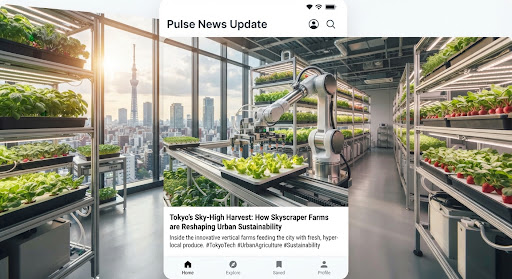
A dense, import-reliant city-state is widening grants for indoor farms as it aims to grow 40% of certain fresh produce at home. Supporters call it food security; critics point to the power bill.
boltCore Drivers
- check_circleA 40% target for selected produceThe goal covers leafy greens and some vegetables, not the whole diet.
- check_circleGrants now reach smaller growersThe expanded scheme lets small operators apply, not just large facilities.
- check_circleEnergy is the sticking pointIndoor farms trade land and water for electricity, which is costly and not always clean.
A city-state with almost no farmland and a population that depends on imports for most of its food has announced a major expansion of its grants for indoor agriculture. In this illustrative launch-edition story, officials say the goal is for local farms to supply 40% of selected fresh produce, mainly leafy greens and some fruiting vegetables, within the next several years. The new scheme widens eligibility to smaller growers and adds support for training and shared processing facilities.
The announcement is the latest sign that dense, import-dependent places see local food production as insurance against disrupted shipping lanes, extreme weather in supplier countries and sudden export bans. It also revives a long-running argument about whether vertical farming is a genuine solution or an expensive niche.
What the expanded grants cover
Under the earlier program, most money went to a handful of large, highly automated facilities. The expansion changes that mix:
- Small-grower grants for converted warehouses, rooftops and car-park levels.
- Shared facilities for washing, packing and cold storage, so small farms don’t each need their own.
- Training places for workers moving into agriculture from other industries.
- Energy-efficiency requirements, with higher support for farms that use efficient lighting and recover waste heat.
Officials say the aim is to build a resilient network rather than depend on a few big sites that could themselves fail.
Why leafy greens first
Not every crop suits indoor growing. Lettuce, herbs, spinach and microgreens grow quickly, stay small and sell at relatively high prices per kilogram, so the cost of light and climate control can be recovered. Staple crops like rice or wheat need far more space and energy per calorie and remain impractical indoors at scale. That is why the 40% target applies only to selected produce. The city-state will still import the vast majority of its calories.
Nobody here thinks we will grow our own rice. The question is whether we can keep fresh vegetables on shelves when the ships are late. — an agricultural policy adviser involved in the program
The energy question
Indoor farms replace sunlight with LEDs and outdoor weather with air conditioning and dehumidifiers. In a hot, humid climate, that can mean a large electricity bill. If the power comes mostly from fossil fuels, the carbon footprint of a locally grown lettuce may be higher than one shipped from a sunny farm abroad. Supporters respond that efficient lighting keeps improving, that waste heat can be reused, and that the point of the program is resilience rather than the lowest possible emissions per head of lettuce.
Price is the other worry. Indoor-grown greens often cost more than imports, and some earlier ventures in the region closed when subsidies ran out. Critics want to see the farms become commercially viable rather than permanently dependent on grants.
Who works on an indoor farm
The training places in the new scheme reflect a practical problem. Indoor farms need people who understand plant biology, but also lighting systems, sensors, water chemistry and food safety. Early operators in the city-state reported difficulty hiring, and some relied on staff trained abroad. The program funds short courses for mid-career workers, including people leaving retail and logistics jobs, and pays a share of wages during an initial placement. Organizers hope that a local workforce will make the sector less fragile, because a farm that cannot find staff is no more resilient than one that cannot get seeds.
What is still unclear
The government has not published how much the expanded scheme will cost in total, how progress toward the 40% target will be measured, or what happens to farms that fail to become profitable. It is also unclear whether shoppers will choose local produce at a premium when cheaper imports are available, or whether restaurants and supermarkets will be encouraged to buy local through procurement rules.
What to watch next
The first signals will be how many small growers apply, and whether the shared facilities open on time. Over the longer run, watch the electricity numbers: farms that publish their energy use per kilogram of produce will make it much easier to judge whether the program delivers on both resilience and sustainability. And watch prices on supermarket shelves, because a food-security plan only works if people actually buy the food.
About this story: this is an illustrative launch-edition scenario. Organizations and people in it are fictional or unnamed, and figures are attributed within the story. Our standards.
Written by
Hana Mori
Food & Cities Reporter — launch-edition house byline. About our bylines • Report an error