Urban Farm Tower Now Supplies 30% of One District's Leafy Greens
A hydroponic tower in a crowded city district says it now grows nearly a third of the salad greens sold in nearby shops. Freshness is the selling point; cost and energy are the questions.
boltCore Drivers
- check_circleAbout 30% of local greens, operators sayThe tower’s operators estimate it supplies nearly a third of salad greens sold in the district.
- check_circleHarvest to shelf in hoursGreens travel a few blocks instead of hundreds of kilometers, so they stay fresher longer.
- check_circlePrices are still higherLocal greens cost more than imports, and the tower depends on steady demand from nearby stores.
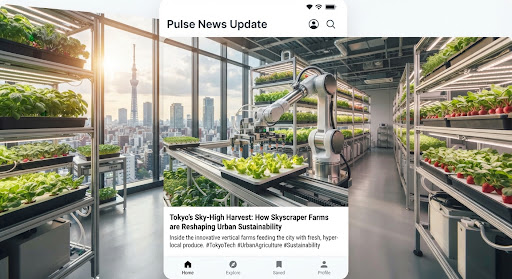
Walk past a certain office-sized building in a dense city district and you might not guess what is inside: floor after floor of lettuce, basil, bok choy and pea shoots growing under pink and white LED light. In this illustrative launch-edition report, the operators of this hydroponic farm tower say it now supplies roughly 30% of the salad greens sold in the surrounding district’s supermarkets and corner shops.
That estimate is the operators’ own, based on their delivery volumes and their reading of local sales. It has not been independently measured. But the tower has become a local talking point, and a test case for whether high-density city farming can earn a lasting place in neighborhood food supply.
How the tower works
The building was converted from offices that stood empty for years. Each floor holds racks of shallow trays in which plants grow with their roots in circulating, nutrient-rich water. LEDs provide light, and the climate is tightly controlled to keep pests and disease out. Robotic carts move trays between growing zones and a harvesting area on the ground floor, where staff cut, wash and pack the greens.
- Crops: leafy greens, herbs and microgreens that grow quickly and fetch good prices.
- Water: recirculated, with much lower use than field farming.
- Delivery: electric cargo bikes and small vans covering a radius of a few kilometers.
Freshness as a business model
The tower’s main selling point is time. Most salad greens in large cities travel long distances in refrigerated trucks, ships or planes, and can spend days in transit. Greens from the tower are often on shelves within hours of harvest, which, the operators say, means longer shelf life at home and less waste. Local shop owners interviewed for this report said customers notice the difference and that spoilage has dropped.
We used to throw out a box of wilted lettuce every few days. Now it lasts long enough to sell. — a corner-shop owner in the district
The costs
Local greens from the tower typically cost more than imported equivalents. The operators argue that lower waste partly offsets the price difference for shops, and that customers are willing to pay a little extra for freshness. But the margin is thin. The tower depends on steady orders from a network of nearby retailers and restaurants, and any downturn in demand could hurt quickly.
Energy is the largest operating cost. The LEDs and climate systems run around the clock, and the building’s electricity bill rises when summer heat increases cooling demand. The operators say they have negotiated a renewable electricity contract and are testing more efficient lighting, but they have not published energy use per kilogram of produce.
Why districts are interested
City planners see several possible benefits beyond fresh salad. Converting empty office space into farms can revive underused buildings. Local production adds a small buffer against disruptions in long supply chains, as several cities discovered during past transport crises. And the tower employs people from the neighborhood, including in jobs that require new technical skills. It also runs tours for school groups, which local teachers say has made children more curious about where food comes from.
Inside a working day
A shift at the tower starts before dawn, when the first harvest crew cuts trays scheduled for morning deliveries. Technicians check nutrient levels and sensor alerts floor by floor, while a small team cleans and reseeds empty trays. By mid-morning the cargo bikes are on their way, and afternoons are given over to maintenance and planning the next week’s planting around shop orders.
The limits
Thirty percent of salad greens in one district is a meaningful local achievement, but greens are a small part of what people eat. The tower does not affect supply of staples like rice, grains, meat or most vegetables. Scaling the model to many more districts would require substantial investment and reliable demand, and some earlier urban-farming ventures elsewhere closed when costs proved too high. Building codes and fire regulations can also make office conversions complicated and slow.
What to watch next
The operators plan to add a second tower in a neighboring district and say they will start publishing energy and yield data. Watch whether the second tower finds enough buyers, whether prices narrow the gap with imports, and whether city authorities make conversions easier. If the model holds up, the empty office block could become one of the more surprising places where cities grow their food.
About this story: this is an illustrative launch-edition scenario. Organizations and people in it are fictional or unnamed, and figures are attributed within the story. Our standards.
Written by
Hana Mori
Food & Cities Reporter — launch-edition house byline. About our bylines • Report an error