The Living Concrete Revolution: Cities Absorbing 100 Million Tons of CO2 Annually
Bio-mineralised concrete that uses microbes to lock away carbon and heal its own cracks is spreading through municipal building codes. Here is what the bold carbon claims actually rest on.
boltCore Drivers
- check_circleTwelve cities require pilot useMunicipal codes in a group of cities now mandate bio-concrete in some public projects.
- check_circle100 million tons is an ambition, not a resultThe headline figure is an industry projection for the future, not measured absorption.
- check_circleSelf-healing could extend building lifeMicrobes that seal small cracks may reduce repairs, which also saves carbon.
Concrete is the most widely used material on Earth after water, and making its key ingredient, cement, is responsible for a large share of global carbon dioxide emissions. That makes the material a prime target for climate innovation. In this illustrative launch-edition investigation, a set of bio-mineralised concrete formulations, mixes that contain living microbes which help form minerals and, in some versions, draw carbon dioxide into the material, has moved from laboratories into building codes. Twelve municipalities now require these mixes in certain public projects.
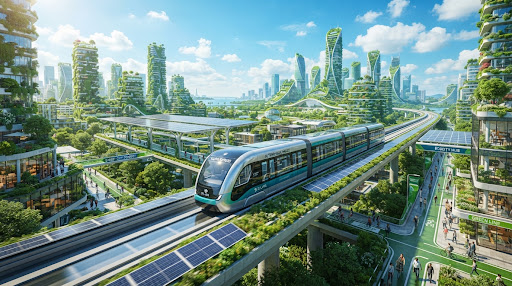
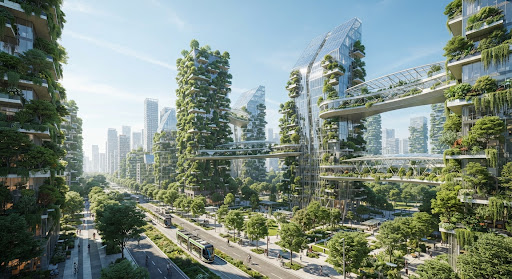
Supporters of the technology have described a future in which cities absorb 100 million tons of carbon dioxide a year through their buildings and pavements. It is important to be clear: that figure is a projection of what the industry hopes to achieve at large scale, not a measurement of what is happening now. This investigation looks at what the materials actually do today.
What “living concrete” means
Several different technologies get grouped under the label:
- Self-healing concrete contains dormant bacteria and nutrients. When a crack lets in water, the bacteria activate and produce calcium carbonate, which seals the crack.
- Carbon-cured concrete is exposed to captured carbon dioxide during curing, which reacts to form stable minerals inside the material.
- Photosynthetic blends, the most experimental, incorporate cyanobacteria, microbes that use sunlight to absorb carbon dioxide, usually in surface layers or panels rather than structural elements.
Most of what is being used in the twelve cities is the first two types. The photosynthetic versions grab headlines but remain largely in pilot installations.
Where the carbon savings really come from
The most significant climate benefits come less from absorbing carbon and more from avoiding emissions. Carbon curing locks some carbon dioxide permanently into the concrete and can allow producers to use slightly less cement for the same strength. Self-healing concrete may extend the life of structures and reduce the need for carbon-intensive repairs. Over decades, those effects can add up.
The honest pitch is a few percent lower emissions per cubic meter and longer-lasting structures. That is valuable. It’s just not the same as turning cities into forests. — a materials scientist who reviews low-carbon construction products
How the city mandates work
The twelve municipalities have taken different approaches. Some require bio-concrete for specific uses, such as sidewalks, retaining walls and drainage structures, where cracking is common and structural risk is low. Others offer faster permitting or density bonuses for private developers who use low-carbon mixes. All require suppliers to provide documentation of the material’s carbon content, a step that has pushed manufacturers to measure and disclose more than before.
The open questions
Lifecycle accounting is the biggest issue. Claims of carbon absorption must be weighed against the emissions from producing the cement, growing and transporting the microbes, and capturing the carbon dioxide used in curing. Different companies use different methods, which makes comparisons hard. Independent standards are still being developed.
Durability is another unknown. Self-healing bacteria have been shown to work in laboratory tests and early field trials, but it is not yet clear how many years they remain viable, especially in harsh climates. Engineers also want more evidence on how the additives affect long-term strength and corrosion of steel reinforcement.
What builders say
Contractors working on the first mandated projects report a mixed experience. Bio-concrete mixes generally pour and finish like conventional concrete, but some need tighter temperature control during curing, and supply can be patchy because only a few plants produce them. Prices are higher for now, typically a modest premium per cubic meter, which cities absorb in their own projects. Several contractors said documentation requirements added paperwork but also forced them to understand the carbon content of materials they had never questioned before.
Why the cities are moving anyway
Officials in the participating municipalities say they see the mandates as a way to build a market and gather data. Public projects provide a steady, predictable demand that helps manufacturers scale up and lower costs. They also offer test sites where performance can be monitored over years. Several cities have committed to publishing inspection results, which could become a valuable public record.
What to watch next
Watch for independent lifecycle standards, long-term inspection data from the first installations, and whether costs fall as production grows. The technology’s real contribution will likely be steady, measurable cuts in concrete’s footprint rather than a dramatic transformation of cities into carbon sinks. That is a less exciting headline, but potentially a more durable one.
About this story: this is an illustrative launch-edition scenario. Organizations and people in it are fictional or unnamed, and figures are attributed within the story. Our standards.
Written by
Marcus Vance
Investigations Editor — launch-edition house byline. About our bylines • Report an error