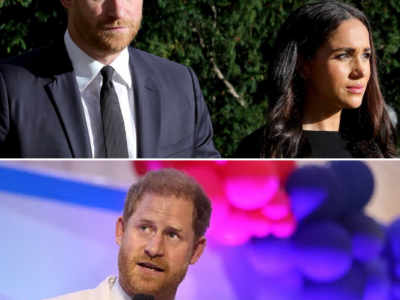
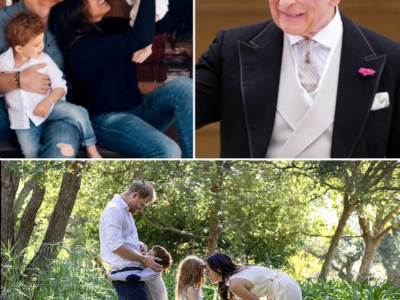
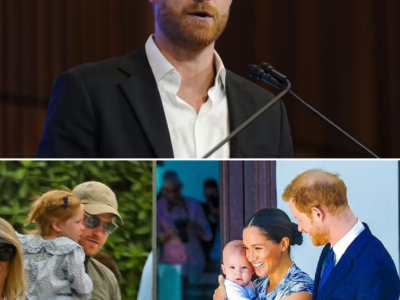
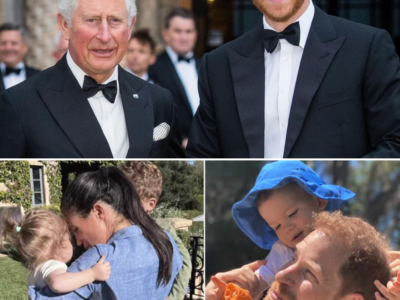
Prince Harry still deeply longs for a reunion between Archie, Lilibet, and his beloved homeland
The planned return of Prince Harry and his family to the United Kingdom has evolved into a high-stakes administrative chess match. While the Duke of Sussex’s camp maintains that the trip is proceeding as scheduled, the official silence regarding their security protection has cast a shadow of doubt over the feasibility of the visit. Amid the mounting speculation, one point has been made abundantly clear: for the Sussex family, security is not a request for royal privilege—it is a survival necessity in a world where they remain unique targets.
Where “Security” Defines the Line Between Home and Danger

The crux of the controversy does not lie in the offer of accommodation on royal estates—a gesture of goodwill extended by King Charles—but rather in the scope of protection provided. Under current protocols set by the Executive Committee for the Protection of Royalty and Public Figures (RAVEC), the Sussex family is granted police protection only while on royal grounds. This policy creates a perilous “gray zone”: the moment they step beyond the palace gates to engage in public or private functions, they are effectively stripped of police protection.
Harry’s camp has emphasized that “risk follows the person, not the place.” This is a pragmatic argument in modern security management. For high-profile figures like Harry and Meghan, threats are not confined to their front door. Splitting their protection between royal spaces and the outside world creates a dangerous fragmentation, leaving them vulnerable to media harassment and other external risks the moment they are in transit.
Administrative Delays: Oversight or Intent?
The situation is further complicated by the conspicuous absence of independent assessments from the Risk Management Board (RMB). That a process deemed mandatory has been “paused” and delayed since March raises serious questions about transparency. In a system that relies on government intelligence, the lack of an objective analysis of current threat levels makes it difficult to believe that security decisions are being driven by reality rather than rigid, bureaucratic inertia.
This lack of assessment does not merely disadvantage the Sussex family; it sets a troubling precedent for how the state handles the security of high-profile former “core” royals. When an agency fails to adhere to its own established assessment protocols, it ceases to be a private issue for the Sussexes and becomes a matter of public accountability regarding the state’s risk management integrity.
The Sacrifice of a Father
Harry is caught between two stark choices: returning to his home country and accepting the resulting instability, or abandoning the opportunity for his children to connect with their heritage and their grandfather. The need to explore “every available option” to keep Archie and Lilibet safe reveals a heartbreaking reality: the link between Harry and his homeland is being held hostage by security fears.
The upcoming visit to Birmingham for the Invictus Games countdown is more than a charitable obligation—it is a test of Harry’s resolve regarding his security demands. Should the trip be canceled, it would represent more than a personal failure; it would signal a total breakdown in the capacity for compromise between the two parties. In this context, security has become an invisible wall, severing the next generation of the royal family from their roots. Until the deadlock regarding independent risk assessments is resolved, the gap between the Sussex family and the United Kingdom will remain a chasm that continues to widen.
SOURCE: PEOPLE
https://people.com/prince-harry-exploring-every-option-bring-archie-lilibet-to-uk-12008332