Toxic smoke containing formaldehyde shrouds the scene: The chilling truth behind the horrific 7-truck explosion
The multi-vehicle collision involving seven trucks on the Hume Highway this past Tuesday was far more than a routine traffic accident; it escalated rapidly into a harrowing industrial-scale catastrophe. The transformation of the Windmills Rest Area—a space designed for safety and respite—into the epicenter of a series of explosive infernos serves as a stark warning regarding the volatile risks inherent in transporting hazardous materials across major arterial roads.
The Convergence of “Mobile Bombs”
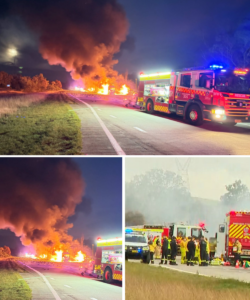
What makes this incident particularly alarming is the specific nature of the cargo involved. With a manifest including resin, memory foam, eight tonnes of butane canisters, and vast quantities of alcohol, each truck involved was essentially a high-capacity warehouse for flammable materials. When the initial collision occurred, the interaction between these various substances triggered a domino effect, turning the scene into an uncontrolled chemical reaction. This is not merely a matter of driver error or mechanical failure; it is evidence of the systemic risk that persists when incompatible, highly combustible goods share the same transit route.
A Dual Challenge for Emergency Responders
In standard traffic accidents, the primary objective is extinguishing fire. In this tragedy, however, first responders were forced to combat a “hidden enemy” in the form of formaldehyde. The toxic smoke emitted from the blaze posed not only immediate respiratory threats to those on the scene but also raised concerns regarding long-term environmental safety for the surrounding area. The fact that firefighters were required to undergo self-decontamination procedures while actively battling the flames illustrates how the complexity of this situation far exceeded that of a typical highway incident.
The Ripple Effects of Safety and Infrastructure Gaps
The tragedy, which left one driver missing and seven heavy vehicles reduced to wreckage, raises critical questions about safety protocols at highway rest stops. Although authorities implemented a 300-meter exclusion zone and issued public health warnings, the collateral damage to traffic flow, local environment, and human life is profound.
The closure of the Hume Highway—a vital artery connecting key regions—forced motorists to endure detours of over 80 minutes via the Federal and Barton Highways. Beyond the immediate economic impact, this disruption highlights the vulnerability of supply chains reliant on these critical transit routes.
Looking ahead, this disaster serves as a grave wake-up call for regulations governing the transport of hazardous cargo. When multiple vehicles laden with flammable materials are clustered within a confined rest area, a single oversight can lead to widespread destruction. Future investigations must look beyond the initial cause of the collision and re-examine the safety standards regarding the simultaneous parking of vehicles carrying specialized hazardous goods. The ongoing search for the seventh driver remains the most painful aspect of this event—a somber reminder of the staggering cost when a traffic incident morphs into an unpredictable chemical nightmare.
SOURCE: 7 NEWS
https://7news.com.au/news/driver-unaccounted-for-major-highway-closed-after-horror-crash-engulfs-seven-trucks-in-flames-c-22506548