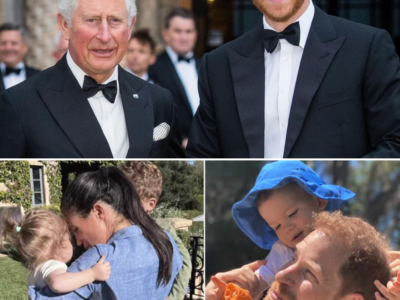
The truth behind Harry’s fiery statements: A security battle or a media gamble?
The announcement from Prince Harry regarding his upcoming visit to the UK next week has once again thrust the Sussex family’s relationship with the monarchy into the spotlight. Amidst scheduled itinerary plans, the long-standing legal battle over police protection remains the primary obstacle, rendering this visit the subject of endless speculation and controversy.
Security as a Symbolic Barrier
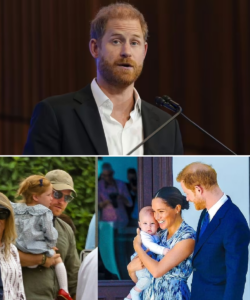
The assertion by the Duke of Sussex’s spokesperson that “risk follows the person, not the place” serves as a sharp critique of the British government’s security assessment framework (RAVEC). Objectively, this is no longer a mere dispute over logistics; it is a fundamental clash of governing ideologies: one side prioritizes a subjective, absolute need for security, while the other adheres to rigid administrative protocol.
The deadlock regarding the formation of an “independent Risk Management Board” has created a profound void of trust. Without an independent body to conduct assessments, any security arrangements currently in place are easily dismissed by the Sussex camp as disproportionate or biased. Ironically, this lack of consensus has transformed the security question into a bargaining chip, casting a shadow over the philanthropic goals Harry intends to pursue in Birmingham.
Communication Breakdowns and Media Shadows
A particularly noteworthy element of this unfolding situation is the ambiguity surrounding accommodation. Initial reports suggested that Harry had accepted the King’s offer to stay at a royal residence, only for those claims to be refuted. This indicates a severe breakdown in the communication channels between the Sussexes and Buckingham Palace. When information remains inconsistent, public perception inevitably leans toward interpreting these developments as either calculated media maneuvering or deep-seated friction between Harry and the King.
Analyzing the situation, Harry’s insistence on proceeding with his travel plans despite the lack of guaranteed security suggests a high-stakes gamble. While this can be viewed as the effort of a father striving to reconnect his children with their heritage, it also highlights his isolation in the fight for his rights. The fact that King Charles III plays no role in Home Office decisions clarifies that even as a monarch, he cannot bypass legal statutes—effectively leaving Harry to stand alone against the state machinery of his own homeland.
The Cost of Prolonged Estrangement
The reality that Archie (7) and Lilibet (5) have not seen their grandfather in person for four years is a harsh truth for a royal family. While Harry’s security concerns may be strategically sound, they are inadvertently creating a generational gap that may prove difficult to close. In the tug-of-war between personal privacy and royal duty, the children—the members least involved in the legal battle—are the ones bearing the brunt of this severed connection.
The upcoming visit, should it proceed, will serve as a litmus test for the parties’ willingness to compromise. If the Duke does not receive the “proportionate” security he demands, will the trip remain as smooth as his spokesperson claims, or will it simply add another chapter of controversy to the Sussex narrative? It is evident that until an independent assessment of security requirements is established, every trip Harry makes to the UK will remain fraught with reputational risks and further deepen the fissures within the royal household.
Ultimately, for the Sussexes, “coming home” is never a simple journey. It is a grueling, long-term negotiation where the line between personal safety and political existence becomes increasingly fragile.
SOURCE: DAILY EXPRESS
https://www.express.co.uk/news/royal/2223121/prince-harry-statement-uk-return-latest