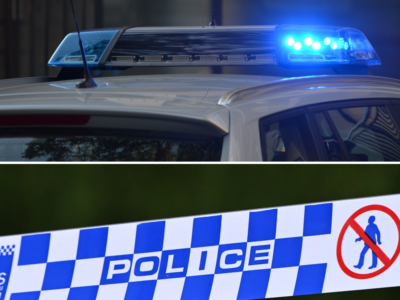
Dramatic rescue of four people swept away by floodwaters in West Gippsland, Victoria
The recent dramatic rescue in Victoria’s West Gippsland region serves as yet another grim warning about the dangerous trend of prioritizing recreational thrills over basic environmental awareness. Four individuals—three women in their 20s and a 54-year-old man—found themselves in a life-or-death struggle after their four-wheel drive was swept 25 meters downstream by the Macalister River. While their survival, enabled by climbing onto the roof of their submerged vehicle to call for help, is a stroke of fortune, it masks a deeply concerning lack of judgment regarding safety in extreme weather conditions.
Subjectivity and the Boundary Between Life and Death
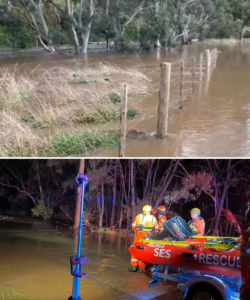
Meteorological data indicates that parts of Victoria recently saw rainfall ranging from 150 to 250 millimeters. These are not merely abstract figures; they are clear indicators that rivers and creeks, often deceptively calm, can transform into lethal torrents within hours. Persisting in crossing these waterways despite such conditions reveals a recurring, risky mindset: an over-reliance on the perceived capability of off-road vehicles and personal driving skills.
While off-road vehicles are frequently marketed for their superior terrain-handling capabilities, no vehicle—regardless of its power or advanced engineering—can withstand the sheer force of tons of floodwater rushing down from the mountains. The dangerous assumption that one is “in control” remains a primary catalyst for avoidable tragedies.
Individual Accountability and Public Safety
What makes this incident particularly alarming is that it is not an isolated event; it follows a similar rescue of two people trapped on the roof of their vehicle near Daylesford. The recurrence of these situations suggests this is not just a series of unfortunate accidents, but a growing behavioral issue. Every emergency deployment, whether by helicopter or ground crew, does not only drain public resources but also places rescue personnel in unnecessary peril. The constant need for emergency services to emphasize the mantra, “If it’s flooded, forget it,” is a stark admission of the widespread lack of situational awareness.
Furthermore, while carrying tools like satellite phones is a positive step in survival preparedness, it may inadvertently create a false sense of security. The knowledge that a rescue team can be summoned at the touch of a button can, in some cases, embolden people to take risks they would otherwise avoid. This technological “safety net” should never be used as a justification for reckless decision-making.
A Shift in Perspective
The drive to explore and challenge nature is human, but it must be grounded in knowledge and respect. When riverbeds turn into dangerous torrents, any decision to enter that environment must be viewed through the lens of life and death, rather than fleeting satisfaction or the pursuit of adventure.
The events in Victoria serve as a poignant reminder that nature does not negotiate with human negligence. Instead of blaming weather conditions, society must fundamentally reset its perspective: personal safety is the ultimate priority. No excursion can be deemed a success if it concludes with a search-and-rescue operation, and no experience is worth gambling with one’s life. It is time for individuals to adopt a mindset where safety is the baseline, rather than expecting the community to bail them out after they have knowingly pushed their luck to the brink of disaster.
SOURCE: 9NEWS
https://www.nine.com.au/australia-news/vic/four-people-rescued-from-floodwaters-in-victoria-20260704-p60cmo.html