A wealthy man buys back an old grocery store every year—not to run a business, but to keep a promise to someone who has passed away
Every year, on the first Monday of autumn, the wealthy man disappeared from his luxurious life without informing business partners, assistants, or even close friends where he was going. His driver knew the routine well enough not to ask questions. Instead of traveling to board meetings, investment conferences, or exclusive charity galas, the expensive black car quietly stopped in front of an aging grocery store that looked as though time had forgotten it. The faded sign above the entrance had been repainted so many times that several layers of old colors still peeked through the newest coat. The wooden floor creaked beneath every footstep, the refrigerator hummed with a tired voice that seemed older than many of the customers, and the shelves were stocked with ordinary necessities rather than expensive imported products. The surrounding neighborhood had changed repeatedly over the decades. Modern buildings had appeared, old businesses had disappeared, and families had moved away, yet the grocery store somehow remained exactly where it had always stood. Every autumn, the wealthy man walked inside carrying a folder filled with legal documents. By sunset, ownership of the little grocery store officially belonged to him. Then, before the week ended, he quietly transferred the deed back to the elderly widow who had managed it for years without accepting a single dollar in return. People who heard about the strange transaction laughed at first, believing it had to be some clever tax strategy or an unusual business experiment. Others assumed the wealthy man secretly planned to redevelop the property into something far more profitable. None of them understood why someone who owned companies worth millions would spend time and money purchasing the same tiny grocery store every single year, only to give it back again without asking for anything in return.
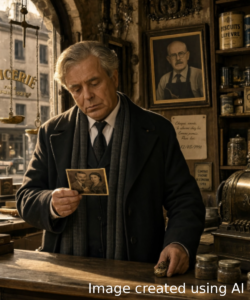
The elderly widow herself never fully understood his annual visit either. Every year she prepared the same pot of fresh coffee before he arrived, carefully swept the floor even though it hardly needed cleaning, and waited patiently behind the old wooden counter where she had spent most of her adult life. When he entered, they greeted each other warmly but rarely spoke about business. Instead, they discussed ordinary things: changing weather, rising grocery prices, neighborhood children growing into adults, and books they had recently read. Once the paperwork was signed, the wealthy man always walked slowly through every aisle as though revisiting an important chapter of his own life. He paused beside shelves filled with canned soup, inexpensive bread, bags of rice, and small jars of candy that children still begged their parents to buy. Occasionally he smiled quietly at memories nobody else could see. Before leaving, he always purchased a loaf of bread, a bottle of milk, and a chocolate bar, despite knowing those simple groceries represented less money than the parking fee at his corporate headquarters. The elderly widow accepted his payment with grateful eyes, though she secretly suspected the groceries were never the real reason he came.
Most people who admired the wealthy man’s success believed his story began with talent and extraordinary ambition. Newspapers celebrated him as a brilliant entrepreneur whose companies had transformed struggling industries through determination and intelligence. Young business owners quoted his interviews, hoping to imitate the discipline that had supposedly created his fortune. Television hosts frequently invited him to discuss investment strategies and leadership. Whenever someone asked about the turning point that changed his life, however, he always smiled politely before answering with vague comments about perseverance and opportunity. He never mentioned the little grocery store. He never described the elderly widow. He never spoke about the promise that quietly shaped every major decision he had made throughout his adult life. Success often encourages people to tell inspiring stories, yet some of the most meaningful moments remain too sacred to place beneath bright studio lights.
Long before expensive suits, private offices, and international business meetings became ordinary parts of his life, the wealthy man had been nothing more than a frightened little boy living with his widowed mother. Their apartment contained little furniture, almost no decoration, and a refrigerator that frequently held more hope than food. His mother worked tirelessly cleaning offices during the day before accepting evening shifts wherever additional income could be found. She hid her exhaustion remarkably well, always greeting her son with a smile that somehow survived despite impossible circumstances. Still, there were weeks when unpaid bills accumulated faster than her paychecks arrived. Electricity occasionally flickered because overdue notices had become impossible to ignore. The little boy learned early not to ask for toys, fashionable clothes, or birthday presents because he understood that his mother’s greatest wish was simply providing enough food until the next paycheck.
One particularly difficult autumn arrived after his mother suffered an injury that prevented her from working for several weeks. Savings disappeared almost immediately beneath rent payments and medical expenses. Every remaining dollar went toward keeping a roof above their heads, leaving almost nothing for groceries. At first they managed by eating smaller meals. Then came the evenings when his mother insisted she had already eaten while he was at school, encouraging him to finish everything left on the plate. Although still young, the boy gradually realized those explanations were not true. He noticed the dizziness she tried hiding whenever she stood too quickly. He heard her stomach growl softly late at night while she believed he was asleep. Hunger became an unwelcome visitor inside their home, quietly occupying every room without saying a word.
One rainy afternoon, his mother finally admitted they had no food left. Embarrassment weighed heavily upon her shoulders as she wrapped an old coat around herself and held her son’s hand while walking toward the nearest grocery store. Throughout the journey she rehearsed apologetic sentences beneath her breath, uncertain whether she possessed enough courage to say them aloud. When they stepped inside, only one customer remained browsing quietly near the back shelves. Behind the counter stood the grocery store’s owner, a middle-aged shopkeeper known throughout the neighborhood for speaking honestly and working from sunrise until long after sunset. The mother selected only the absolute necessities: bread, milk, eggs, rice, and a small jar of peanut butter because her son loved it. At the register she carefully counted every coin inside her worn purse before her trembling hands stopped moving. She was still several dollars short.
The little boy lowered his head, pretending not to notice.
His mother quietly removed the peanut butter first.
Then the milk.
Finally, with tears beginning to gather in her eyes, she reached for the loaf of bread.
Before she could place it back on the shelf, the old shopkeeper gently rested his hand upon the counter.
“Take everything,” he said softly.
She immediately shook her head.
“I can’t pay.”
The shopkeeper smiled.
“You don’t have to today.”
Then he opened a small notebook kept beneath the register, wrote down only one number…
and changed two lives forever.
This article uses AI.