‘This Never Should Have Happened’: Doctor Claims Kyle Busch’s Fatal Medical Crisis Could Have Been Avoided — What the 911 Caller Reported Is Heartbreaking
‘VERY, VERY UNUSUAL’: Medical expert reveals how ‘healthy’ Kyle Busch, 41, DIED from pneumonia that progressed to sepsis in HOURS – as death certificate shows ‘chain of events’ that ‘could have been PREVENTED’
HIGHLIGHTS:
Dr. Ryan Maves, chief of critical care medicine at Wake Forest University, calls Busch’s death ‘very, very unusual’ – with healthy 41-year-olds having LESS THAN 1% chance of dying from pneumonia
The death certificate reveals a harrowing chain reaction: bacterial pneumonia triggered sepsis, which then caused disseminated intravascular coagulation (abnormal blood clotting) followed by hemorrhagic shock that lasted for HOURS
Chilling 911 audio captured Busch’s final moments: coughing up blood, burning with fever, lying on a bathroom floor after collapsing while using a racing simulator
Dr. Jesse Morse claims the tragedy ‘could have been PREVENTED’ – arguing Busch needed ‘IV antibiotics and a full battery of tests’ as he battled ‘walking pneumonia’ for WEEKS while continuing to race

The NASCAR world is still reeling.
Kyle Busch was just 41 years old. He was fit, fierce and seemingly indestructible – a two-time Cup Series champion who had won more races than any active driver.
Then pneumonia killed him.
In less than 24 hours, the infection that had been quietly brewing for weeks exploded into a medical catastrophe that left doctors and fans asking the same question: How does this happen to a healthy 41-year-old?
Now, as Busch’s death certificate reveals the terrifying ‘chain of events’ that claimed his life, medical experts are speaking out about what went wrong – and whether it could have been prevented .
‘VERY, VERY UNUSUAL’
Dr. Ryan Maves, chief of critical care medicine at Wake Forest University and an infectious disease physician, did not mince words when asked about Busch’s death.
For a healthy person in their 40s who gets sick enough to land in the hospital with pneumonia, roughly 1% die from it .
Factor in everyone who gets pneumonia at that age and never needs hospitalization, and the number drops even lower.
‘It is very unusual,’ Maves said. ‘Very, very unusual.’
But Busch wasn’t just any patient. He was a professional athlete who had been powering through his symptoms for weeks – dismissing what started as a ‘sinus cold’ while continuing to race at 200 mph .
THE HIDDEN KILLER: ‘WALKING PNEUMONIA’
Dr. Jesse Morse, a board-certified sports medicine physician, believes Busch likely had ‘walking pneumonia’ – a deceptive form of the illness that allows patients to remain functional even as the disease quietly advances .
‘He likely had a case of walking pneumonia which lingers for weeks and people can still “function” as we saw with him,’ Morse wrote on social media.
During the Cup Series race at Watkins Glen on May 10, Busch radioed his team with an ominous request.
‘I’m gonna need a shot,’ he said, asking for a doctor to meet him after the race .
Fox Sports commentators noted he was fighting what they described as a ‘sinus cold.’
On May 16 – a day after winning a Truck Series race at Dover – Busch admitted to a reporter that he was ‘still not great,’ adding that ‘the cough was pretty substantial last week’ .
He kept going.
On May 19, he appeared at a karting facility opening, posing for photos.
On May 20, he was at a racing simulator in Concord, North Carolina.
That’s where everything fell apart.
‘HE’S ON THE BATHROOM FLOOR RIGHT NOW’
At approximately 5:30 p.m. on May 20, a frantic 911 call was placed from the General Motors Charlotte Technical Center .
The caller’s voice was urgent.
‘I’ve got an individual that’s shortness of breath, very hot, thinks he’s going to pass out, and he’s producing a little bit of blood, coughing up some blood,’ the caller told dispatchers .
‘He is awake. He’s awake on the bathroom floor right now.’
Those symptoms – coughing up blood, high fever, shortness of breath – are textbook signs that pneumonia has progressed to sepsis .
Dr. Stephanie Widmer, an emergency medicine physician, explained on ‘Fox & Friends’ that when pneumonia advances to sepsis, ‘every minute counts because patients can deteriorate very quickly’ .
Busch was taken to the hospital.
He never came out.
THE DEATH CERTIFICATE: A ‘CHAIN OF EVENTS’
Busch’s death certificate, obtained by Us Weekly and reviewed by multiple outlets, lays out the medical nightmare in chilling detail .
The document reveals that Busch had been battling bacterial pneumonia ‘of an undetermined etiology’ for ‘days to weeks’ before his death .
Then came the cascade:
Step 1: The pneumonia progressed into sepsis – the body’s overwhelming and life-threatening response to infection .
Step 2: Sepsis triggered disseminated intravascular coagulation (DIC) – a catastrophic condition causing abnormal blood clots to form throughout the body’s blood vessels, systematically cutting off critical blood flow to vital organs .
Step 3: DIC led to hemorrhagic shock – extreme internal and external blood loss that lasted for hours before Busch died .
The timeline is terrifyingly short.
Sepsis set in roughly 24 hours before his death .
Once DIC and hemorrhagic shock began, Busch suffered for hours before passing away at 4:37 p.m. on May 21 .
COULD IT HAVE BEEN PREVENTED?

Dr. Morse believes the answer is yes.
‘He needed a full battery of tests, imaging and (ideally IV) antibiotics,’ Morse wrote .
‘It’s unclear how much, if any, antibiotics he was given, but one thing is for certain – it clearly wasn’t enough.’
Morse called the outcome ‘a sad, unfortunate and totally preventable situation’ .
Dr. Robert Glatter, attending physician in the Department of Emergency Medicine at Lenox Hill Hospital, told Healthline that the speed of Busch’s decline is what makes pneumonia so dangerous .
‘Reports indicate that Kyle Busch appeared to be struggling with what seemed like a sinus infection or a cold just two weeks before his death, and had even won a race the weekend prior,’ Glatter said.
‘That rapid reversal – from competing to a fatal crisis – is exactly what makes this progression so dangerous.’
WHAT IS SEPSIS? THE BODY TURNING ON ITSELF
Sepsis is often misunderstood.
It’s not the infection itself. It’s the body’s overwhelming and erratic response to an infection .
‘Once sepsis is triggered, it can start to affect different organs – the heart, the lung, the brain, kidneys – and really patients can get sick very, very quickly,’ Dr. Widmer explained .
Think of it this way: pneumonia begins as a localized infection in the lungs .
In severe cases, the immune response escapes its local boundaries and spills into the bloodstream.
‘At that moment, the body stops fighting an infection in the lungs and begins mounting a systemic war against itself,’ Glatter said.
Inflammatory chemicals flood every organ system. Blood vessels leak. Microscopic clots form throughout the circulation. Blood pressure collapses .
The kidneys, liver, lungs and heart begin to fail – not because the infection has physically spread to each organ, but because the immune system’s runaway cascade is damaging them all simultaneously .
When blood pressure fails to respond to treatment, it becomes septic shock – which carries mortality rates exceeding 40% .
THE WARNING SIGNS EVERYONE SHOULD KNOW
The TIME mnemonic was developed to help non-medical observers recognize possible sepsis :
T for Temperature: Abnormally high or abnormally low
I for Infection: A known or suspected infection is present
M for Mental decline: New confusion, sudden disorientation, unusual drowsiness
E for Extremely unwell: A gut-level recognition that the person seems far worse than the illness should explain
Any combination of these signs, especially in someone with a known infection, requires immediate emergency evaluation .
‘Sepsis can mimic many other conditions, which contributes to its lethality,’ Glatter warned .
THE HUMAN COST: ‘I WEAR WISH THEY COULD HAVE CAUGHT A LITTLE EARLIER’
The grief has been overwhelming.
During a segment on ‘Fox & Friends,’ anchor Ainsley Earhardt struggled to maintain composure while discussing Busch’s death.
‘I wear wish they could have caught a little earlier,’ she said. ‘The pneumonia could have been treated.’
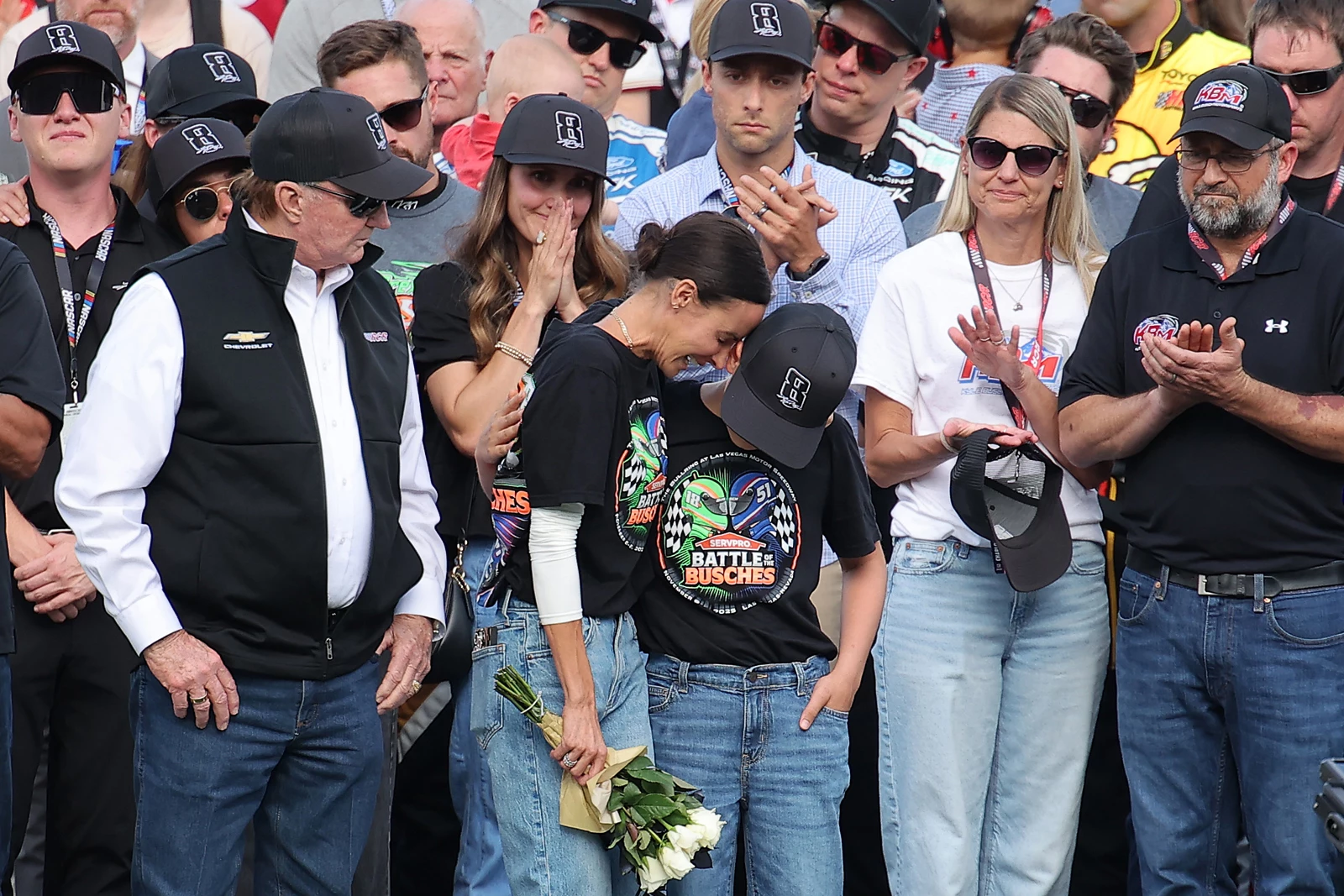
She noted the heartbreaking image of Busch’s family at the Coca-Cola 600 just days after his death.
‘I was watching the race and the finale when they brought his family out – his wife and his little children. It’s so sad.’
Busch leaves behind his wife Samantha, his son Brexton, 11, and his daughter Lennix, 4 .
In his final interview, conducted with Sean Hannity over the weekend before his death, Busch spoke proudly about his son.
‘His son was 10, just turned 11 – and how he was going to take over the racing world, too,’ Earhardt recalled. ‘He is a really good racer as well.’
WHAT THE FANS ARE SAYING

Social media has been flooded with tributes and disbelief.
On X, @NASCARHeart wrote: ‘A sinus infection. That’s how it started. A SINUS INFECTION. Went to the doctor. Get checked. Don’t wait.’
Another fan, @Rowdy4Ever, posted: ‘He won a TRUCK RACE days before he died. He was coughing up blood and still wanted to race. That’s Busch. That’s who he was. RIP to a legend.’
@SepsisAwarenessNow added: ‘This is why sepsis awareness matters. Healthy. Young. Fit. And gone in 24 hours. Share the TIME signs. It saves lives.’
THE LESSON
Busch’s death is a rare tragedy.
For a healthy 41-year-old, the risk of dying from pneumonia is less than 1% .
But rare doesn’t mean impossible.
‘No illness should ever be thought of as nothing serious,’ one medical commentator noted.
‘Who would think that a sinus infection would lead to what it leads to?’
Dr. Maves put it simply.
‘Your risk of death from pneumonia at 41 is very, very, very low,’ he said. ‘But I bet you have a grandparent. Part of the prevention is not just for ourselves but for the vulnerable people around us’ .
Vaccination against flu, COVID-19, RSV and pneumococcus can reduce the risk of severe infections that lead to pneumonia and sepsis .
But for Busch, it was too late.
‘The best way to deal with pneumonia is to prevent it,’ Maves said .