Sally Field Reveals the Hidden Struggle Behind Remarkably Bright Creatures’ Emotional Finale: “There Wasn’t a Lot of Wiggle Room”
Sally Field’s experience filming the emotional climax of Remarkably Bright Creatures became a story of endurance as much as performance, with the Oscar-winning actress pushing through extreme physical conditions to deliver one of the film’s most pivotal scenes. According to those involved in the production, the final sequence demanded not only emotional depth but also sheer physical resilience, as it was shot in relentless weather conditions that tested the entire crew.:max_bytes(150000):strip_icc():focal(999x0:1001x2)/Colm-Meaney-Sally-Field-Remarkably-Bright-Creatures-040126-68f0000c0c754d628f0fead24e64a75c.jpg)
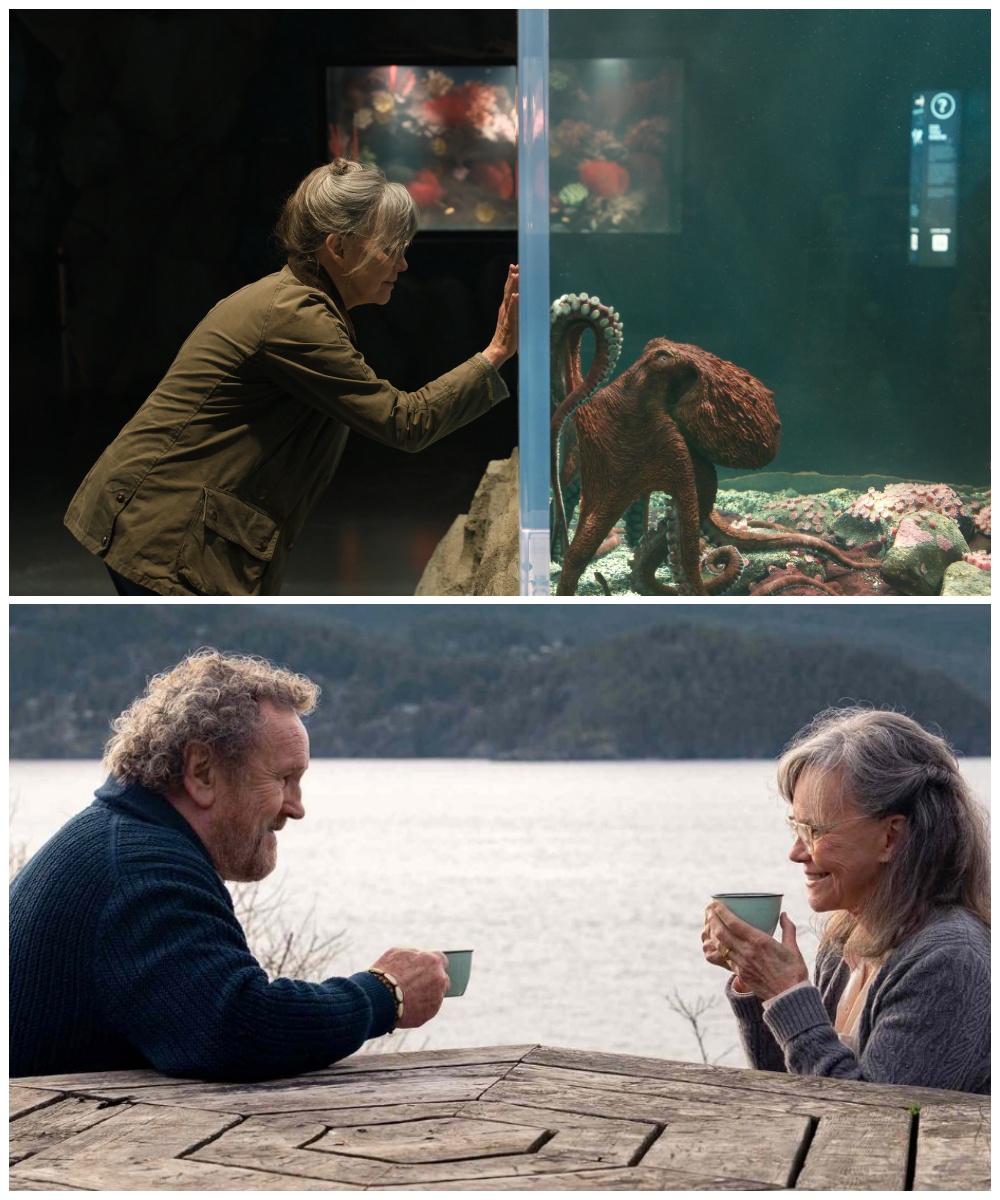
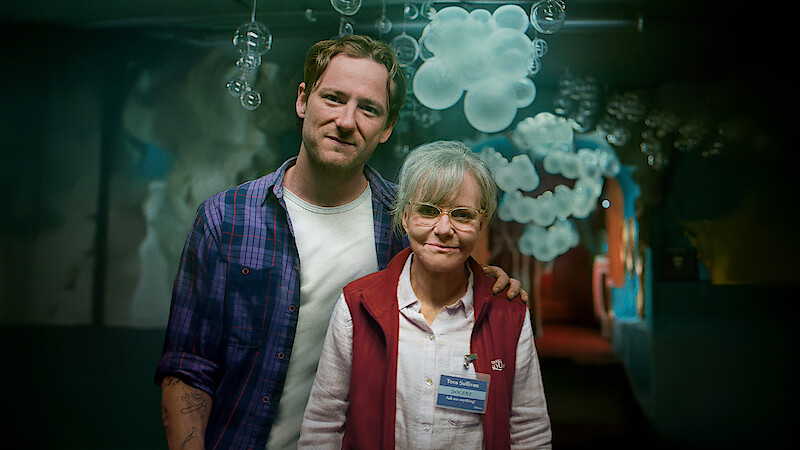
The film, adapted from the bestselling novel by Shelby Van Pelt, follows Tova, a widowed woman portrayed by Sally Field, whose life changes when she forms unexpected bonds with two very different companions: Cameron, a young musician played by Lewis Pullman, and Marcellus, a highly intelligent octopus voiced by Alfred Molina. The story blends human grief, healing, and unusual friendship into a quiet but emotionally layered narrative.
The film’s climactic moment takes place at night on a pier during a violent rainstorm, where Tova makes the heartbreaking decision to remove the ailing Marcellus from captivity and return him to the ocean so he can spend his final days in his natural environment. It is a scene built on emotional release, sacrifice, and acceptance, and it required careful coordination between performance, cinematography, and environment.
For Field, however, the challenge went far beyond acting. The scene was filmed outdoors in Vancouver, where production faced cold temperatures, heavy rainfall, and unpredictable conditions. She later described how the rain was constant and overwhelming throughout filming. Water streamed down her face, soaked her clothing, and fogged her glasses, making even basic movement difficult. Despite this, she remained committed to completing the scene without interruption.
Between takes, the atmosphere on set shifted dramatically. Crew members immediately wrapped her in thick blankets and surrounded her to help retain heat. Heated water bottles were placed under her arms in an effort to prevent her body temperature from dropping too far. The contrast between the emotionally quiet scene on screen and the urgent care happening off camera highlighted just how physically demanding the shoot had become.
Field recalled that the rain never truly let up during filming. It was not a brief weather effect but a sustained downpour that continued for hours, forcing the production to adapt in real time. Every reset between takes became a race against the cold, as the team worked quickly to warm her before the next sequence began. Despite the discomfort, she refused to step away from the performance, determined to maintain continuity and emotional truth in the scene.
The director of the film, Olivia Newman, explained that the weather conditions were carefully considered during planning. Known for her work on emotionally driven adaptations, she had previously directed films such as Where the Crawdads Sing and understood the importance of atmosphere in storytelling. For this scene, she and her team monitored forecasts closely, aware that rain would be both a challenge and a storytelling advantage.
Newman later explained that the production deliberately chose to proceed with the storm sequence because it visually and emotionally matched Tova’s internal state. The rain, while difficult to manage, added authenticity to the moment, reflecting grief, release, and transformation. The team believed that no artificial effect could replicate the emotional weight that real weather would bring to the performance.
However, the decision came with pressure. The window for filming was limited, and the team had only a short period over two days to capture the entire sequence. This created what Newman described as a situation with “very little flexibility,” where timing, lighting, and weather had to align almost perfectly. Any delay risked losing continuity, forcing the production to wait for conditions that might not return.
Despite these challenges, Newman praised Field’s professionalism and commitment. She described the actress as fully immersed in the role, willing to endure discomfort in order to preserve the emotional integrity of the scene. According to her, there was never a moment where Field considered stepping back, even as the conditions became increasingly harsh.
Field herself later reflected on the physical toll of the experience with a mix of humor and honesty. She explained that she was aware of how close the conditions were to dangerous levels, particularly when it came to prolonged exposure to cold water. She even recalled being told that once shivering stops in such conditions, it can be a warning sign of hypothermia rather than relief. Despite that awareness, she pushed through the shoot, joking that she ultimately “survived” the experience.
The emotional weight of the scene also contributed to its difficulty. Tova’s decision to return Marcellus to the ocean represents a moment of profound loss and acceptance within the story. As she stands on the pier in the storm, she is not only letting go of the octopus but also confronting her own loneliness and grief. Balancing that internal emotional breakdown with external physical hardship created a uniquely demanding acting challenge.
Meanwhile, the presence of Marcellus as a character—voiced by Alfred Molina—adds another emotional layer to the scene. Though the character is not physically present in human form, his symbolic role in Tova’s life gives the moment a sense of farewell that extends beyond species and language. The bond between them represents understanding and companionship in unexpected forms.
The film’s adaptation from the novel by Shelby Van Pelt also played a role in shaping audience expectations for this climax. Fans of the book were already familiar with the emotional intensity of the pier scene, which made its execution on screen even more significant. The production’s commitment to filming it in real rain helped preserve the authenticity that readers had imagined.
Despite being a relatively late entry in awards consideration, Remarkably Bright Creatures has begun gaining attention from critics and audiences alike. Its sensitive storytelling, combined with strong performances, has helped it rise in early rankings for television film categories, positioning it as a quiet but impactful contender in the season.
For the cast and crew, however, the focus remained less on awards and more on completing the story with integrity. The final pier sequence stands as a testament to that commitment—an example of how far filmmakers and actors are willing to go to preserve emotional truth on screen.
In the end, the combination of harsh weather, tight scheduling, and deep emotional storytelling created a scene that was as difficult to film as it was powerful to watch. And for Sally Field, enduring the freezing rain was simply part of telling a story that demanded nothing less than total hones