🚨 25CM PROJECTIL3 T@ACK — SURGE0N REVEALS A DISTURBING DETAIL IN THE BOGIE TRIPL3-MURD3R TRIAL… AND THE COURT HEARD HOW CLOSE IT CAME TO TRAG3DY
A surgeon who fought to save the life of the sole survivor of an alleged Queensland triple murder has told a jury that Ross Tighe had about two litres of blood in his abdomen and would have died without emergency surgery.
Dr Marius Jordann, who operated on Mr Tighe at Mackay Base Hospital on August 4, 2022, gave stark medical evidence as the trial of Darryl Valroy Young continued in the Supreme Court in Townsville.
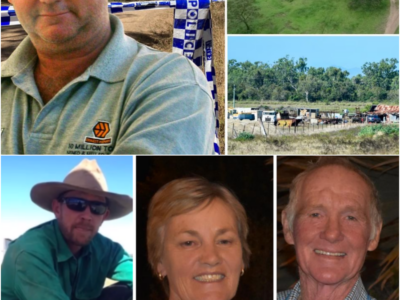
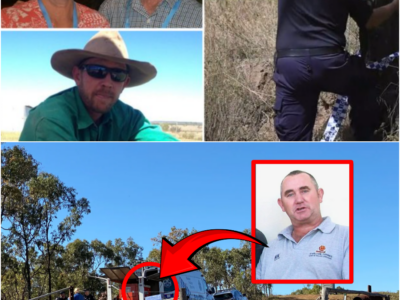
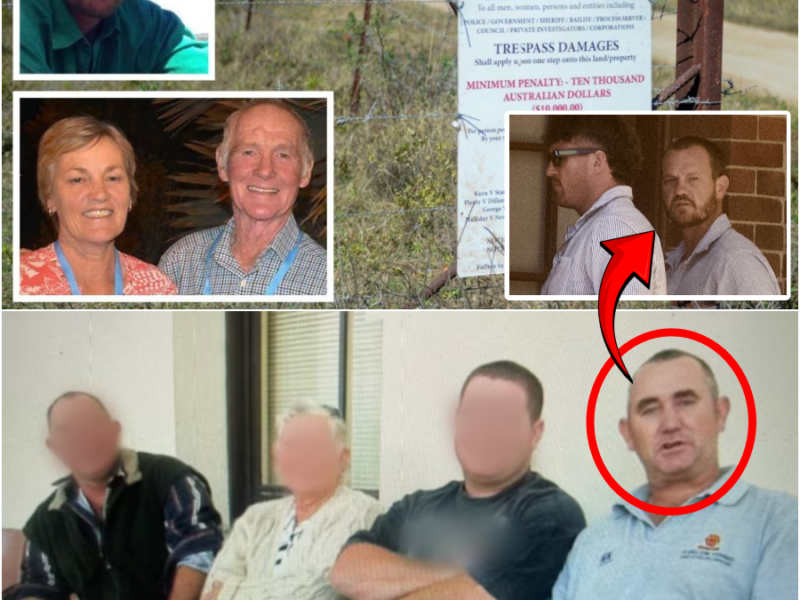
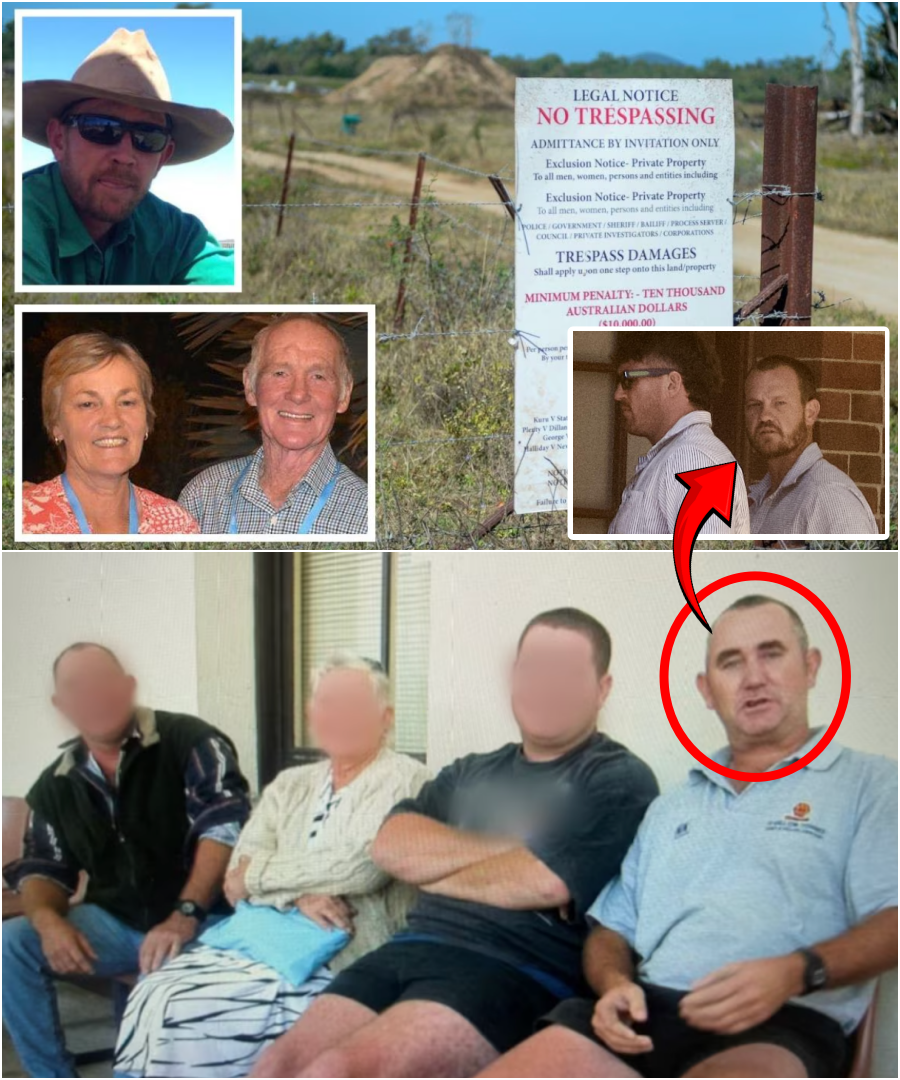
Young, 63, has pleaded not guilty to murdering Mervyn Schwarz, Maree Schwarz and Graham Tighe, and to the attempted murder of Ross Tighe. Prosecutors allege the four family members were shot when they met Young at the front gate of his Shannonvale property at Bogie.
The court heard Ross Tighe was flown by helicopter to hospital after suffering a gunshot wound to his stomach during the alleged shooting.
When Dr Jordann examined him, the injuries were severe.
The surgeon told the jury that Mr Tighe had significant internal bleeding, with about two litres of blood found inside his abdomen. Surgery was urgently required to treat the damage and control the consequences of the penetrating injury.
Dr Jordann said the wound was consistent with a small projectile entering Mr Tighe’s body and travelling through his abdomen.
The projectile track ran from left to right and was estimated to be about 25 centimetres long.
During the operation, doctors also treated injuries to Mr Tighe’s small bowel. But one piece of material described in court as shrapnel could not be removed.
According to Dr Jordann, it had travelled into the muscles beneath the inside of Mr Tighe’s pelvic bone and became lodged deep in the area.
The fragment remained inside his body because of where it had come to rest.
For the jury, the evidence offered a clinical account of the injuries suffered by the only member of the group to survive the confrontation at the Shannonvale gate.
Dr Jordann’s conclusion about what would have happened without medical intervention was equally stark.
In his opinion, Mr Tighe would have died either from uncontrolled bleeding or from infection caused by the wound if surgery had not been performed.
The medical evidence came after the jury had already heard Ross Tighe’s own account of the events of August 4, 2022.
Mr Tighe previously told the court that he, his brother Graham, their mother Maree Schwarz and stepfather Mervyn Schwarz had travelled to the front gate of Shannonvale Station for a meeting with Young.
He alleged that an argument developed before Young retrieved a rifle and began firing.
Ross Tighe told the jury he saw his stepfather shot and then ran between the vehicles in an attempt to find cover. He said he believed he was shot in the stomach as he turned away and fled.
Despite his injuries, he continued trying to escape.
He told the court he repeatedly fell as he attempted to run downhill and eventually hid in grass. After returning to the gate, he found the aftermath of the shooting and managed to drive away before getting help.
He was later flown to Mackay Base Hospital, where the emergency operation described by Dr Jordann took place.
The severity of Mr Tighe’s injuries is central to the attempted murder charge against Young.
The prosecution alleges Young was responsible for shooting all four members of the family, killing three and leaving Ross Tighe critically injured.
Young denies the allegations and has pleaded not guilty to every charge.
His defence has challenged the prosecution’s version of events and previously suggested that Young was not at the front gate when the shooting occurred.
Ross Tighe strongly rejected that suggestion during cross-examination, insisting that Young had been present.
As the trial has progressed, the jury has heard evidence from eyewitnesses, police, medical professionals and firearms experts as prosecutors seek to reconstruct what happened at the remote cattle property.
The surgeon’s testimony added another important piece to that picture: an account based not on memory or disputed observations, but on the physical condition of the survivor when he arrived on the operating table.
Dr Jordann described internal injuries that required immediate surgical attention, including the substantial loss of blood and damage to the small bowel.
The estimated 25-centimetre track through Mr Tighe’s abdomen also gave the jury a clearer picture of the path taken by the projectile after it entered his body.
That evidence followed detailed testimony from ballistics expert Sergeant Ian Bruce, who has examined ammunition, cartridge cases and the victims’ clothing.
Sergeant Bruce told the court that four spent cartridges recovered from the alleged crime scene showed markings consistent with having been fired from the same gun as a cartridge found at Young’s home. He also gave evidence about testing performed on clothing worn by the victims and the possible direction of some of the shots.
The ballistics evidence, like the surgeon’s testimony, forms part of the prosecution’s broader attempt to connect the alleged shooting at the Shannonvale gate with the physical evidence recovered during the investigation.
However, the firearms expert also acknowledged limitations in what could be concluded. The available evidence did not allow every shot to be reconstructed with precision, and some tests could not definitively establish the direction of particular wounds.
The alleged murder weapon has not been recovered, making the medical and forensic evidence especially important as the jury considers the competing accounts.
For prosecutors, the case centres on their allegation that a meeting between neighbouring cattle families ended in a devastating burst of violence.
For the defence, the allegations remain unproven, and Young maintains his innocence.
But the evidence from Dr Jordann left the jury with little doubt about one aspect of that day: Ross Tighe arrived at hospital with injuries so serious that, in the surgeon’s professional opinion, he would not have survived without urgent surgery.
With approximately two litres of blood inside his abdomen, a wound cutting a path estimated at 25 centimetres through his body, injuries to his small bowel and a fragment lodged deep in his pelvis, the survivor’s medical battle became one of the most confronting chapters yet heard in the triple-murder trial.
The trial is continuing in the Supreme Court in Townsville.
SOURCE: https://www.couriermail.com.au/subscribe/news/1/?sourceCode=CMWEB_WRE170_a_GGL&dest=https%3A%2F%2Fwww.couriermail.com.au%2Fnews%2Fqueensland%2Ftriplemurder-trial-expert-links-accused-killers-home-to-murder-scene%2Fnews-story%2F00968bcc54a7d590676f36b2deb00874&memtype=anonymous&mode=premium&v21=GROUPA-Segment-2-NOSCORE