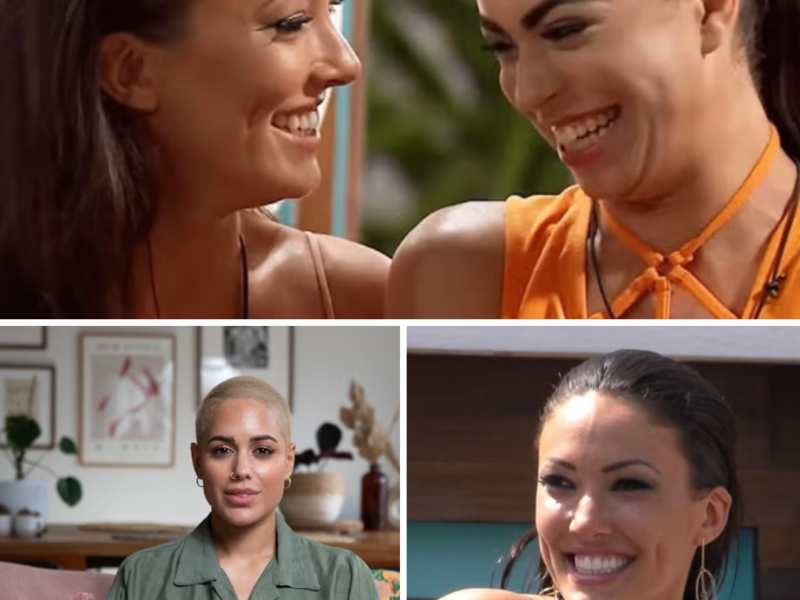
The darker side of Love Island is back in the spotlight — as a childhood friend of late star Sophie Gradon speaks out, reigniting fears about the show’s so-called “curse
The Curse of Love Island: Childhood friend of late Love Island star Sophie Gradon speaks out
He has spoken out about the late reality star in Prime Video’s The Curse of Love Island.
Steven Douglas, childhood friend of the late Love Island star Sophie Gradon, has remembered her in Prime Video’s two-part documentary, The Curse of Love Island, where he at one point stated: “I wish she never did that show.”
Sophie appeared in Love Island‘s second season, which aired in 2016, and later died by suicide in 2018, aged 32.
Speaking out in the new documentary, Douglas recalled that the pair had met when he was around 15 years old, and they quickly became “super fast friends” – a friendship, he highlighted, that had been “super super important to me”.

The Curse of Love Island, as described in the synopsis, sets out to examine “the impact of reality TV fame in the social media age. Featuring contributions from fellow contestants, industry insiders and close friends, the series explores the highs and lows of reality TV, media scrutiny, online abuse, mental health and the pressures of life in the public eye.”
Through the stories of Sophie and season three contestant Mike Thalassitis, who also later died by suicide, the documentary asks questions around duty of care, social media trolling, and life in the public eye.
Douglas recalled that he had “zero idea” that Sophie was going on Love Island, adding that she had kept “very tight-lipped” about her appearance ahead of the show.
It was only the second series since ITV’s 2015 reboot, and at that point Love Island had not yet reached the viewership and reality television juggernaut-status that it’s now known for.
Sophie made a big impact during her time on the series, becoming a fan-favourite to many, and even forming the ITV show’s first-ever same-sex couple when Katie Salmon entered the villa, following her former partner Tom Powell’s exit.

When Sophie felt the mood in the villa starting to shift – Beach Hut footage of Sophie reaching that decision was included in Prime Video’s documentary – Sophie decided it was her time to go home.
Her childhood friend Steven said in Prime Video’s new documentary that Sophie “was loving it” after the show. “She was riding the wave in the most gracious way,” he added.
Sophie’s fellow season-two Islander and friend Malin Andersson, who was also interviewed for the The Curse of Love Island, discussed the ‘financial difficulties’ that they had both started to experience once the attention from the show had started to calm down.
Steven recalled that he had started to grow concerned for his friend Sophie, saying that he thought “her spark had gone” and later adding that he thought she might be “in a vulnerable place”.
He also talked about the impact of negative comments on social media. “With the rise of fame, came the rise of the trolls,” he said.
“I think being in the industry she was in could cause some anxious feelings, mental health issues,” he continued, later adding: “And this wouldn’t have happened if she hadn’t been on the show”.
Malin claimed that Sophie had ‘tried to get in touch with Love Island‘, and that she was upset about ‘not getting anywhere’. ITV has stated that it does not recognise this claim.
As repeated in the documentary, ITV said it “takes care for those appearing on the show very seriously” and “offers psychological support for them before, during, and after filming”.

In 2019, major duty of care changes were announced for the reality show by ITV, and that has continued to evolve even more in the years since.
“This isn’t about starting to point at a show, or a company, or a person. It would be unfair to pick up one commonality and say that that was that one thing,” psychologist Dr Linda Papadopoulos, also a contributor to The Curse of Love Island, reflected towards the end of the documentary. “There are infinite reasons to kind of create this sort of perfect storm.
“If we’re saying that it’s a personality type, it’s bullying online, it’s the selection, it’s the after care, great, let’s look at each of those things, how do they interact, and where, if anywhere, can we have a positive impact?”
At the end of The Curse of Love Island, a response from ITV was featured in end-cards, which read:
ITV said that due to confidentiality they cannot comment on specific steps taken in relation to individuals’ welfare, but they do not recognise claims that Sophie looked to them to provide psychological support and “she wasn’t getting anywhere with them.”
ITV confirmed that their duty of care procedures have “evolved significantly over time – we have added elements such as language and behaviour training for participants, as well as a social media blackout for the duration of their time on the show.”
ITV has worked with medical professionals when reviewing their welfare procedures and they maintain proactive contact with islanders for a period of 14 months after the series has ended with additional help provided where needed.
ITV referred to positive comments from other former Love Islanders across multiple series praising the welfare support provided before, during and after their time on the programme.