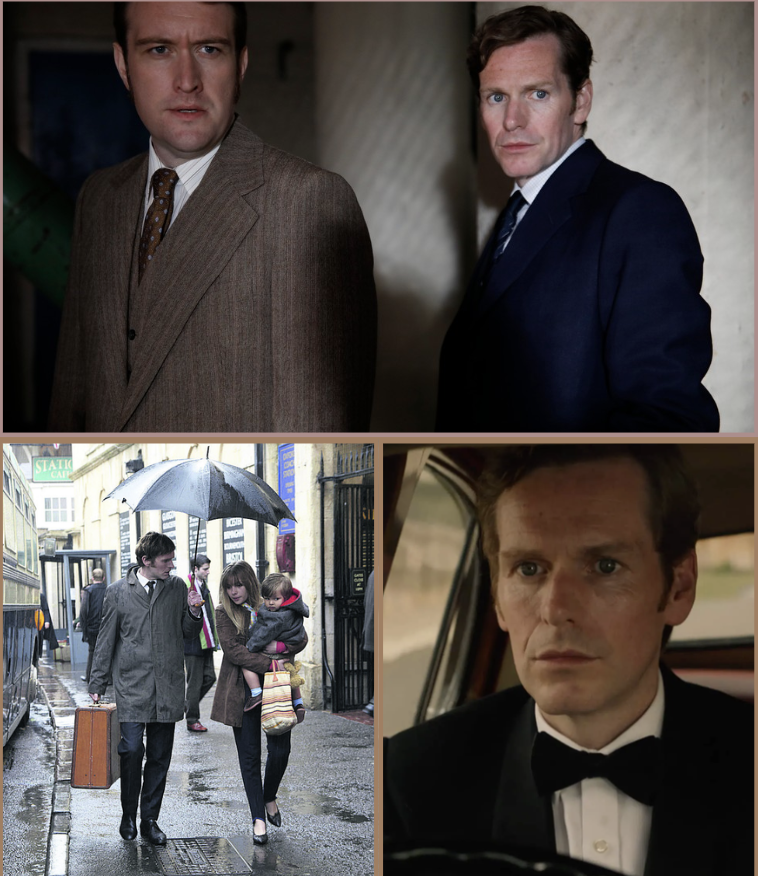
THIS BRILLIANT BRITISH DETECTIVE DRAMA REVEALS THE ORIGINS OF ONE OF TELEVISION’S MOST ICONIC INVESTIGATORS!
Among the finest British crime dramas of the modern era, Endeavour stands as a remarkable achievement. Intelligent, beautifully crafted, and consistently engaging, the series serves as a prequel to the beloved Inspector Morse, exploring the early years of one of television’s most iconic detectives.
First airing in 2012, Endeavour follows a young Detective Constable Endeavour Morse as he begins his career with Oxford City Police during the 1960s. Long before he became the brilliant but solitary detective familiar to generations of viewers, Morse was an ambitious young investigator struggling to find his place within the police force.
At the heart of the series is Shaun Evans, who delivers an outstanding performance as the young Morse.
Evans captures many of the traits that would later define the character: extraordinary intelligence, a passion for classical music, a sharp eye for detail, and a tendency to become emotionally isolated. Yet Endeavour also reveals a more vulnerable side of Morse, allowing viewers to witness the personal experiences that shape him into the man he eventually becomes.
The series begins when Morse leaves his studies at Oxford University and joins the police force. While many of his colleagues underestimate him, his exceptional analytical abilities quickly become impossible to ignore.
His talent attracts the attention of Detective Inspector Fred Thursday, portrayed brilliantly by Roger Allam.
Thursday becomes both mentor and father figure to Morse, creating one of the most compelling relationships in the entire series. Experienced, practical, and deeply loyal, Thursday recognizes Morse’s potential long before others do. Their partnership forms the emotional backbone of the drama and remains one of its greatest strengths throughout the show’s run.
Roger Allam’s performance is exceptional.
The chemistry between Allam and Evans gives the series much of its emotional weight, transforming what could have been a standard detective drama into something far more meaningful.
Each episode presents a complex murder investigation set against the backdrop of a rapidly changing Britain.
The 1960s and early 1970s were periods of enormous cultural transformation, and the series cleverly incorporates these shifts into its storytelling. Political tensions, social changes, technological developments, and evolving attitudes all influence the world Morse inhabits.
Oxford itself becomes an essential character.
The city’s historic colleges, elegant architecture, libraries, churches, and winding streets provide a stunning backdrop for the mysteries. The setting contributes enormously to the show’s atmosphere, creating a world that feels both intellectually stimulating and deeply mysterious.
Visually, Endeavour is one of the most beautiful detective dramas ever produced.
The cinematography captures Oxford with remarkable elegance, while the period detail is meticulously recreated. Costumes, vehicles, interiors, and music all combine to immerse viewers in the era.
The writing is equally impressive.
Unlike many procedural crime dramas, Endeavour often presents intricate mysteries that challenge both the detectives and the audience. The cases frequently involve literature, history, academia, music, and social issues, rewarding attentive viewers.
Yet the series never becomes inaccessible.
The investigations remain emotionally grounded, with strong character development ensuring that viewers become invested not only in the mysteries but also in the people solving them.
The supporting cast adds further depth. Anton Lesser shines as Superintendent Bright, initially appearing stern and inflexible before revealing unexpected layers of humanity. Sean Rigby provides warmth and humor as Detective Sergeant Jim Strange, while Sara Vickers brings emotional complexity as Joan Thursday, whose relationship with Morse becomes one of the show’s most memorable storylines.
One reason Endeavour resonates so strongly with audiences is its melancholy tone.
While many detective dramas focus solely on solving crimes, Endeavour also explores loneliness, regret, ambition, and sacrifice. Morse is a brilliant detective, but he often struggles with relationships and personal happiness. These flaws make him feel profoundly human.
Over nine acclaimed seasons, the series successfully bridges the gap between a young police officer and the legendary detective viewers already knew from Inspector Morse.
The result is a rich, emotionally satisfying character study wrapped inside one of television’s most consistently excellent crime dramas.
For fans of British mysteries, Endeavour is essential viewing. Combining superb performances, intelligent storytelling, stunning production values, and unforgettable characters, it remains one of the greatest detective series ever made.