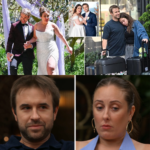
In a candid and no-holds-barred interview with Daily Mail Australia, Married At First Sight groom Steven Danyluk has finally addressed the collapse of his relationship with bride Rachel and the intense public scrutiny that followed. The 35-year-old Sydney-based mechanic offers a measured yet revealing reflection on the experiment, pushing back against accusations of ghosting while acknowledging his own missteps and the harsh realities that emerged once the cameras stopped rolling.

Married At First Sight’s Steven Danyluk has broken his silence in a no-holds-barred interview, lifting the lid on his failed relationship with bride Rachel and the controversy that followed

Steven entered the MAFS experiment as a self-described “hopeless romantic,” signing up impulsively after a night at the pub. At a stage in life where many of his peers were settling down and starting families, he sought guidance from the experts to break out of his routine of work as a mechanic, weekend fishing, and watching others move forward. Matched with Rachel in what appeared to be one of the season’s more grounded pairings, the couple’s journey began with wedding-day nerves, an awkward prank moment, and Rachel’s memorable giggle that ultimately helped ease the tension.
Early signs were promising: they shared a bed on their wedding night and enjoyed a relatively smooth honeymoon. However, cracks soon emerged. A pivotal moment during intimacy week saw Steven refuse a kiss in a key task, an action he now openly regrets. “I should’ve just kissed her,” he admitted. “But I didn’t want to be performative or fake it. There was so much going through my head.” He recognised at that point that Rachel was more invested than he was, creating an emotional imbalance that would prove difficult to overcome.

Further strain came during the couples’ retreat when a crude private comment about their sex life was publicly revealed. Steven has apologised for his “bad choice of words” but maintains the situation was exaggerated. Despite these setbacks, he insists genuine feelings developed, particularly during the homestays when he realised, “I could do life with this woman.” Rachel had his back, even with his family, which meant everything to him. Both chose to continue the relationship at Final Vows, a decision Steven stands by as he wanted to test their connection in the real world.
The true test came off-camera. With Steven in Sydney and Rachel in Melbourne, the distance exposed the fundamental gap between the protected MAFS bubble and everyday life. “MAFS isn’t real life,” he explained. “There’s no bills, no work, no responsibilities. Then suddenly you’re back in it and it hits hard.” Although they stayed in contact and spoke regularly, communication faltered. Steven flew to Melbourne to see her, but the reunion felt off. After hours of emotional conversations, Rachel asked if they were “just delaying the inevitable,” and they mutually decided to end things.

This off-camera reality — the logistical challenges, the shift in energy, and the raw conversations far from the structured experiment — proved more decisive than any on-screen drama or subsequent fan backlash. Steven describes intense online trolling, including baseless speculation about his sexuality and mental health, and criticism of his “awkward” portrayal, which he attributes partly to editing that omitted key moments of growth and emotional development in their relationship. He felt pressured by the experts during the final commitment ceremony and believes the narrative painted him unfairly as the villain.

Yet Steven is clear: there is no bad blood with Rachel. “We’re cordial. We still talk quite often. I’ve got nothing but respect for her.” He accepts responsibility for where he could have communicated better and reflects deeply on the experience. “I’ve learned I’m my own worst enemy. I was too worried about being liked instead of just being myself.”

Looking back, Steven maintains he was genuine throughout and did not ghost Rachel, emphasising that they remained in touch and he made the effort to visit. His advice to future contestants is straightforward: speak your mind and be yourself, or you’ll regret it.
The interview reveals a more nuanced picture than the edited version that aired — one of two people who formed a real connection under artificial conditions, only for ordinary life to expose its fragility. While the public backlash has been loud, Steven suggests the quiet, untelevised moments after filming wrapped carried the real weight, reshaping everything the audience thought they understood about the couple’s story.
News
“I Deserved to Win!” — Harlan Goode Addresses Explosive Fallout From Australian Idol Voting Drama
Harlan Goode breaks silence on Idol voting scandal and teases bold comeback plan “I CAN’T STAY SILENT ANY LONGER!” —…
Blonde Bombshells and Yacht Parties: MAFS Grooms Seem to Have Fully Moved On in Style
EXCLUSIVE: Newly single MAFS grooms Danny Hewitt and Steven Danyluk let loose on SeaDeck after brutal splits – as wild…
Shocking Fallout on MAFS: Three Brides Reportedly Lose Their Jobs After Controversial On-Screen Behaviour
The brides have been more explosive than ever on MAFS Australia this year, and some of them have actually lost their real-life…
SHOCKING CLAIMS SURROUND GEORGE RUSSELL’S FUTURE — Reports Spark Wild Speculation After Comments Allegedly Linked to His Camp Following a Controversial Japanese GP Weekend
The Breaking Point: George Russell’s Father Shocks the F1 World with a Radical Career Ultimatum The high-octane world of Formula…
Max Verstappen at the Center of Chaos as Nürburgring 24H Faces Unexpected Shockwave
In the misty, unforgiving forests of the Nürburgring Nordschleife – the notorious 25.378km “Green Hell” that has broken more drivers…
Inside Red Bull: Laurent Mekies Reveals Details on Tense Talks About Max Verstappen’s Future
The Final Decision: Laurent Mekies Breaks Silence on Max Verstappen and the Red Bull Internal Crisis The landscape of professional…
End of content
No more pages to load