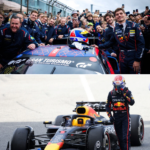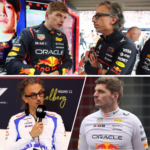

In the misty, unforgiving forests of the Nürburgring Nordschleife – the notorious 25.378km “Green Hell” that has broken more drivers and machines than any other track on Earth – one man is currently turning an entire endurance racing institution upside down.
Max Verstappen, the four-time Formula 1 world champion who needs no introduction, has become the undisputed epicentre of a storm that is threatening to overwhelm the 2026 edition of the legendary ADAC RAVENOL 24 Hours of Nürburgring.
From his shock disqualification in a recent NLS (Nürburgring Langstrecken-Serie) race after storming to victory, to the explosive “domino effect” that has caused an unprecedented surge in entries, spectator numbers and logistical chaos, everything now seems to be spiralling wildly out of control. And at the heart of it all stands the Dutch lion – a single driver whose mere presence is shaking the entire tournament to its foundations.
The drama began in earnest back in March 2026 during the second round of the NLS, the crucial warm-up series for the big 24-hour showpiece. Verstappen, making one of his preparatory appearances in a Mercedes-AMG GT3 run under the Verstappen Racing banner (in partnership with Winward Racing), delivered a masterclass. He took pole position, dominated the four-hour ADAC Barbarossapreis event alongside experienced GT aces Dani Juncadella and Jules Gounon, and crossed the line with a commanding one-minute advantage.
Fans went wild. The sight of the F1 superstar attacking the Nordschleife with the same ruthless precision he shows at Spa or Suzuka was pure motorsport theatre. Social media exploded with clips of his searing pace through the Karussell, Flugplatz and Pflanzgarten sections.
Then, two hours after the celebrations, the bombshell dropped.
The technical commission discovered that Verstappen’s team had used seven sets of tyres during qualifying and the race – one set over the strict limit of six permitted under the regulations. The win was immediately stripped away in a ruthless but rule-bound disqualification. The victory was handed instead to the Rowe Racing BMW crew of Dan Harper and Jordan Pepper.
Verstappen and the team accepted the decision with relative grace – team principal Christian Hohenadel called it “an internal error” that left stewards with no choice – but the controversy refused to die down. Was it a genuine mistake under pressure? A simple miscalculation in the heat of battle? Or, as some wild conspiracy theories on social media suggested, a deliberate ploy to test the rules ahead of the main event?
Whatever the truth, the disqualification did nothing to dampen the Verstappen fever. If anything, it poured rocket fuel on it.
Word spread like wildfire across the global motorsport community: the man who has dominated F1 is coming for the Nürburgring 24 Hours – and he means business. His participation, confirmed earlier in the year alongside a star-studded line-up including Lucas Auer, Jules Gounon and Daniel Juncadella in the #3 Mercedes-AMG GT3, suddenly transformed what was already one of the world’s toughest endurance races into the hottest ticket in racing.
The domino effect was immediate and brutal.
Organisers of the 24 Hours, already accustomed to huge crowds (the 2025 edition drew a record-breaking 280,000 spectators), found themselves swamped by an unprecedented wave of interest. Entries poured in at a rate never seen before. Privateer teams, amateur drivers, influencers, sim-racers and wealthy enthusiasts all suddenly wanted a slice of the action – many citing Verstappen’s involvement as their inspiration.
Paddock space became a nightmare. Camping areas around the 25km circuit, traditionally a free-for-all pilgrimage site for die-hard fans, began filling up weeks in advance. Reports emerged of fans arriving as early as Monday morning for the May race weekend just to secure a decent spot. Some areas reportedly reached capacity days before official practice even began.
Logistical chaos ensued. Local roads leading to the Eifel region turned into parking lots. Food vendors, toilet facilities and medical services struggled to cope with the sheer volume of humanity descending on the remote German countryside. Ticket sales for grandstands and general admission soared, with secondary markets seeing prices rocket as high as three or four times face value.
Faced with a potential safety and organisational crisis, the ADAC and Nürburgring organisers were forced to act – and act fast.
In an urgent move that has never been required on this scale before, officials implemented a rigorous new screening and approval process for additional entries. Every late application is now being scrutinised for technical compliance, driver experience on the Nordschleife (a notoriously difficult track to master), and even basic logistical feasibility. Some amateur entries have reportedly been turned away or delayed, sparking accusations of favouritism toward professional outfits.
One senior organiser, speaking anonymously to Daily Mail, admitted the situation had become “almost unmanageable” in the space of just a few weeks.
“Max Verstappen’s name carries enormous weight. His participation has brought global attention we could only dream of – but it has also created pressures we were not fully prepared for. The domino effect from that NLS disqualification only amplified everything. Suddenly everyone wanted to be part of the story. We’ve had to intervene urgently to protect the integrity and safety of the event.”
The disqualification itself continues to fuel debate. Some pundits argue it highlighted the razor-thin margins in endurance racing, where tyre management is everything over 24 gruelling hours. Others see it as a wake-up call for Verstappen’s team ahead of the main event – a valuable lesson learned in the build-up rather than during the race itself when the consequences would be far more painful.
Verstappen, true to form, has remained characteristically blunt when asked about the incident. In interviews, he shrugged off the controversy, focusing instead on his love for the Nordschleife and his long-held ambition to tackle the full 24-hour epic.
“I’ve always wanted to do this race,” he said in one recent paddock chat. “The Nürburgring is special. It’s raw, it’s challenging, and it doesn’t care who you are. That’s what I like about it.”
His presence has already transformed the grid. The SP9 GT3 class, the premier category, now features an even stronger field with multiple works-supported entries looking to take the fight to the Verstappen Racing Mercedes. Falken Motorsports, Rowe Racing, and other heavyweights have upped their game, knowing they will be racing not just for glory but against one of the most watched drivers on the planet.
For fans, the appeal is obvious. The chance to see a current F1 superstar battling it out on the same public roads that form the Nordschleife – often in the dead of night, in pouring rain, or through thick fog – is the stuff of legend. Verstappen’s sim-racing background and his fearless style have only heightened the excitement.
Yet the overcrowding has raised genuine safety concerns. The Nürburgring 24 Hours has always been a dangerous event; the combination of professional GT3 cars, slower touring cars, and amateur drivers on a track with limited run-off areas demands absolute focus. With thousands more spectators than usual cramming into every vantage point, the risk of incidents involving fans has organisers on high alert.
Emergency services have reportedly been bolstered, additional barriers and signage installed, and strict crowd-control measures introduced in key areas. Some popular viewing spots have even been temporarily restricted to prevent dangerous overcrowding on hillsides or near track edges.
Inside the paddock, the atmosphere is electric but tense. Mechanics and engineers from dozens of teams are working around the clock, not just to prepare cars but to navigate the additional scrutiny that comes with the Verstappen effect. Media accreditation requests have skyrocketed, with international broadcasters and journalists descending on the Eifel in numbers usually reserved for major F1 races.
Verstappen’s co-drivers – experienced endurance specialists Auer, Gounon and Juncadella – bring serious pedigree to the #3 car, making it one of the favourites despite the earlier tyre drama. The team has used the disqualification as motivation, fine-tuning their processes and ensuring no repeat mistakes when the real test begins.
As the May 16-17 weekend approaches, the question on everyone’s lips is simple: can the Nürburgring 24 Hours cope with the Verstappen tsunami?
The race has a proud history of weathering storms – both literal and metaphorical. It has survived fog, snow, multiple serious accidents and organisational challenges in the past. But never before has a single driver’s participation created quite this level of external pressure.
Some veterans of the event welcome the attention, arguing it brings much-needed investment and prestige to a race that sits somewhat in the shadow of Le Mans. Others worry that the “Max effect” could dilute the raw, grassroots spirit that has always defined the Nürburgring 24 Hours – turning it into more of a celebrity spectacle than a pure test of endurance.
For Verstappen himself, the motivation appears straightforward. After years of dominating F1 and expressing occasional frustration with certain aspects of the championship, the Nordschleife offers a different kind of challenge – one where strategy, tyre wear, weather and sheer stamina over 24 hours matter as much as raw speed.
His earlier NLS outings, even the one that ended in disqualification, have given him valuable seat time and helped him build confidence on the daunting track. Now, with the full 24-hour race looming, the eyes of the world will be watching to see if the F1 superstar can translate his talent to one of endurance racing’s ultimate proving grounds.
Back in the F1 paddock, his Red Bull bosses have given the green light for the adventure, recognising it as a way for their star to stay sharp and enjoy his passion for racing beyond the confines of grand prix weekends.
As one Red Bull insider put it: “Max loves racing, pure and simple. The Nürburgring 24 Hours has been on his bucket list for a long time. We support him fully – as long as he comes back ready to fight for more F1 titles.”
Whether he returns with a famous victory or simply valuable experience, one thing is already certain: Max Verstappen’s involvement has changed the 2026 24 Hours of Nürburgring forever.
The disqualification that started it all may have cost him a smaller trophy, but it helped ignite a fire that has engulfed the entire event. The domino effect continues to ripple outward – more fans, more entries, more chaos, more excitement.
Organisers are intervening urgently. Screening processes are being tightened. The Green Hell is bracing itself for the biggest storm it has seen in years.
And at the centre of it all, one person continues to shake the entire tournament: a 28-year-old Dutchman in a Mercedes GT3 who refuses to do anything quietly.
As the lights go out for the start of the 2026 24 Hours, millions will be tuning in – not just to watch a race, but to witness history being made on the most fearsome track in the world.
Love him or hate him, you cannot ignore him.
Max Verstappen has arrived at the Nürburgring. And the Green Hell – along with everyone connected to the 24 Hours – will never be quite the same again.
News
Inside Red Bull: Laurent Mekies Reveals Details on Tense Talks About Max Verstappen’s Future
The Final Decision: Laurent Mekies Breaks Silence on Max Verstappen and the Red Bull Internal Crisis The landscape of professional…

Joe McCann’s Ex-Wife Speaks as New Details Surface in Ashley Jenae’s De_ath in Zanzibar
A Case That Sparked International Attention The sudden death of Ashley Jenae during a trip to Zanzibar has become the…
Is YNW Melly Finally Getting Released? New Timeline Reports Spark Massive Buzz
In a stunning court development, YNW Melly’s release date has been officially set for April 30th after seven grueling years…

Rumors Surround d4vd After Explosive Claims in Case Linked to Celeste Rivas
SHOCKING ARREST: Singer D4VD Detained In Brutal Murder Of 14-Year-Old – But Why No Charges Yet? The long-awaited moment finally…

Carey Mulligan & Oscar Isaac Lead Wildly Twisted Season 2 That Has Everyone Talking
Starring Carey Mulligan, Oscar Isaac, Charles Melton and Cailee Spaeny, the new instalment follows two couples: newly engaged Gen Z pair Ashley and…

Last Chance to Watch This Emotional Love Story Before It Vanishes from Netflix
A comedy-drama movie that boasts Lesley Manville and James Norton in its supporting cast is set to leave Netflix in the coming…
End of content
No more pages to load