Nigel Mansell Sparks Debate After Blunt Remarks on Modern F1, Arguing That Some Overtakes Don’t Represent the Real Essence of Competitive Racing
The Art of the Overtake: Nigel Mansell and the Global Debate Over Real Racing in Formula 1
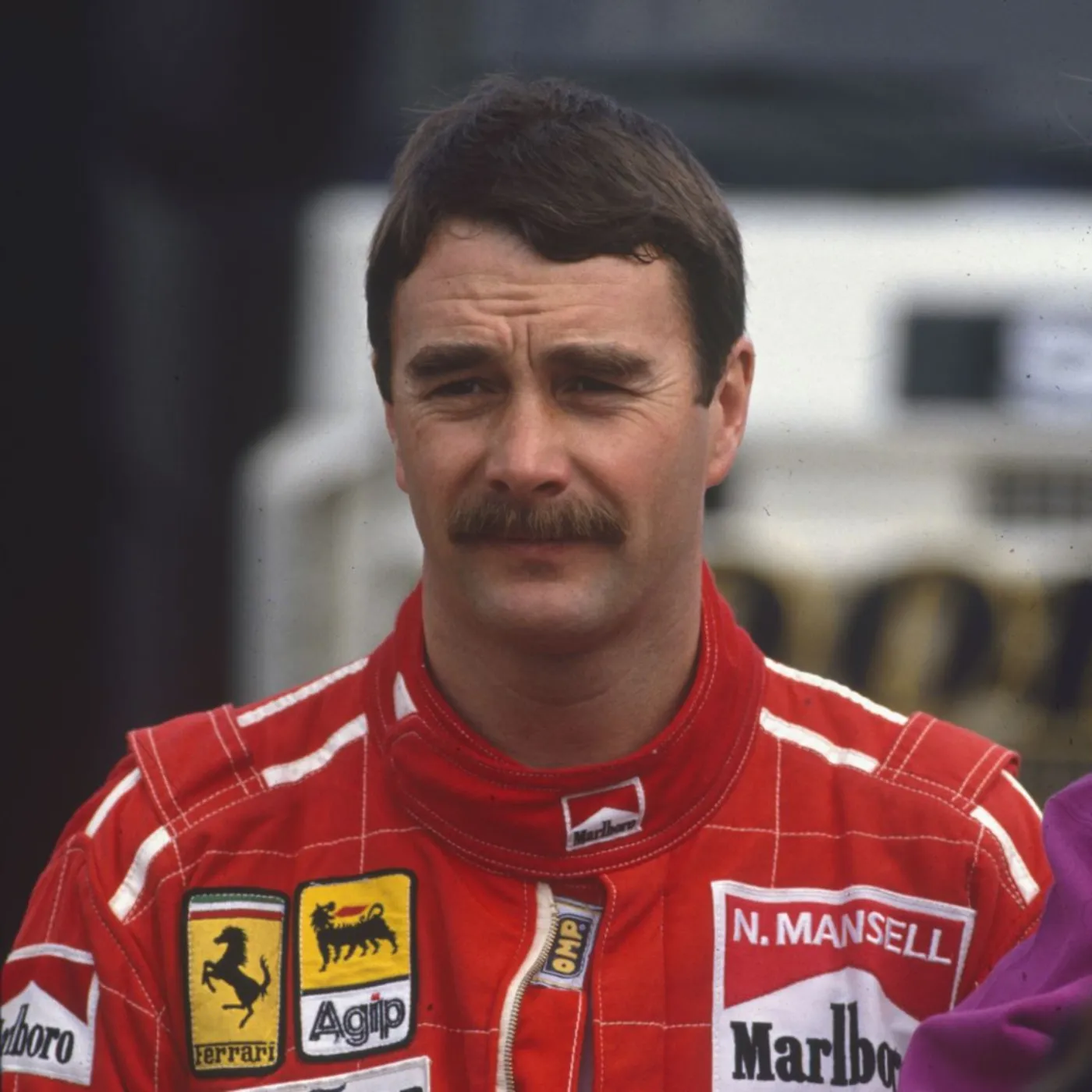
The world of international motorsports has always been defined by the thrill of the pass. For decades, fans have flocked to circuits from Silverstone to Interlagos to witness the high-speed chess match that occurs when one driver attempts to seize a position from another. However, the modern era of Formula 1 has introduced a set of technical variables that have left some legends of the sport questioning the authenticity of the action on track. In a recent and characteristically blunt assessment, former World Champion Nigel Mansell ignited a firestorm within the racing community by suggesting that while the quantity of overtaking has increased, the quality and “reality” of those moves have diminished. Mansell famously stated that “lots of overtaking is happening, but not all of them are real,” a comment that served as a direct critique of the current aerodynamic and technical regulations governing the 2026 F1 season.
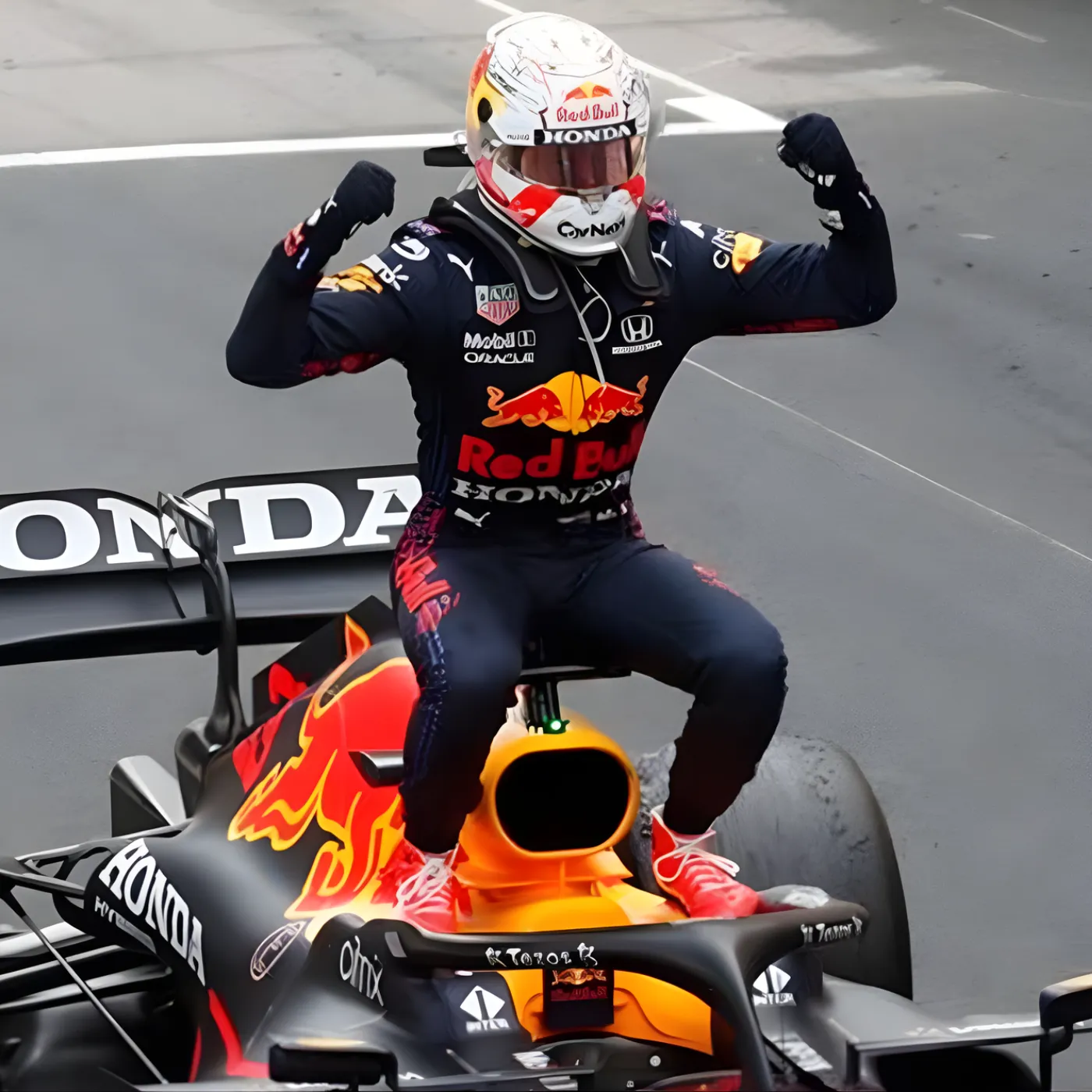
The debate escalated almost immediately when Mansell’s traditionalist views were compared to the aggressive, uncompromising driving style of Max Verstappen. Verstappen, the dominant force of the modern era, represents a philosophy of racing that prioritizes efficiency, data-driven precision, and the maximization of technical tools like the Drag Reduction System (DRS). When these two worlds collide—the “Red 5” era of brute strength versus the “Verstappen era” of digital mastery—the resulting conversation forces us to ask a fundamental question: What actually constitutes “real racing” in the pinnacle of motorsport?
The Nigel Mansell Philosophy: Racing Without Electronic Crutches
To understand Nigel Mansell’s perspective, one must look back at the era of the late 1980s and early 1990s. This was a time when cars were notoriously difficult to handle, featuring massive turbocharged engines and a significant lack of electronic driver aids compared to today’s standards. For Mansell, an overtake was a physical and psychological victory that required out-braking an opponent into a corner or finding a gap where none seemingly existed. He argues that in the modern era, many passes are “artificial” because they are facilitated by push-to-pass buttons and DRS zones that make the defending car essentially defenseless on the straight.
Mansell believes that the Formula 1 overtaking statistics of the current decade are inflated by these technical assists. In his view, a “real” overtake is one where the driver must earn the position through superior car control and bravery, rather than simply waiting for a designated zone on the track where their rear wing opens to grant a 15-20 km/h speed advantage. This sentiment resonates with a significant portion of the fan base that feels the “gladiator” element of the sport has been sanitized by an over-reliance on technology.
Max Verstappen and the Modern Definition of Dominance
On the other side of the grid sits Max Verstappen, a driver who has mastered the modern regulations to a degree that is statistically staggering. Verstappen’s approach to racing is built on the reality of the current hardware. He is not a driver who looks back with nostalgia; he is a driver who exploits every millimeter of the track and every line of code in the ECU to secure victory. The Max Verstappen driving style is characterized by late braking, incredible spatial awareness, and a ruthless efficiency in using DRS to his advantage.
When critics like Mansell suggest that modern overtakes aren’t “real,” the Verstappen camp argues that the skill has simply shifted. It is no longer just about the physical wrestle with the steering wheel, but about the mental management of battery deployment, tire temperatures, and aerodynamic wake. To Verstappen, “real racing” is about winning within the rules provided. If the rules allow for DRS, then using it perfectly to minimize risk and maximize speed is the mark of a superior professional. This clash of philosophies is the core of the Formula 1 racing debate in 2026.
The Impact of the 2026 Technical Regulations on Overtaking
The 2026 F1 technical regulations were designed specifically to address the concerns raised by traditionalists like Mansell. The introduction of active aerodynamics and a more balanced power delivery between the internal combustion engine and the electric motor was intended to make following another car easier. However, the unintended consequence has been a further reliance on automated systems to regulate the “racing room.” The cars are now more sensitive to “dirty air” than ever, meaning that without technical assists, overtaking would be virtually impossible on many modern street circuits.
This technical reality creates a paradox. To have the “lots of overtaking” that fans demand for entertainment, the sport must use “unreal” methods like DRS. If the FIA were to remove these assists, as Mansell suggests, the races might return to the “procession” style of the early 2000s, where the fastest car simply leads from start to finish without any position changes. The F1 aerodynamics of the modern car are so efficient that they create a vacuum behind them, making the “real” pass that Mansell dreams of a physical impossibility without some form of intervention.
Evaluating the Quality of the Overtake: Bold vs Artificial
One of the most contentious points in the Mansell vs Verstappen debate is the location and nature of the pass. Mansell famously overtook Ayrton Senna or Nelson Piquet in high-speed corners or through daring dives into the chicane. In contrast, many of the passes seen in the 2026 Grand Prix calendar happen halfway down a 1.2-kilometer straight. Critics argue that these “highway passes” lack the drama and skill of a corner-entry battle. They feel like a mathematical inevitability rather than a sporting achievement.
However, supporters of the current system point to Verstappen’s race craft as evidence that skill still matters. Verstappen often sets up an overtake three or four corners in advance, sacrificing a line in one turn to ensure a better exit for the next. This strategic thinking is a form of “real racing” that is often invisible to the casual viewer. The “realness” of the move isn’t just in the moment the car moves ahead, but in the laps of preparation that made the move possible.
The Role of Sim Racing in Shaping Modern Driver Skills
An overlooked factor in this debate is how the younger generation of drivers, led by Verstappen, has been shaped by the world of sim racing. Modern drivers spend thousands of hours in high-fidelity simulators that allow them to practice every possible overtaking scenario. This has led to a level of “automated” excellence that can appear artificial to an older generation. When Mansell raced, he was relying on “seat of the pants” feel and intuition. Verstappen is relying on a mental database of simulated outcomes.
This digital preparation allows for more precision, which some perceive as a lack of “soul.” When a driver knows exactly how the car will react because they have practiced that specific move a thousand times in a virtual environment, the element of “chance” is reduced. For Mansell, the “realness” of racing was in the uncertainty. For the Red Bull Racing star, the “realness” is in the elimination of that uncertainty through superior preparation.
Fan Perspectives: Entertainment vs Sporting Integrity
The Formula 1 fan base is currently divided along generational lines. Younger fans, who grew up with the high-action, DRS-heavy races of the last decade, generally enjoy the high frequency of overtaking. They view the sport as an entertainment product that needs to be exciting from start to finish. To them, more overtakes equals a better race, regardless of how those overtakes are achieved. They appreciate the Verstappen dominance as a display of peak athletic performance.
Older fans, who remember the “unfiltered” era of the 1980s, often side with Mansell. They would prefer to see three “real” overtakes per race than thirty “artificial” ones. They believe that the sporting integrity of F1 is compromised when the car in front has no way to defend because of a technical rule. This segment of the audience misses the days when a slower car could hold off a faster car through clever defensive driving—a tactic that is almost impossible in the DRS era.
The Evolution of Defensive Driving in the 2020s
Defensive driving has also undergone a massive transformation. In the era of Nigel Mansell, moving under braking was common, and “squeezing” an opponent toward the grass was part of the game. Today, the FIA sporting regulations are much stricter, with specific rules about moving once to defend and leaving “one car width” of space. These rules, while making the sport safer, also contribute to the “unreal” feeling that Mansell describes.
When a defender is restricted in how they can protect their position, the overtake becomes easier. Max Verstappen has often been at the center of this controversy, as his aggressive defending has sometimes pushed the boundaries of the rules. The irony is that when Verstappen defends “realistically” (i.e., aggressively), he is often penalized, which further encourages the “artificial” highway passes that Mansell dislikes. The sport seems to be at a crossroads where it wants the excitement of battle but fears the reality of contact.
The Economic Influence: Why F1 Needs High Overtake Numbers
It is important to consider the commercial side of the Nigel Mansell critique. Formula 1 is a global business worth billions of dollars, and television networks demand highlights. High overtaking numbers look good in press releases and social media clips. If the sport were to revert to the “real racing” of the 1990s, where positions were rarely changed on track, the casual audience might lose interest.
The Formula 1 marketing strategy relies on the perception of constant action. This is why the “artificial” elements are unlikely to be removed. The sport has chosen to prioritize the volume of action over the “purity” of the maneuvers. For a legend like Mansell, this is a betrayal of the sport’s roots. For a champion like Verstappen, it is simply the environment in which he must win.
Safety vs The Raw Nature of the Sport
Another factor that distinguishes the “real racing” of the past from the modern era is the element of risk. Mansell raced in an era where a mistake could be fatal. The runoff areas were grass or gravel, and the barriers were often just tires or hay bales. This physical danger added a layer of “reality” to every move. The driver knew that a botched overtake could result in a massive accident.
Today’s circuits are designed with massive asphalt runoff areas and “Tecpro” barriers. While this is a massive victory for safety, it has changed the driver psychology. A driver like Verstappen can afford to be more aggressive because the consequences of a mistake are often just a trip through the runoff and a loss of a few seconds, rather than a season-ending injury. Mansell’s “real racing” was forged in a furnace of high consequence, whereas modern racing is a high-speed game played in a very safe sandbox.
The Future of Overtaking: Toward a Balanced Approach
As the sport moves deeper into the 2026 season and looks toward the 2030s, the goal should be to find a middle ground between Mansell’s purity and Verstappen’s efficiency. The Formula 1 Commission is constantly looking at ways to reduce the “DRS effect” while still allowing cars to follow closely. One proposal is the “manual override” system, where drivers have a limited amount of extra energy they can use throughout the race, similar to the “Push to Pass” system in IndyCar.
This would return an element of strategy to the overtaking process. Instead of having an infinite number of DRS assists, a driver would have to decide when and where to use their extra power. This would satisfy Mansell’s desire for “real” decision-making while acknowledging the technical realities that Verstappen excels at. It would turn the overtake back into a contest of skill and management rather than a simple rule of physics.
Analyzing the “Realest” Overtakes of the Verstappen Era
Despite his criticisms, even Mansell would have to admit that some of Max Verstappen’s overtakes have been breathtaking. Moves like his pass on the outside of Blanchimont at Spa or his aggressive lunge at the final corner in Abu Dhabi 2021 (regardless of the controversy surrounding the restart) are examples of world-class skill. These moves don’t rely solely on DRS; they rely on a driver seeing a gap and having the courage to take it.
This proves that “real racing” still exists in the modern era; it just happens less frequently than the “artificial” passes. The challenge for the sport is to highlight these moments of pure skill over the mundane highway passes. We need to celebrate the driver’s instinct rather than just the car’s top speed. When Verstappen is forced to work for a position, he proves that he is a worthy successor to the legends of the past.
The Role of Technology in the “Reality” of the Race
We must also ask if technology itself can be “real.” For Nigel Mansell, technology was a tool to be wrestled with. For the modern fan, the technology IS the race. Seeing the data overlays of Verstappen’s throttle and brake telemetry provides a new kind of “reality” that fans in the 90s didn’t have. We can see the “real” effort the driver is putting in, even if the pass itself looks easy on television.
The F1 television broadcast has become so advanced that it allows us to see the “micro-battles” happening inside the car. We can see Verstappen adjusting his brake balance mid-lap to prepare for a pass three turns later. This is a “real” sporting effort that Mansell’s generation performed purely by feel. Perhaps the definition of “real” has just evolved from the physical to the intellectual.
A Sport Defined by its Evolution
The debate between Nigel Mansell and the modern era is a sign of a healthy sport. It shows that the history and the “soul” of Formula 1 still matter to the people who made it great. Mansell is right that the “art” of the overtake has changed, and he is right to point out that some passes are more “artificial” than others. However, we cannot ignore the incredible level of talent required to drive a 2026 Formula 1 car at the limit.
Max Verstappen is not just a driver of “artificial” overtakes; he is a driver who has adapted to the most complex racing environment in history. His skill is real, his speed is real, and his championships are real. The sport must continue to evolve, finding ways to make the “show” exciting without losing the “purity” that makes a pass a true achievement. Whether you side with the “Red 5” traditionalism of Mansell or the “Orange” dominance of Verstappen, we can all agree that the pursuit of the overtake is what makes Formula 1 the greatest spectacle on earth.
The race is only just beginning, and as the technical landscape continues to shift, the definition of “real racing” will continue to be written by the men brave enough to sit in the cockpit. We may never return to the raw, unassisted days of the early 90s, but as long as drivers like Verstappen are pushing the boundaries of what is possible, the “art of the overtake” will remain a vital and thrilling part of the NASCAR and F1 world.