JUST MINS AGO: King Charles has shared a deeply moving new reflection on Queen Elizabeth’s final days at Balmoral — and royal fans say his words are leaving them emotional.
Writing in the foreword to a new official guidebook about the royal family’s Scottish estate, the King opened up about the special place
ing Charles has shared a deeply personal reflection on Queen Elizabeth II’s final days, revealing just how much Balmoral meant to his late mother in an emotional new tribute.
Writing in the foreword to a new official guidebook about the royal family’s Scottish estate, the King opened up about the special place Balmoral has held in his family’s heart for generations, while offering a poignant insight into why it remained so important to the late Queen until the very end of her life.
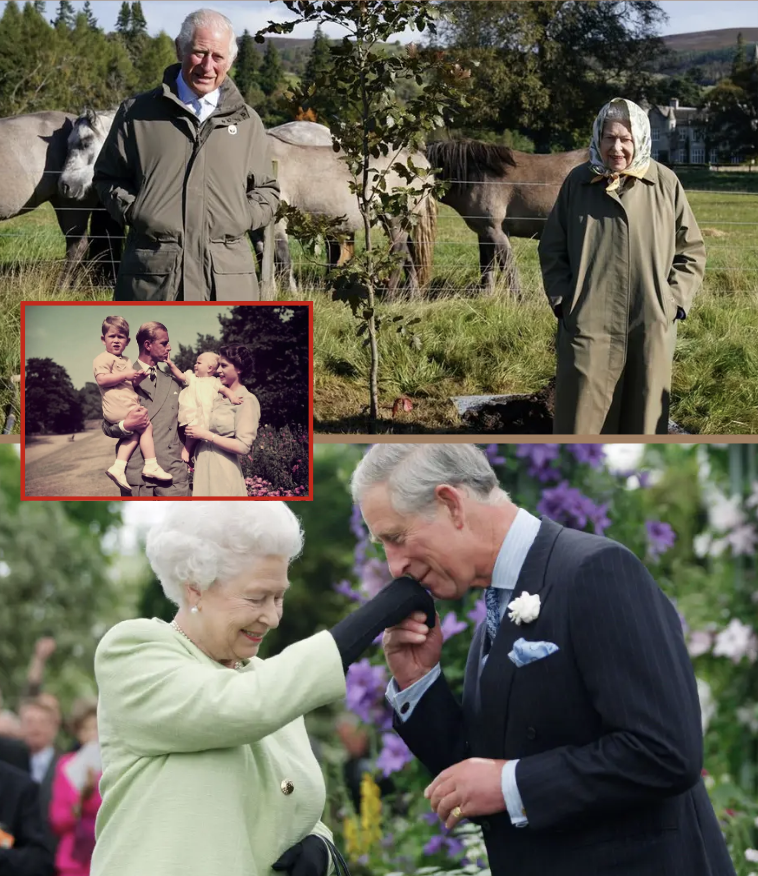
“My late mother particularly treasured her time at Balmoral,” Charles wrote. “It was here, in these most beloved of surroundings, that she chose to spend her final days.”
 © Bettmann Archive
Queen Elizabeth II and Prince Philip, Duke of Edinburgh with their children, Prince Andrew (centre), Princess Anne (left) and Charles, Prince of Wales sitting on a picnic rug outside Balmoral Castle
You may also like
The touching admission is one of the most personal reflections the monarch has shared about his mother’s death since Queen Elizabeth passed away peacefully at the Aberdeenshire estate on September 8, 2022, aged 96.
For millions around the world, Balmoral became forever linked to the end of Britain’s longest-reigning monarch. For the royal family, however, it has always represented something far more intimate: a place of family memories, laughter, freedom and refuge from public life.
 © Bettmann Archive
Balmoral was a very special place for the Queen
In his foreword, Charles described Balmoral as a sanctuary unlike any other. “Balmoral has been the cherished Scottish home of my family since the estate was purchased by Prince Albert, my great-great-great-grandfather, in 1852,” he wrote.
“With its buildings of startling individuality, which never fail to fascinate, and its precious, almost sacred, surrounding landscape, it is a place where there is constant change, yet everything remains unaltered, with a sense of timelessness which refreshes the soul.”
The King also revealed that his own connection to the estate stretches back to his earliest years. “Since my earliest childhood, it has held, and continues to hold, a uniquely special place in the hearts of my family and myself,” he said.
 © POOL/AFP via Getty Images
Queen Elizabeth II and Charles before her death
For Queen Elizabeth, Balmoral was widely regarded as her happiest place. Away from the formality of palace life, she could spend time riding horses, walking across the Highlands, enjoying picnics by the river and gathering with children, grandchildren and great-grandchildren each summer.
Former prime ministers and close family friends often spoke about seeing a different side of the Queen at Balmoral, where she appeared more relaxed and at ease than anywhere else.
Harold Wilson, who famously enjoyed a warm friendship with the monarch, was invited to spend time at the estate and joined the royal family for riverside picnics during his visits.
Charles concluded his foreword by expressing his hope that visitors to Balmoral would be able to experience some of the same magic that captivated his mother and generations of royals before her.
“Whatever the circumstances in which you are reading this book, I hope that you, too, will be inspired by the rich complexity of the architecture and share in the magic of the surrounding countryside, whose ‘wild and majestic’ landscape has been the source of inspiration and enjoyment for so many.”
 © Getty Images
The royal family in the grounds of Balmoral Castle in Scotland, 26th September 1952
The King’s tribute appears in the new 80-page guidebook, Balmoral, written by journalist and historian Mary Miers.
The publication opens with one of Charles’s own watercolour paintings of the castle, painted in 1989, highlighting his longstanding personal connection to the estate.
Since ascending the throne, the King has carefully balanced preserving Balmoral’s historic character while subtly introducing his own vision.
In July 2024, he made history by opening the castle’s interior to the public for the first time in more than 170 years, allowing visitors unprecedented access to one of the royal family’s most treasured residences.
He has also overseen several changes to the grounds and interiors. According to the guidebook, the ballroom lawn has been transformed into an intricate maze inspired by geometric patterns, reflecting Charles’s lifelong passion for architecture and design.
Elsewhere, the wrought-iron gates in Queen Mary’s Garden were restored and updated in 2023 to mark both their centenary and the coronation of Charles and Queen Camilla, incorporating the royal couple’s cyphers.
Inside the castle, additional furniture, artworks and decorative pieces from the Royal Collection have been introduced, alongside new carpets and furnishings that complement the historic interiors.
Author Mary Miers believes the changes continue a tradition first established by Queen Victoria and Prince Albert, who purchased the estate in 1852 after falling in love with the Scottish Highlands.
“Balmoral will forever be associated with Victoria and Albert’s love affair with the Highlands,” she explained.
“Now that Balmoral is more publicly accessible, it’s possible to appreciate how central the Prince Consort’s interests in architecture, design, landscaping and estate management were to its creation, and how effectively the King, who shares these passions, has added a new layer of interest and style, while preserving and enhancing the original.”