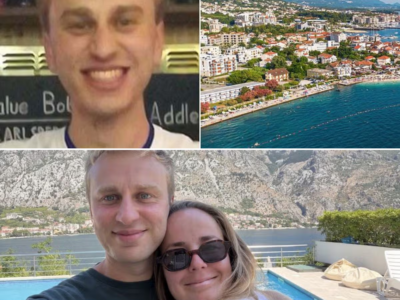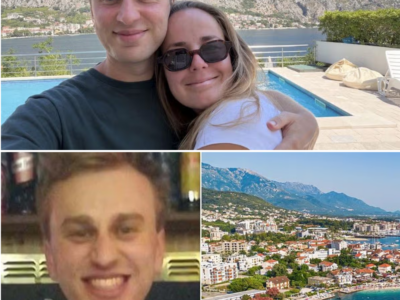
Once the Prison Gates Closed, the Nightmare Began – Jamie Varley’s Transfer to HMP Wakefield Sparks Fear Over Brutal Reputation Inside Notorious Jail
Grisly Child Abuser Deaths in Notorious Jail Where Baby Preston’s Dad Will Rot
WARNING GRAPHIC CONTENT – Jamie Varley is serving his whole life sentence at HMP Wakefield, a brutal prison where inmates mete out their own form of justice on child abusers.
Sobbing in his cell and cowering in fear, Jamie Varley is living on borrowed time. The child killer has a bounty on his head, it’s been claimed, after being found guilty of sexually abusing and murdering his adopted baby son, Preston Davey.

Having received a whole life order, Varley will spend the rest of his days at the notorious HMP Wakefield, a Category A prison known as ‘Monster Mansion’.
Former prisoners say there is a hierarchy within Wakefield, with those who have committed crimes against children on the lowest rung. They are often violently targeted, and given Varley’s vile offences and his high-profile case, he is a prime target.
On his first night in his cell, Varley, 37, was reportedly left ‘sobbing and quaking’ as fellow cons hammered on bars and vowed retribution for the insidious abuse he inflicted on Preston.

He is right to fear violence; in the past year alone two child abusers, Kyle Bevan and Ian Watkins, have been attacked and killed in Wakefield.
Varley is said to be confined to his cell, with guards monitoring him 24/7 for his safety. He also reportedly remains under 24-hour suicide watch. Varley’s partner, John McGowan-Fazakerley, is serving his 25-year sentence at HMP Durham – and is also likely to be a target.
The Mirror spoke to Steve Gallant, a convicted murderer who spent 16 years in prison. He is now a changed man, having been awarded a Gallantry Medal for helping stop the London Bridge attacker while on day release. But he knows the reality of life behind bars.
“These wings are full of people with very predatorial tendencies – if they see weakness, they’ll go for it. So if you’re isolated on your own, you’re vulnerable,” he says.

“Varley is going to be very, very vulnerable, even on the VP unit, because of what he did to that child, make no mistake about it. And my assumption is that at some point he’s probably going to get targeted.”
As Varley begins his new life of torment, The Mirror takes a look at child abusers who have previously died in Monster Mansion…
Kyle Bevan
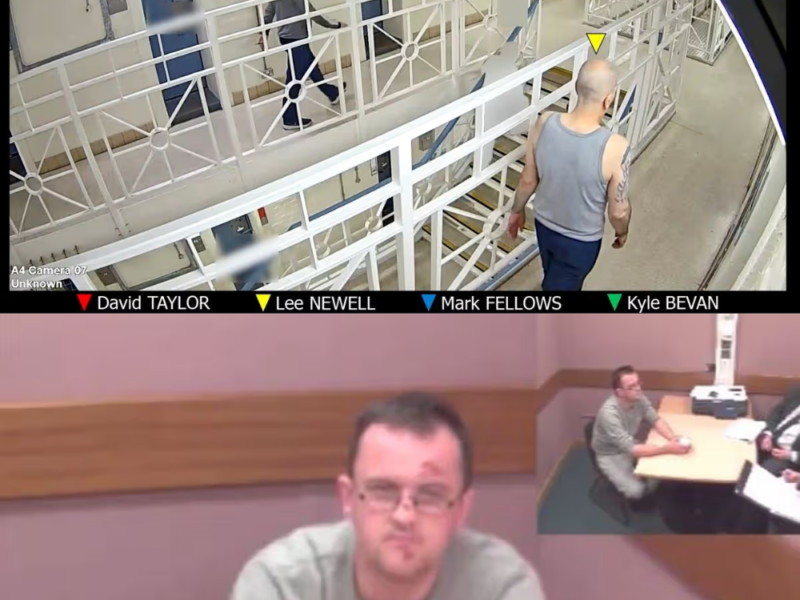
Child killer Kyle Bevan was stabbed 25 times in his cell and left to bleed to death in his bed after being targeted by three Wakefield inmates.
Bevan, 33, was serving a life sentence with a minimum of 28 years for murdering Lola James, two, in 2020.
He was attacked by Mark Fellows, 45, David Taylor, 64, and Lee Newell, 57, who used makeshift weapons, in one instance utilising metal from the back of a TV.

The men went on trial and were found guilty of killing Bevan. Chilling footage shows Bevan entering his cell on November 4 2025, followed by his killers, who came out four minutes and 39 seconds later, displaying “something of a satisfied, job-done mood”.
Bevan was ‘tucked up in bed’ after the attack and his body was not discovered until the following morning, the court heard. He had suffered 25 stab wounds.

Prosecutor Jason Pitter told the jury that around 77% of inmates at Wakefield are classed as vulnerable prisoners (VPs). He said, unlike other prisons, VPs are not separated from other inmates, and the wing had an ‘open door’ policy.
The judge told the defendants they had targeted Bevan because he “had been convicted of the murder of a child.” She said: “There were congratulations when you returned to your own landing.”
Newell was first jailed for murder in 1989 after strangling his neighbour. He was then given a whole-life order in 2013 after killing a prisoner who had murdered a child. Newell left the strangled inmate in his bed in “a chilling similarity” to Bevan.

Fellows committed two gangland murders and was given a whole-life term in 2019.
Taylor, meanwhile, received multiple sentences, including one for the murder of vulnerable Alisha Apostoloff-Boyarin, 24. She was reported missing by her family in February 2022.
Taylor was in custody when he claimed to have new information on her whereabouts. An officer visited him at HMP Frankland, during which he took an improvised weapon and stabbed the officer in the chest, “narrowly missing his heart”.
Taylor was jailed for life with a minimum term of 20 years for Alisha’s murder, given 30-years for attempted murder, and a whole-life order for Bevan’s murder.
Ian Watkins
One month before Bevan’s death, Ian Watkins was stabbed to death in the same prison. The singer was serving a 29-year sentence for child sex offences, including the attempted rape of a baby.
Rico Gedel, 25, and Samuel Dodsworth, 44, went on trial for his murder, but it collapsed in May with the judge discharging the jury for legal reasons. A retrial is scheduled to begin in February 2027.

Given the nature of his crimes, Watkins had been described as a “dead man walking” from the moment he arrived in December 2013. He faced demands for protection money and threatening letters.
Watkins also faced physical violence. In 2023, he was brutally attacked by three other inmates who stabbed him in the neck. He had to be rescued by specially trained riot officers. “He was screaming and was obviously terrified and in fear of his life,” a source said. Nevertheless, a former inmate said Watkins never showed any remorse and remained a ‘self centred loner’ before he was killed.
William Roberts
William Roberts was killed by Robert Maudsley, who targeted men deemed dangerous to children, in a double-killing in July 1978. He first targeted Slaney Darwood, who had killed and sexually assaulted his wife.
He then killed Roberts, who was serving a seven-year sentence for attempting to strangle and rape a four-year-old girl.
Maudsley entered his cell and stabbed him to death. He then walked into the wing office, handed over the knife, and told the officer the next roll call would be two short.

Stephen Beadman
Stephen Beadman, 35, was serving 35-years for the rape and murder of schoolgirl Kayleigh Haywood in 2015. But on April 7, 2021, he was found hanged in his cell.
A prison report revealed that Beadman was bullied by other inmates due to the nature of his crimes.

Robin Crago
Robin Crago, 65, was jailed in 2006 for raping a teenage girl among other sexual offences. Labelled a “dangerous sexual predator” by a judge, he died from kidney failure while serving a life sentence.

David Charles Zold
Zold was imprisoned for a series of abuses committed against children in the 70s and 80s. He lured them to his home, exposed them to explicit material and forced them into sexual acts. Zold died in Wakefield at the age of 72 in March 2023.
Other notorious child sex offenders who have been viciously attacked at Wakefield include Roy Whiting, who abused and killed Sarah Payne, and Mark Bridger, who abducted and murdered April Jones.
The Brutal Reality of Monster Mansion
HMP Wakefield has earned its notorious reputation as ‘Monster Mansion’ due to the high number of dangerous offenders it houses. The prison’s environment, where vulnerable prisoners are not always separated from others, creates a dangerous dynamic that often leads to violence against those convicted of crimes against children.
The hierarchy within the prison puts child abusers at the bottom, making them prime targets for violence. Former inmates have described how weakness is exploited and how those convicted of such crimes face constant threats. The recent deaths of Kyle Bevan and Ian Watkins highlight the extreme dangers faced by such prisoners.
Jamie Varley’s Uncertain Future
Jamie Varley’s whole life sentence at HMP Wakefield places him in one of the most dangerous environments for someone convicted of crimes against a child. His high-profile case and the nature of his offences make him particularly vulnerable to attack. The reports of him being confined to his cell with 24/7 monitoring and under suicide watch reflect the serious concerns for his safety.
The prison’s history of violence against child abusers suggests Varley will face significant risks throughout his sentence. The experiences of other high-profile inmates show that even constant monitoring may not prevent determined attacks. Varley’s situation serves as a stark reminder of the brutal reality inside Britain’s most notorious prisons.
The Broader Issues in the Prison System
The deaths of child abusers in HMP Wakefield raise important questions about prisoner safety and the management of vulnerable inmates. The ‘open door’ policy on certain wings has been criticised for creating opportunities for violence. The cases of Bevan and Watkins highlight the challenges faced by prison authorities in protecting high-risk prisoners.
The prison system’s approach to housing dangerous offenders alongside vulnerable ones creates inherent tensions. The hierarchy that develops among inmates often leads to violence against those convicted of certain crimes. The cases at Wakefield demonstrate the need for better separation and protection measures for vulnerable prisoners.
Public Reaction to the Cases
The high-profile nature of these cases has generated significant public interest and debate about prison conditions and justice. The brutal deaths of child abusers have sparked discussion about whether such violence represents a form of ‘inmate justice’ or a failure of the prison system to protect vulnerable individuals.
The cases have also raised questions about the effectiveness of the current prison system in managing dangerous offenders and protecting those at risk. The public reaction reflects broader concerns about crime, punishment, and the safety of both prisoners and staff.
Looking Ahead for the Prison System
The recent incidents at HMP Wakefield highlight the ongoing challenges faced by the prison service. The need for better protection for vulnerable prisoners and improved management of high-risk individuals remains a priority. The cases serve as a reminder of the complex issues involved in running secure prisons and protecting all inmates.
The prison authorities continue to face pressure to address these issues and ensure the safety of all prisoners. The experiences of high-profile inmates like Varley will likely prompt further discussion about prison reform and the management of dangerous offenders. As the cases continue to unfold, the focus remains on improving prison conditions and preventing further violence.