
This Dark Netflix Crime Drama Is Leaving Viewers Completely Speechless — And The Jaw-Dropping Final Episodes Change Everything You Thought You Knew
Netflix’s Dept Q. suggests that psychological trauma might help a detective investigate – neuroscience backs this up
Carl Morck is psychologically damaged. He’s socially insufferable. And he’s a departmental embarrassment. Yet this broken man becomes an incredibly effective investigator. Welcome to the brilliant paradox of Netflix’s Dept. Q, where mental trauma doesn’t disable – it supercharges.
Detective Morck’s story begins with catastrophic failure. Ignoring protocol, he and his partner, James Hardy, rush headlong into what they think is a routine murder scene. It’s an ambush. Hardy ends up paralysed for life, a rookie officer dies and Morck survives with crushing survivor’s guilt and severe PTSD (post-traumatic stress disorder). Most detectives would retire. Morck comes back more determined to get his man.
Months later, Morck returns to work. He obsessively replays the rookie’s body camera video hundreds of times as well as the ballistics reconstruction. His colleagues flee his toxic presence. His commander ships him off to the basement with a stack of cold cases, hoping he’ll disappear into bureaucratic obscurity.
Instead, she accidentally creates the perfect storm.
Morck’s first basement case involves Merritt Lingard, a prosecutor who vanished from a ferry four years earlier. The official conclusion was she fell overboard and drowned. Case closed. But Morck can’t move on from anything anymore. His trauma-rewired brain won’t let him.
He watches the ferry security footage with the same obsessive intensity he brings to replaying his shooting. Frame by frame. Over and over. The same compulsive attention to detail that torments him with endless replays of his failure becomes his investigative superpower. Where normal detectives see a tragic accident, Morck’s damaged neural pathways spot the inconsistencies everyone else missed.
This isn’t nonsense, it’s neuroscience. Research shows that depression fundamentally rewires information processing, creating enhanced sensitivity to negative details and threats. What his therapist calls pathological rumination becomes detective gold.
The banished misfits
Morck is saddled with a team of misfits: Hardy (paralysed and bitter), Akram Salim (a Syrian refugee with mysterious combat skills), and Rose Dickson (battling her own demons). Together, they form a collection of damaged individuals that conventional policing would write off.
But here’s the magic: their shared outsider status creates collective investigative superpowers.
Take their interview with William Lingard, Merritt’s disabled brother. William draws pictures of “a man in a hat with a bird logo” — evidence that conventional investigators would probably set aside because it wouldn’t hold up in court. The series shows this attitude earlier when a young mother recants her witness statement. While other officers dismiss it as useless since it can’t help prosecute a case, Morck argues it’s still valuable investigative information.
This reflects a fundamental difference in approach: most police focus on building prosecutable cases, but Dept. Q’s outsider status frees them to pursue any lead that might reveal truth, regardless of its courtroom value. Taking William’s drawings seriously as investigative intelligence, rather than dismissing them as legally inadmissible, eventually leads them to identify the crucial cormorant logo connection.
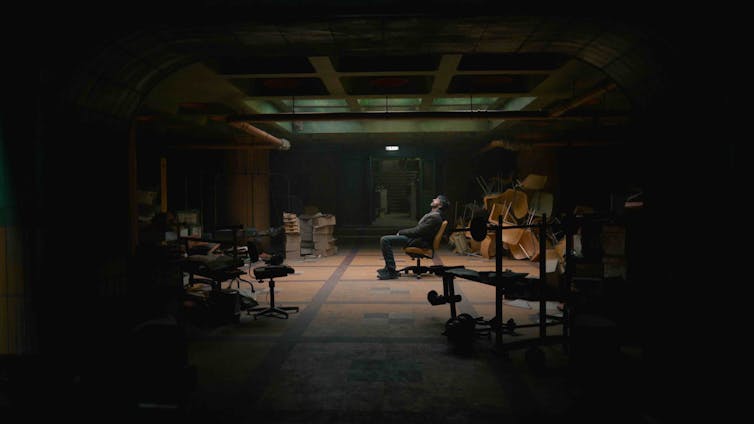
Mork and his team are relegated to the basement, which till this point was an out of use bathroom used as overflow storage. Netflix
Organisational psychology research shows that socially excluded groups are more willing to ask questions that insiders avoid due to workplace politics or social taboos. Operating from their basement exile, Department Q pursues theories that proper procedure would shut down. Their isolation becomes investigative freedom, unencumbered by institutional constraints.
Department Q isn’t just entertainment, it’s a master class in psychological diversity’s investigative value. Real police departments might benefit from understanding how different types of cognitive processing can reveal different types of evidence. The systematic pessimism of depression, the hypervigilance of PTSD, the pattern recognition of anxiety – these aren’t just symptoms to medicate away, they’re investigative tools waiting to be properly deployed.
The series suggests that our most psychologically damaged individuals might see truths that healthy minds systematically miss, which research backs up. It’s a provocative idea: maybe the people we consider “broken” are exactly who we need investigating the cases that have broken everyone else.
Department Q proves that in the right circumstances, psychological damage doesn’t create victims. It creates visionaries.
News
 SEASON 2 MAY BE CLOSER THAN FANS THINK. New rumors surrounding Teach You a Lesson Season 2 are already fueling speculation about the cast, story, and — most importantly — when the next chapter could arrive. And fans are watching closely for a release date update.

Teach You a Lesson Season 2: Cast, Rumours & Release Date Teach You a Lesson will give you a lot to talk about Korean series Teach You a Lesson has a premise that’s hard to resist. In schools where bullies wreak havoc,…
The official release date for season 2 of Every Year After has been announced, here’s everything you need to know
Is ‘Every Year After’ Getting a Season 2? Here’s Everything We Know About the Show’s Future The showrunner dropped a major clue. Summer romance is in full swing in Barry’s Bay. Based on the book Every Summer After by Carley Fortune, Amazon…
SEASON 2 JUST DROPPED — AND FANS ARE ALREADY ASKING ABOUT WHAT COMES NEXT. The future of The Summer I Turned Pretty spinoff Every Year After is already sparking speculation, with viewers wondering whether another season could be on the way. But one detail about the show’s future has everyone talking.
Will There Be a Season 2 of ‘Every Year After’? If you’re looking for a way to beat the heat, all eight episodes of Prime Video’s Every Year After are now available on the streamer. Based on Carley Fortune’s bestselling novel “Every Summer…
THE RELEASE DATE IS FINALLY HERE. The new K-drama Teach You a Lesson is officially set to premiere, and fans won’t have to wait much longer to see the story unfold.
Credits: Netflix The premise of Korea’s latest action drama has me rather concerned about the kind of stuff we’re willing to promote in 2026. When I first started the show, like many others, I found a sense of joy in…
MAJOR DEVELOPMENT IN BELFAST ‘BEHE@DING’ CASE: Friend Reveals Troubling History as Victim’s Family Speaks About His Fight to Survive!
The streets of Belfast are no stranger to historical tension, but a recent, horrifying act of violence has shocked the local community to its core, leaving a family shattered and a neighborhood grappling with disbelief. What began as a simple,…
 “HE SAID HE WOULDN’T BE BACK LONG…” Bobby Bloomfield’s family says the 12-year-old left home intending to return that same evening. Instead, they were faced with every parent’s worst nightmare. As the case continues to unfold, a mysterious detail from the final 30 minutes keeps coming back to light
The profound sorrow that has gripped the community of Pilgrims Hatch, near Brentwood, shows no signs of lifting as the murder investigation into the death of twelve-year-old Bobby Bloomfield enters a critical phase. For days, the county of Essex has…