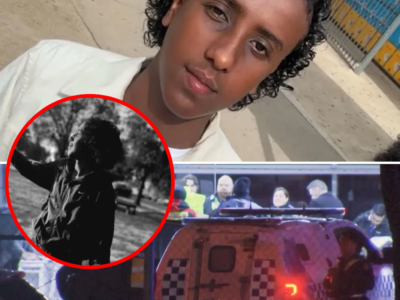
The heart-wrenching loss of Darweish Mohamed: Moving tributes for a young soul taken at just 15
The heartbreaking killing of 15-year-old Darweish Mohamed, who was found mortally wounded in a hospital parking lot, has once again sounded a dire alarm regarding the state of violence among modern youth. The fact that multiple teenagers, aged 14 to 16, have been charged in connection with this death is not merely a legal matter; it is a profound societal wound that exposes severe fractures in our educational structures and community bonds.
Violence as an Escalation of Unresolved Conflict
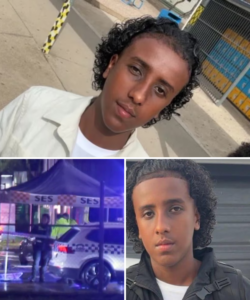
The revelation that multiple minors face murder charges is deeply unsettling. When paired with the discovery of a burnt-out vehicle and the additional charges of affray and theft against other involved youths, a chaotic picture emerges of a social environment spiraling out of control. This incident was likely not the result of a single impulsive moment, but rather the culmination of skewed perceptions and a lack of behavioral restraint. When the line between conflict and fatal aggression becomes dangerously thin, the tragic consequences are irreparable.
The Burden of Moral Degradation
The emergence of hashtags such as “LLD” (Long Live Darweish) and “E4D” (Everything for Darweish) on social media highlights a poignant display of solidarity among the victim’s peers. However, it also reflects a reality where the social dynamics of young people often operate outside the sphere of adult supervision and traditional guidance. While fundraising efforts to assist with funeral costs provide a necessary human response, they can only address the aftermath, not the root causes that led to such extreme behavior.
Analysis of similar cases suggests that when adolescents are detached from positive behavioral channels, they are easily pulled into the vortex of group violence. Acts such as car theft and property destruction are not mere vandalism; they are often symptomatic of a misguided quest for status and dominance within peer groups. Perhaps most alarming is the age range of those involved, suggesting a negative synergy where the actions or influence of older individuals may have exacerbated the choices made by younger, more impressionable participants.
Revisiting Community Responsibility
While justice will inevitably be sought through the courts, the fundamental question remains: who bears responsibility for the path these teenagers chose to take? The absence of sufficient safeguards to prevent behavioral degradation—within the family unit, the school system, and community outreach programs—creates a dangerous void. Objectively, youth violence is rarely the fault of a single individual; it is the culmination of systemic indifference or deficiencies in supervision, where the volatile nature of youth is not tempered by understanding or clear boundaries.
The death of a 15-year-old in a hospital parking lot is more than just another tragic statistic; it is a stern warning. Public safety is not defined solely by police response times or legal sentencing, but by our collective ability to identify and intervene in the complex psychological shifts occurring in young people before they cross the point of no return. Without a fundamental shift in how we approach behavioral education and community engagement, such tragedies will remain an ever-present threat to the fabric of our society.
SOURCE: 7NEWS
https://7news.com.au/news/third-teen-charged-with-murder-after-darweish-mohamed-stabbed-in-melbourne-c-22529616