Extraordinary moment in court: Mother forgives the men who took her son’s life
During a recent session at the Supreme Court of Victoria, a rare and haunting moment unfolded. As Mason Matticoli and Tyler Van De Steeg faced sentencing for the manslaughter of Jackson Gilmour, the victim’s mother, Kim Male, delivered a statement that stunned the public: she offered them her forgiveness. Standing at the fragile intersection of profound personal loss and the will for social redemption, her actions invite a deep reflection on the role of compassion within the criminal justice system.
From Individual Collapse to Social Fallout
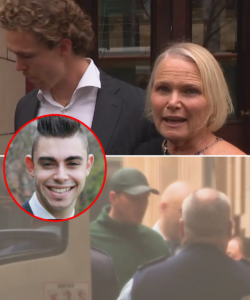
The tragic event that unfolded in the early hours of December 2, 2024, in Rye—where a botched break-in resulted in the deaths of Jackson Gilmour and Charli Hayter—is a sobering case study. The involvement of illicit substances, often cited as a catalyst for such violent behavior, highlights a pressing societal issue: the moral disintegration and aimlessness among a segment of today’s youth. When narcotics like methamphetamine or cocaine become the drivers of action, the consequences transcend mere individual tragedy; they become a drain on societal resources and a scar on community safety.
The shift in charges from murder to manslaughter for Matticoli and Van De Steeg, alongside the arson conviction for Jarod Smit, underscores the complexities of the legal process. While defense attorneys worked to highlight remorse and potential for rehabilitation, the objective reality remains that a life has been irrevocably extinguished.
The Extraordinary Power of Forgiveness
Kim Male’s declaration that she has “no room for anger” serves as more than just a personal coping mechanism; it poses a moral challenge to society at large. Within a justice system primarily built on the foundation of punitive measures, the victim’s forgiveness often carries a psychological weight that far exceeds any legal sentencing guideline. This is not an act of erasing guilt, but rather a deliberate effort to create a “moment of clarity” for the offenders to reflect upon their actions.
By urging the men responsible for her son’s death to “use this time in front of them to help other young men make better choices,” Ms. Male established a standard of profound grace. This is the essence of restorative justice: rather than remaining trapped in a cycle of destructive self-loathing, the offenders are challenged to transform their regret into a tool for social good.
A Test for Reintegration
From an objective standpoint, however, compassion must be balanced with strict deterrence. Even as a mother chooses to forgive, society requires sentences that are sufficiently rigorous to uphold public safety and justice. Forgiveness does not mitigate the gravity of a criminal act, but it plays a pivotal role in shifting the offender’s perspective.
Monitoring the incarceration period and the genuine progress of Matticoli, Van De Steeg, and Smit will ultimately prove whether such extraordinary grace can lead to real transformation. The Rye case will not simply conclude with a sentencing hearing this July; it leaves behind a significant lesson on educating younger generations against “deadly temptations.” In the most agonizing of circumstances, such profound human kindness may be the only key to breaking the cycle of violence and preventing future tragedies.
SOURCE: 9 NEWS
https://www.nine.com.au/australia-news/vic/mother-offers-forgiveness-hope-to-her-son-s-killers-20260629-p60b3o.html