A glimmer of hope in the search for Minnieweather’s remains… yet a monumental challenge lies ahead
The murder of 15-year-old Ja’Derrius Minnieweather in Baton Rouge, Louisiana, transcends the sheer brutality of the act itself, leaving behind a harrowing humanitarian dilemma: the recovery of a victim’s remains from a sprawling municipal landfill. With the suspect, 51-year-old Maurice Parms, in custody facing first-degree murder charges, the case has entered a grueling phase of retrieval under unprecedented conditions.
Challenges in the Numbers
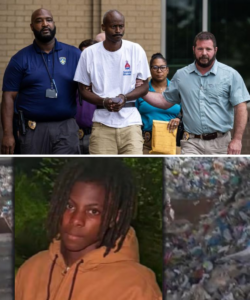
When authorities identified “strong evidence” pointing to the North Landfill as the location of the victim, it was more than a procedural update—it was a sobering reality. According to police reports, the facility processes roughly “1,600 tons of solid waste each day” via the rotation of over 300 vehicles. This figure reveals a painful paradox: while society functions with rapid industrial efficiency, the traces of a human life can be so easily buried within the debris of daily waste.
Searching an area spanning over 400 acres is not merely a test of investigative skill; it is a desperate race against time and environmental hardship. The fact that officials required nearly a month of planning to initiate the recovery operation highlights the sheer scale and complexity of locating remains disposed of within urban refuse.
The Inhumanity of Concealing Crime
From a societal and ethical perspective, the perpetrator’s choice to use a landfill for disposal is not just a tactic to erase physical evidence; it is a profound violation of the victim’s right to a dignified resting place. This level of cruelty transforms what began as a personal dispute into a deeply haunting case. When an altercation regarding behavioral conduct between an adult and a minor culminates in violence and subsequent concealment, it reflects an alarming degradation in conflict resolution and emotional control within certain segments of society.
The collaboration with the FBI to execute such a large-scale recovery operation underscores the gravity of the incident. The intensity of this task—from investigators working in protective gear under stifling heat to the painstaking process of sifting through refuse—acts as an indirect burden on those enforcing the law, and a painful reminder to the victim’s family of the harsh reality they must endure.
A Lesson on Safety and Compassion
This tragedy poses a significant question for parents and the community: how can children be protected when routine interactions, such as grabbing food with a friend, can lead to such devastating outcomes? When personal grievances escalate into murder, the consequences extend far beyond a prison sentence for the perpetrator; they leave a permanent scar on those left behind.
The recovery mission at the North Landfill is more than a duty of law enforcement. It is a journey to restore dignity and final peace to a 15-year-old boy. Ultimately, society must take a more serious look at measures to monitor and protect its youth, while demanding absolute severity for heinous acts involving the desecration of human remains. Justice, in this context, is not found solely in the conviction of a criminal, but in the recovery of what was lost—no matter how formidable the task amidst the city’s waste.
SOURCE: WAFB
https://www.wafb.com/2026/06/26/baton-rouge-teens-body-still-missing-search-narrows-landfill/