
Young Stars, Secret Deals, And Dark Industry Rules… 50 Cent’s Alleged Bombshell
In a compelling exposé that has reverberated throughout the music industry, Curtis “50 Cent” Jackson has unveiled the predatory practices that ensnare numerous young artists. Through a series of candid interviews, the rap mogul has highlighted the disturbing terms that many aspiring musicians encounter before signing a record deal, illustrating how the industry’s allure can swiftly become a trap.
Every artist, from established superstars to eager newcomers, has signed contracts promising to transform their lives. However, as 50 Cent passionately explains, these agreements often come with hidden costs that can ruin the very careers they claim to support. “The music industry sets traps,” he states, stressing that the supposed opportunities are frequently veiled in complex legal jargon designed to exploit the vulnerable.
With over three decades of experience in the music business, 50 Cent understands the consequences of these contracts. He characterizes the typical record deal as a mechanism that strips artists of ownership—of their music, name, and future. “That deal is designed to do one thing. Take everything,” he asserts, illustrating how many young artists, often hailing from underprivileged backgrounds, sign without fully grasping the implications.
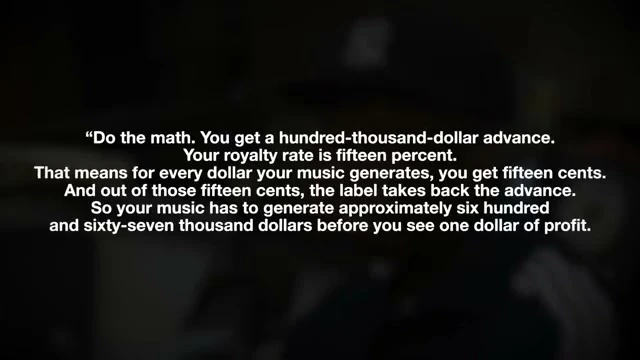
The financial terms are staggering. A typical advance may seem appealing—$50,000, $100,000, or more—but 50 Cent quickly exposes the harsh truth: that money is effectively a loan, repayable before artists can profit from their own work. With royalty rates typically between 12% and 20%, the calculations are unforgiving. “You get a $100,000 advance. Your royalty rate is 15%. That means for every dollar your music generates, you get 15 cents,” he clarified, painting a bleak picture of the financial maze young artists must navigate.

However, the real nightmare extends beyond the written terms to the unwritten clauses that govern artists’ lives. 50 Cent cautions against the 360 deal, which allows the label to reach into every potential revenue stream—from touring to merchandise, and even personal branding. “It wasn’t fair, but there were boundaries. The 360 deal erased the boundaries,” he remarked, highlighting a system that aims to control every facet of an artist’s life.
As if that wasn’t enough, he delves into the alarming reality of morality clauses and conduct provisions that dictate how artists can lead their lives. “I’ve seen contracts where the morality clause grants the label the right to terminate the deal and recoup all advances if the artist engages in behavior deemed detrimental by the label,” he warned. This implies that an artist could be dropped and left in debt simply for voicing a controversial opinion or making choices that conflict with the label’s interests.

The culture of compliance extends further. 50 Cent describes a troubling “access economy,” where artists must consistently demonstrate their loyalty and availability to retain their status within the industry. The pressure to attend events, network, and adhere to unwritten expectations can be overwhelming, leading to a cycle of grooming that undermines an artist’s autonomy.
In his impactful discourse, 50 Cent addresses the whispers surrounding past scandals and the private gatherings where the true terms of engagement are established. “These gatherings are structured events with specific purposes,” he disclosed, hinting at the darker aspects of the industry that many artists are reluctant to discuss. This is where compliance is closely monitored, and those who choose not to participate risk being marginalized or completely excluded.

He recounted harrowing tales of artists who faced severe repercussions for resisting these unwritten terms. One artist, on the brink of a breakout, turned down an invitation to a private gathering and soon witnessed radio support disappear and a tour budget reduced. Another artist attempted to voice concerns about the troubling environment within the industry, only to be met with legal threats that silenced him.
50 Cent’s message is unequivocal: the cost of compliance is high, but the price of non-compliance can be even steeper. It serves as a sobering reminder that the allure of fame and fortune often comes with strings attached—strings that can bind artists for life.
As he prepares for his upcoming documentary, “The Machine,” 50 Cent aims to unveil the full extent of exploitation within the industry. “The documentary goes deeper,” he vowed, promising to illuminate the systemic issues that have long remained in the shadows. “I want every executive, every gatekeeper, to understand that the era of silence is over.”
With a powerful voice and a commitment to justice, 50 Cent is not merely recounting a story; he’s igniting a movement that could transform the future of the music industry. As he boldly states, “No amount of money or fame is worth being on someone else’s leash.” This serves as a rallying cry for artists everywhere to reclaim their power and redefine the terms of their own success.