
CASE CLOSED? Henry Nowak Raises New Questions Over Evidence and Final Verdict in Controversial Trial
THE EVIDENCE, THE SENTENCE, AND THE GAPS THAT WON’T GO AWAY — Why Henry Nowak Keeps Returning to the Debate
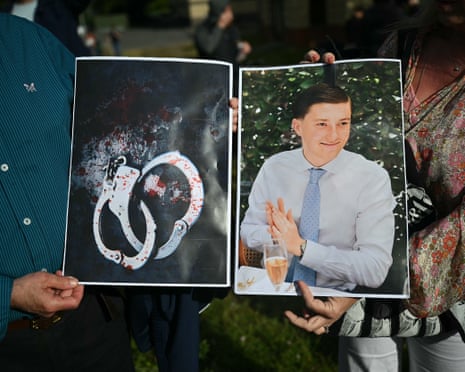
For many observers, the conviction and sentencing of Lucy Letby marked the end of one of the most shocking criminal cases in modern Britain.
After a lengthy investigation, months of courtroom testimony, and extensive jury deliberations, a verdict had been reached. The legal process appeared to have delivered its answer.
But for others, the debate never truly ended.
Years after the trial concluded, arguments over the evidence continue to surface in public discussions, media coverage, and expert commentary. Among those repeatedly returning to the controversy is Henry Nowak, who has questioned whether certain aspects of the case were ever fully explained.
His concerns do not focus on a single piece of evidence.
Instead, they center on what he describes as the gaps that continue to exist between the medical evidence, the investigative narrative, and the conclusions ultimately presented to the jury.
Supporters of the verdict reject those concerns.
They argue that the case was subjected to one of the most rigorous examinations possible within the criminal justice system. Evidence was challenged by defense lawyers. Witnesses were cross-examined. Medical experts presented competing interpretations. Jurors spent months hearing testimony before reaching their decision.
From that perspective, the process worked exactly as intended.
Yet critics insist that legal finality does not automatically end scientific or factual debate.
And that is where the controversy continues.
At the center of many discussions is the nature of the medical evidence itself.
The prosecution case relied heavily on expert interpretation of unusual collapses and deaths involving babies on the neonatal unit.
According to the prosecution, those incidents could not be adequately explained by natural causes alone.
The jury ultimately accepted that argument.
However, some critics have questioned whether all of the medical conclusions are as settled as they appear.
They point to disagreements among specialists regarding causes of deterioration, mechanisms of injury, and the interpretation of clinical records.
Medicine, they argue, is rarely absolute.
Complex neonatal cases can generate differing opinions even among experienced professionals.
That reality has led some commentators to ask whether alternative explanations received sufficient consideration.
For Henry Nowak, this uncertainty appears to be one of the central issues.
His argument is not simply about individual incidents.
Rather, it concerns how multiple strands of evidence were combined to create a broader narrative.
Investigators examined medical records, staffing data, witness testimony, and patterns surrounding incidents on the ward.
Over time, these elements were assembled into a picture that prosecutors argued pointed overwhelmingly toward guilt.
Supporters of the verdict view this cumulative approach as one of the case’s greatest strengths.
No single piece of evidence stood alone.
Instead, numerous factors allegedly reinforced one another.
But critics see a potential weakness in the same process.
They argue that once investigators become convinced of a particular theory, there is a risk that separate pieces of information begin to be interpreted through that lens.
What appears persuasive when viewed together, they suggest, may look less certain when each component is examined independently.
This disagreement lies at the heart of the continuing debate.
Was the evidence compelling because multiple facts genuinely pointed in the same direction?
Or did the narrative become stronger because information was organized around a conclusion that had already begun to take shape?
That question remains a recurring theme among those who continue to challenge aspects of the case.
Another area frequently discussed involves the role of patterns.
Throughout the investigation, attention focused on incidents occurring during shifts when Letby was present.
Supporters of the prosecution argue that the recurring association was too significant to dismiss as coincidence.
Critics counter that staffing patterns can be complicated and that retrospective analysis may sometimes create the appearance of connections that are less obvious in real time.
The debate over patterns is particularly contentious because it touches on a broader question.
How should investigators distinguish between meaningful correlations and statistical coincidence?
That challenge exists in many complex cases, especially those involving large volumes of data collected over long periods.
For supporters of the verdict, the answer is simple: the patterns formed only one part of a much larger body of evidence.
For critics, however, the question remains whether those patterns carried more weight than they should have.
Henry Nowak has repeatedly highlighted this issue when discussing what he sees as unresolved concerns.
The controversy extends beyond medicine and statistics.
It also involves the investigation itself.
Critics have questioned whether alternative hypotheses were explored with sufficient intensity before attention became focused on a single suspect.
Supporters of the investigation reject that claim, arguing that detectives spent years examining evidence and pursuing multiple lines of inquiry before reaching their conclusions.
Yet questions about investigative decision-making continue to attract attention.
Once a particular theory emerges, how can investigators ensure they remain open to competing explanations?
How do they guard against confirmation bias?
And how can outsiders determine whether that process was handled appropriately?
Those questions are not unique to the Letby case.
They arise in many major investigations.
But because of the extraordinary nature of this case, they have assumed unusual significance.
Perhaps the most striking aspect of the ongoing debate is that both sides often point to the same facts while reaching very different conclusions.
Supporters of the verdict see a case that was tested exhaustively in court and ultimately accepted by a jury after months of scrutiny.
Critics see a case where uncertainty remains despite the verdict.
One side views the remaining questions as normal loose ends that exist in almost every complex trial.
The other views them as potentially significant gaps deserving further examination.
Neither perspective has disappeared.
In fact, the discussion appears to have intensified as additional experts, commentators, and observers have weighed in on the evidence.
That continuing attention helps explain why figures such as Henry Nowak keep returning to the debate.
For them, the unanswered questions remain too important to ignore.
For supporters of the verdict, however, the repeated challenges risk overlooking the extensive legal process that has already taken place.
And so the argument continues.
Years after the sentencing, the case still generates headlines, expert disagreements, and passionate public discussion.
The verdict may have concluded the trial.
It did not end the controversy.
Because beneath the medical evidence, the investigative findings, and the courtroom arguments lies a question that neither side seems willing to abandon.
Are the remaining inconsistencies simply the inevitable loose ends found in every major case—or are they clues pointing toward a deeper story that has yet to be fully understood?