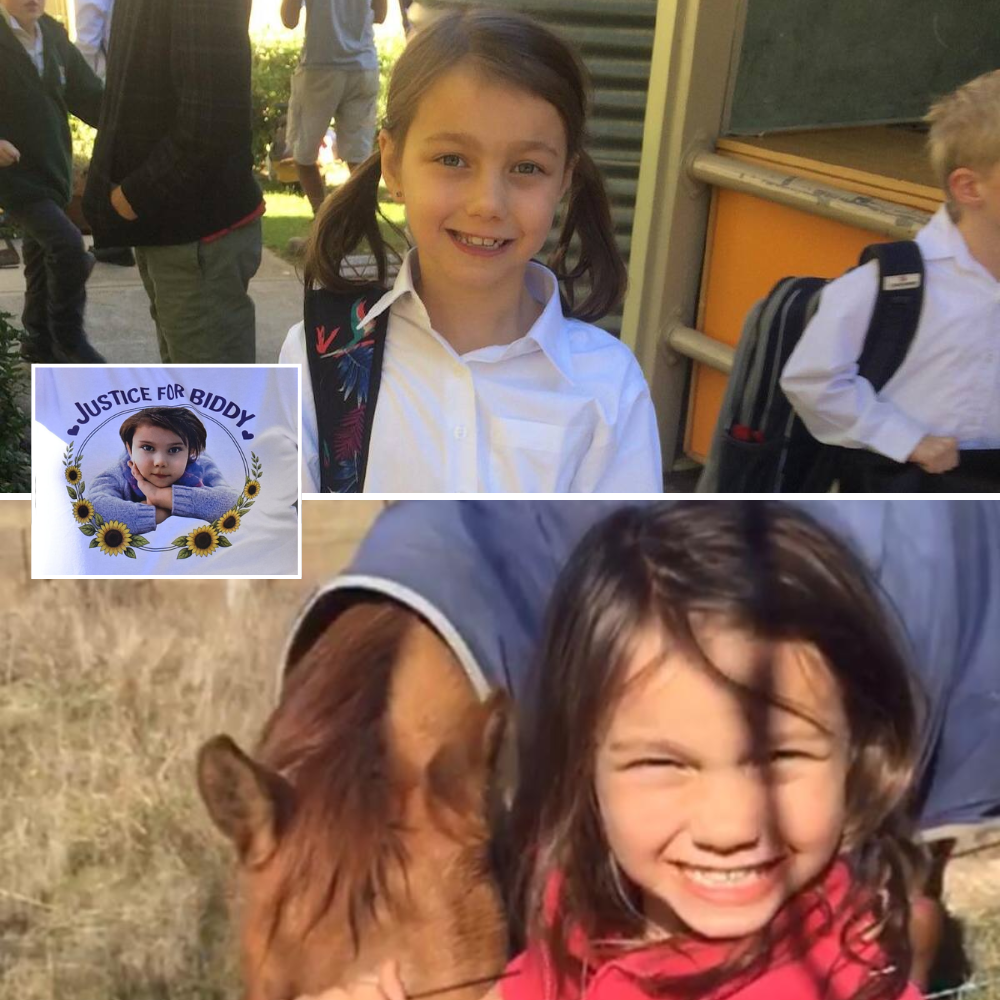
Biddy Porter Inquest Sparks Debate as Family Allegedly Blames Video Games for Teen K-i-ller’s Violent Behaviour in Rural New South Wales
As a teenager slaughtered chickens, had visions of the Cheshire cat and thought about killing people, her father mistakenly believed her behaviour was down to attention-seeking, bullying and video games.
Just two weeks after the teenager confessed to her mother she thought about killing people “all the time”, the girl killed 10-year-old Biddy Porter at a property in rural NSW, an inquest has been told.
Biddy, remembered as a vibrant, clever and creative child, died of multiple injuries while staying at the property for the school holidays on July 8, 2020.
The NSW Supreme Court found Biddy’s killer, who cannot be identified for legal reasons, was not criminally responsible due to mental illness in 2021.
She has been in custody since her arrest.
Two psychiatrists found the teenager had schizophrenia and was in acute psychosis at the time of the killing.
The teenager likely had delusions and a “loss of contact with reality”, counsel assisting Peggy Dwyer SC told the inquest at Lidcombe Coroners Court on Tuesday.

Dwyer outlined the teenager’s worsening mental health before the killing and her “disturbing” descent into psychosis.
About a year before the killing, the teenager slaughtered six chickens on the farm and took pieces of the animals to school.
Around the same time she also told relatives she saw the Cheshire cat when she closed her eyes, heard voices and “didn’t feel real”.
The teenager had a collection of knives, some of which she’d named Roo, Ray and Storm.
Her mother went to a GP after the confession about murderous thoughts and got a referral to a psychiatrist, something the girl’s father said he was not fully supportive of.
The father told the inquest he believed the killing of chickens was either typical behaviour of a child raised on a farm, or the influence of a video game she’d been playing that involved hunting.
“(It was) monkey see, monkey do,” the man told the inquest.
He said he wondered whether her reports of hearing voices and having visions were attention-seeking.
The girl’s behaviour noticeably changed when she returned to school in the midst of the COVID-19 pandemic, the father said.
“I believed she was getting bullied at school after COVID,” he said.

The father acknowledged that her behaviour could have been a missed red flag, though he said it was difficult to determine what was just bad behaviour.
“That’s the scariest part,” he said.
He said he was sorry for the loss of Biddy.
“It’s unimaginable for everyone involved, it’s distressing for us to talk about,” he said.
The girl’s mother also said mental health issues were not initially on her radar.
“I’m very ashamed to say I didn’t believe in mental illness,” the mother said.
She did not think the teenager chasing Biddy and another child with a knife and suggesting they play “serial killers” on July 7 was evidence of disturbed behaviour.
The inquest will examine possible systemic failings in the lead-up to Biddy’s killing, along with any early warning signs.

Biddy’s parents, Rebekah Keukenmeester and Dominic Porter, campaigned for the inquest in the hopes no other family have to endure a similar tragedy.
Dwyer said the coroners court was not an arena for blame or shame, but rather to find out what happened to Biddy so others can learn.
“It’s not to blame, but to help teach counsellors, GPs, parents and grandparents,” Dwyer said.
“If you notice signs and symptoms like this, how to you distinguish them from other teenage behaviour and how do you get help?”
The inquest continues before NSW State Coroner Teresa O’Sullivan.