FOUR FEMALES D!ED IN JUST FOUR DAYS — EXPERTS SAY AUSTRALIA DOESN’T NEED MORE REPORTS… IT NEEDS ACTION
Two women and two girls dead in four days. Australian experts yet again call for action
‘We already have more than 1,000 recommendations. The knowledge gap isn’t there. There’s an implementation gap,’ policy expert says
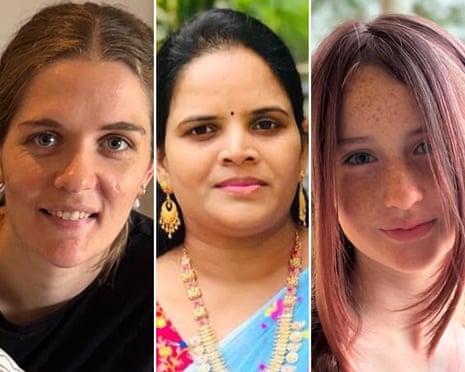
Last week, two women and two girls were allegedly murdered in four days. The deaths of Lavanya Chappa, Jana Armstrong, Layla Jeffery, 13, and a 17-year-old Yolngu girl, have been called another crisis point for domestic and family violence.
It has been eight weeks since the last national crisis point: the alleged murder of a woman and two children at a Sydney home. Before that it was the January killings of Sophie Quinn, her unborn baby, her aunt Nerida Quinn and partner John Harris. Every time, there is the same familiar hand-wringing, and often calls for a royal commission.
“But we don’t have a knowledge gap,” says Katherine Berney, a policy expert on gender-based violence.
“We already have more than 1,000 recommendations. The knowledge gap isn’t there. There’s an implementation gap.”
Seventeen years ago, the national council to reduce violence against women and their children titled their landmark blueprint for reform: “time for action”.
Experts and those working to prevent violence against women describe their frustration at the apparent cycle of outrage and fatigue, often fuelled by the latest tragedy, then prolonged by the inability of governments to implement lasting and effective, though costly, reforms.
Most Australian states have a “death review” system, with the primary purpose of analysing cases, identifying systemic problems, and making recommendations that might prevent future deaths.
In 2024, researchers went back over the recommendations of the two longest-running state death reviews, in Queensland and New South Wales. They concluded that only 16% of recommendations, over more than a decade, had been properly enacted by governments and agencies.
Sign up for the Breaking News Australia email
Dr Emma Buxton-Namisnyk, a co-author of the study and a senior lecturer at the University of New South Wales, questions whether government responses to tragedies are “performative”, in that they are about managing a spike in public concern rather than effecting real change.
“It does worry me that there is a level of performativity in being seen to [be] taking these deaths seriously … but then defenestrating them by not actually implementing recommendations,” Buxton-Namisnyk says.
“Governments like populist announcements. What is often missing is that really sustained investment out of the public purse, and that’s not a great announceable.”
Governments struggle with the complexity of domestic and family violence, she says. “It’s highly relational. The victim and the offender don’t behave in ways that are the same as a victim of crime and an offender where there’s no relationship. There’s a simpler, more carceral narrative that you can spin when it comes to other types of crime.
“The thing that I always think about is: why aren’t we upset right now? Why were we so upset two years ago compared to now when we’re seeing the same things? It can be overwhelming engaging in the news cycle when it’s so horrific.”
‘We’ve got to listen to dead women’
“No one knows what to do or say, because it’s so horrific,” Berney says.
“When it’s dramatised people can lean into the horror and the urgency. But when we are confronted with allegations like this in real life there’s almost silence from our senior cabinet leaders and first ministers.”
In Queensland, the alleged domestic violence murder of Toowoomba woman Jana Armstrong comes after state cut tens of millions in funding and resources from its domestic violence response.
SOURCE: https://www.theguardian.com/australia-news/2026/jul/16/two-women-two-girls-dead-in-four-days-australia-call-for-action-ntwnfb