Montreal Street Prayer Debate Sparks National Conversation on Public Space, Religion, and Community Tensions
A heated confrontation in Montreal has reignited debate across Canada about public religious gatherings, freedom of expression, and the growing tensions surrounding the use of shared civic spaces.
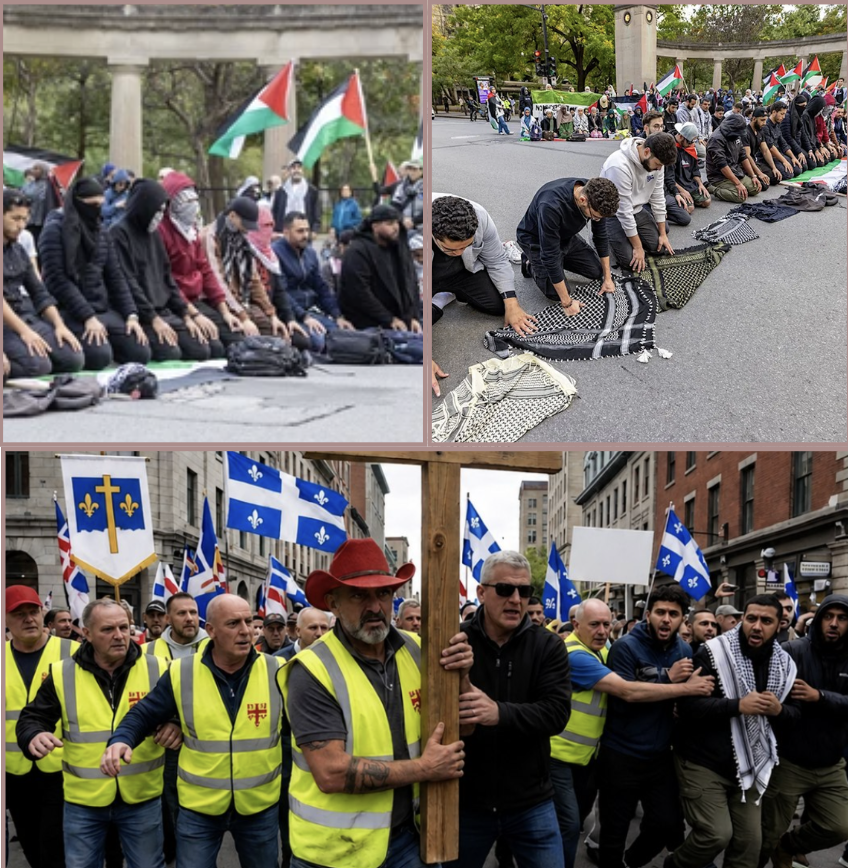
The controversy began after a large group of Muslims gathered near a Catholic church in Montreal for a public prayer session, an event that quickly attracted attention online after videos of the confrontation spread across social media platforms. In several clips, individuals associated with the church community appeared to challenge the gathering and demand that the group leave the area.
The incident immediately sparked intense reactions across Canada, with some people arguing the prayer gathering represented an exercise of religious freedom, while others claimed public spaces and places of worship should not become locations for political or cultural confrontation.
In response to growing backlash and wider public debate, Quebec officials announced plans to strengthen restrictions on organized street prayers in certain public areas. Provincial authorities defended the move as necessary to maintain public order and reduce the risk of escalating tensions between communities.
Government representatives stressed that the proposed measures are intended to apply broadly to all religious groups rather than targeting one faith specifically. However, critics of the policy argue that the political language surrounding the debate has increasingly focused on Muslim communities, raising concerns about discrimination and social division.
The Montreal incident has also become part of a larger international conversation about religion in public life. Similar debates have emerged in cities across Europe and North America, where local governments are struggling to balance freedom of assembly with concerns over traffic disruption, public safety, and rising social polarization.
In the United States, videos involving public demonstrations, religious gatherings, and confrontations outside churches and synagogues have fueled heated political arguments online. Some commentators claim Western societies are becoming more divided over questions of identity, immigration, and religion, while others warn that sensationalized online narratives risk deepening mistrust between communities.
Security experts note that viral clips shared online often lack important context and can quickly inflame tensions. Short videos of confrontations are frequently reposted alongside exaggerated or misleading claims, making it difficult for viewers to separate verified facts from emotionally charged commentary.
Religious leaders from multiple faiths have urged calm in the aftermath of the Montreal dispute. Several Christian and Muslim organizations released statements encouraging dialogue and mutual respect while condemning hostility and intimidation.
Community advocates warn that framing such incidents as a battle between religions could have dangerous consequences. Canada has generally maintained a reputation for multicultural coexistence, but experts say increasing political polarization and online outrage are placing growing pressure on that social balance.
Meanwhile, supporters of Quebec’s proposed restrictions argue that governments have a responsibility to prevent demonstrations or gatherings that could disrupt neighborhoods or escalate into conflict. Opponents counter that limiting public religious expression could create a precedent affecting multiple faith communities in the future.
As investigations and political discussions continue, the Montreal confrontation has become far more than a local dispute. It now represents a broader cultural flashpoint touching on religion, identity, free expression, and the future of public life in Western democracies.
For many observers, the most concerning aspect is not only the confrontation itself, but how rapidly emotionally charged narratives spread online and transform local incidents into national ideological battles.
Whether the Quebec government’s response will ease tensions or deepen divisions remains unclear. But one thing is certain: the debate over public religious gatherings, cultural identity, and shared civic space is unlikely to disappear anytime soon.