16 children endured this for two decades, and not a single soul knew?
The recent rescue of 16 siblings from squalid conditions in a Hamden, Ohio home is not merely a case of systemic child abuse; it serves as a complex social critique regarding the fragile boundary between familial autonomy and communal accountability. As these children were discovered in a near-feral state, confined to claustrophobic living spaces, society is forced to confront the systemic failures that allowed a two-decade tragedy to remain hidden in plain sight.
Perfect Invisibility Within the System
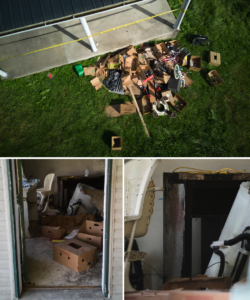
The fact that 16 siblings, ranging from 18 months to 18 years of age, managed to exist without leaving a trace in school systems or medical registries is staggering. In a modern era defined by digital footprints and constant connectivity, a family’s ability to remain “invisible” for 20 years highlights a severe fracture in the network between local authorities and rural communities.
This isolation was not merely a byproduct of circumstance; it appears to be a calculated strategy. The family’s history of frequent relocation across southern Ohio suggests a deliberate effort to evade the scrutiny of neighbors and social services. In this context, the concept of “family autonomy” was distorted into systematic captivity, rendering the children victims of those duty-bound to protect them.
Legal Defenses and the Human Dimension
While defense attorneys have attempted to frame this as a case of “isolation” rather than “malice,” such arguments must be viewed with skepticism. A lack of parenting skills or a narrow worldview cannot serve as a blanket immunity for neglecting children to the point of physical and psychological depletion.
The distinction between poverty and abuse is profound. Poverty can be mitigated through community support, but abuse—whether born of ignorance or intent—inflicts irreversible trauma on a child’s development. Debating legal terminology is a standard part of due process, but it must not obscure the grim reality: these children were systematically stripped of their fundamental right to access the outside world, receive an education, and live with human dignity.
The Community’s Role in Identifying ‘Social Blind Spots’
The Hamden tragedy serves as a harrowing wake-up call regarding the dangers of communal apathy. While these children were meant to be part of the community’s future, they became “strangers” within their own town. The admission by neighbors that they had “never spotted the kids” exposes a critical flaw in the culture of local surveillance—where a respect for privacy inadvertently became a barrier to life-saving intervention.
To prevent similar scenarios, authorities must establish more proactive monitoring mechanisms for transient populations that remain detached from public services. Community vigilance should not be viewed as invasive curiosity, but rather as the final safeguard—the essential mesh that catches the early warning signs of distress before they devolve into irreparable tragedies.
Ultimately, regardless of the investigation’s legal outcome, this incident has left an indelible scar on Hamden. These children require far more than an immediate rescue; they need a long-term commitment to rehabilitation—an opportunity to learn how to exist as individuals, not within the constraints of a 3.5-square-meter room, but within the supportive embrace of an attentive society.
SOURCE: LOCAL10.COM
https://www.local10.com/news/2026/07/02/right-under-our-noses-and-nobody-was-able-to-help-them-16-kids-found-in-squalor-shocks-ohio-town/