CHILLING COURT REVELATION: Axel Rudakubana’s Online Activity Before Southport Attack Raises Alarming New Questions
Axel Rudakubana, the British teenager responsible for the fatal stabbing of three young girls at a Taylor Swift-themed dance class in Southport, England, has been sentenced to a minimum of 52 years in prison. The attack, which took place in July of the previous year, targeted a group of children enjoying a holiday workshop filled with activities like making friendship bracelets and listening to music. Prosecutors described how Rudakubana left his home that day with a clear intent to kill, having researched previous violent incidents in an effort to replicate them. Just 40 minutes before departing, he viewed social media footage of the stabbing of a bishop in Sydney, Australia, an event that had occurred earlier.
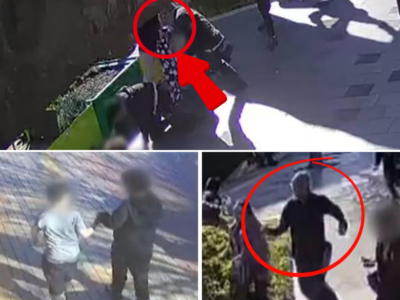
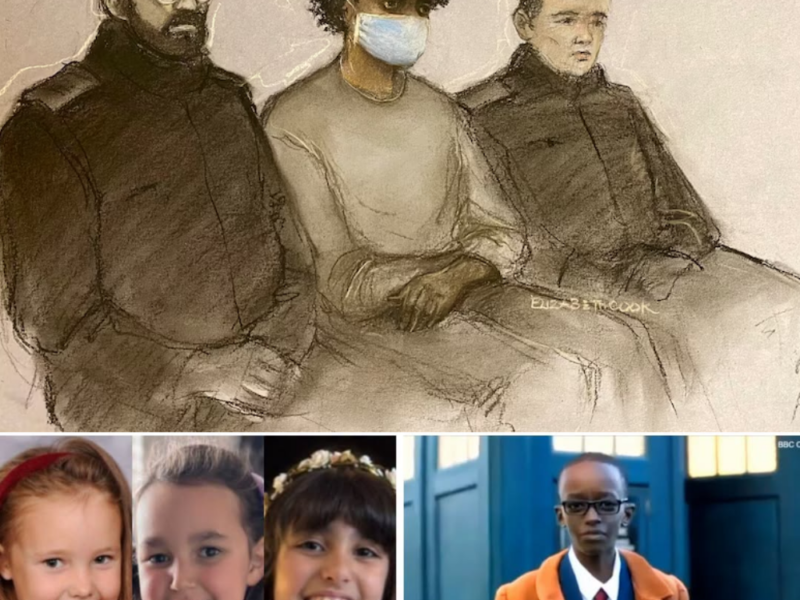
At Liverpool Crown Court on Thursday, the now 18-year-old received his sentence for the murders of Bebe King, aged six, Elsie Dot Stancombe, aged seven, and Alice da Silva Aguiar, aged nine, along with the attempted murder of ten others. Court presentations included CCTV and police body camera recordings showing Rudakubana entering the venue and launching his assault within seconds, leading to screams echoing outside. Witnesses recounted seeing him attack with a large kitchen knife, with many children suffering wounds to their backs as they attempted to escape. Prosecutor Deanna Heer KC highlighted the particularly gruesome nature of injuries to some victims, describing them as sadistic. Following his arrest, Rudakubana expressed satisfaction over the children’s deaths, stating he was glad and happy about the outcome.
The assault also injured eight girls between seven and 13 years old, as well as dance instructor Leanne Lucas and Jonathan Hayes, a nearby worker who tried to intervene. In victim impact statements, Lucas questioned how she could continue living after surviving while children perished. The mother of Elsie Dot Stancombe labelled the perpetrator a coward, while Alice da Silva Aguiar’s parents spoke of their lives feeling trapped in an unending nightmare. A teenage survivor addressed Rudakubana directly, noting his eyes appeared inhuman and possessed, yet affirmed her determination to move forward with her family. Rudakubana was removed from the courtroom during proceedings after repeatedly shouting and claiming illness. Due to his age of 17 at the time of the crimes, UK law limited the maximum sentence possible. Judge Julian Goose characterised the offence as an extreme crime causing national shock and revulsion, noting the high level of culpability and harm intended, with little prospect of release.
Background, Warning Signs, and the Perpetrator’s Obsessions
Rudakubana came from an evangelical Christian family of Rwandan migrant heritage, born in Cardiff, Wales, before moving to Banks in Lancashire in 2013. As a child, he appeared in a BBC advertisement as Doctor Who for a programme supporting underprivileged youth. However, his teenage years saw increasing isolation, with him rarely leaving home. Behind this quiet exterior lay a deep fixation on violence. From age 13, he was referred three times to the UK’s Prevent counter-terrorism programme due to concerns over his interest in violent themes. He was also expelled from school after bringing a knife on multiple occasions, claiming bullying as the reason.
Court evidence revealed Rudakubana’s extensive collection of images related to conflicts in Gaza, Ukraine, Iraq, and other areas, including graphic depictions of death, torture, beheadings, and rape. Prosecutor Heer noted this material offered insight into his mindset, reflecting a broad and longstanding obsession with killing, violence, and genocide. He showed fascination with historical despotic figures such as Genghis Khan and Adolf Hitler, and reportedly maintained a “kill list.” Prosecutors suggested the Southport attack might not have been his first attempt at mass harm; a week earlier, he had tried to return to his former school but was prevented by his father, who intervened with a taxi driver. Notably, he used the alias “Simon” for both that booking and the one to the dance class.
The court also heard that Rudakubana pleaded guilty to producing the biological toxin ricin and possessing an al-Qaeda training manual. His history included known prior violence that had brought him to police attention. These details have prompted intense scrutiny over missed opportunities to intervene. Despite referrals and behavioural indicators, the attack proceeded, leading to questions about why preventive measures failed to stop the tragedy.
Implications for Policy, Legal Reforms, and Public Safety
The Southport incident, combined with speculation about the suspect’s background and motives, sparked widespread riots across the UK in the following days. With the trial concluded, attention has shifted to systemic failures and necessary changes. Home Secretary Yvette Cooper has criticised agencies for not adequately identifying the threat Rudakubana posed and has initiated a public inquiry to uncover what occurred and what reforms are essential moving forward.
Prime Minister Keir Starmer has advocated for updates to terrorism laws as a key response. He argues that current definitions, which require advancing a religious, political, racial, or ideological cause, leave gaps for cases involving “extreme individualised violence” without a clear ideology. Such lone actors, driven by obsessions with violence or personal grievances, can cause widespread terror yet fall outside traditional terrorism prosecutions. Starmer believes broadening the framework would help address these scenarios and prevent future attacks from slipping through.
Jonathan Hall KC, the independent reviewer of terrorism legislation, has evaluated these proposals. He acknowledges that while the existing definition is broad enough for some lone actors, it does not cover those motivated purely by a fixation on violence. Potential benefits of expansion include greater public perception of seriousness, access to specialised counter-terrorism resources, and additional legal tools for early intervention, such as offences related to preparation or possession of certain materials. However, Hall cautions that these reasons require careful consideration to ensure viability and balance.
The case underscores challenges in addressing non-ideological threats while maintaining effective prevention strategies. As the public inquiry progresses, its findings are expected to influence how authorities handle similar risks, aiming to better protect communities from individuals whose obsessions with violence go unchecked. The sentencing of Rudakubana brings a measure of justice for the victims’ families, yet it also serves as a catalyst for broader reflections on mental health indicators, early intervention programmes, and legal adaptations in an era of evolving threats. Families and survivors continue to emphasise resilience and the need for meaningful change to honour those lost and prevent recurrence.