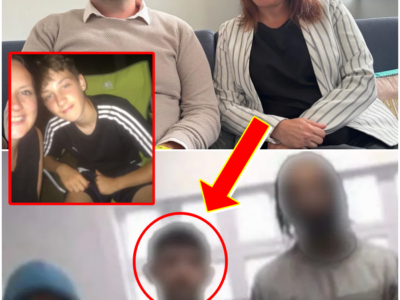
🚨 EMOTIONAL COURTROOM MOMENT — SEAN GATHRIGHT’S MOTHER AND GRANDMOTHER MAKE HEARTFELT PLEA BEFORE FOOLIO MUR-DER SENTENCING
Mother and Grandmother Speak at Sean Gathright’s Sentencing for Julio Foolio Murder
The sentencing hearing of Sean Gathright, one of the men convicted in the murder of rapper Julio Foolio, featured emotional testimony from family members who pleaded for compassion while reflecting on the devastating consequences of the case.
Gathright was convicted in connection with the killing of Julio Foolio, whose legal name was Charles Jones. The rapper’s death became one of the most widely discussed criminal cases in the hip-hop community, drawing significant public attention and leading to a lengthy legal process that ultimately resulted in convictions for several individuals involved.
Before the court finalized sentencing, Gathright’s mother and grandmother were given an opportunity to address the judge. Their remarks focused not only on Sean himself but also on broader issues involving youth, family relationships, and the long-term consequences of violence.
His mother delivered an emotional statement that reflected on the impact the case had on everyone involved. Speaking directly to the court, she described the pain that the tragedy had caused and expressed hope that public attention surrounding the case could serve a greater purpose.
According to her, one positive outcome would be if families became more engaged in meaningful conversations with their children about the dangers of violence and poor decision-making. She emphasized the importance of communication between parents and teenagers, arguing that stronger family relationships could help prevent future tragedies.

Despite speaking on behalf of her son, she also acknowledged the suffering experienced by the victim’s family. Her remarks suggested an awareness that the consequences of the crime extended far beyond the courtroom and affected an entire community.
The judge later recognized the mother’s dedication to her son and acknowledged the effort she had made to remain involved in his life despite the difficult circumstances surrounding the case.
Following her statement, Gathright’s grandmother addressed the court.
Her argument centered largely on Sean’s age at the time of the offense. She reminded the court that he was only 18 years old when the events occurred and argued that young adults should not always be viewed in the same way as fully mature offenders.
Referencing research regarding brain development, she pointed to the prefrontal cortex—the area associated with impulse control, judgment, and risk assessment—which many studies suggest continues developing well into a person’s twenties.
She argued that because of this reality, society should take a more nuanced approach when evaluating young offenders. In her view, a sentence that effectively guarantees a lifetime in prison failed to account for the possibility of growth, maturity, and rehabilitation.
The grandmother also described Sean as someone she believed possessed the ability to positively influence others if given the opportunity. She urged the court to consider not only the crime itself but also the potential for personal transformation over time.
When Sean Gathright himself took the floor, he delivered a lengthy statement that had clearly been prepared in advance.
Throughout his remarks, he repeatedly referenced his Christian faith and drew parallels between his own situation and the biblical story of the Prodigal Son. The story, which focuses on forgiveness, redemption, and personal change, served as a central theme of his statement.
Gathright expressed remorse and reflected on the decisions that had brought him before the court. At the same time, he raised broader questions about how society treats young offenders.
He argued that many laws recognize developmental differences among young adults. For example, individuals under the age of 21 face restrictions involving alcohol, tobacco, and other activities because lawmakers acknowledge that cognitive development is still ongoing.
Gathright questioned why similar considerations are often absent when courts impose the most severe criminal penalties available under the law.
While he did not dispute the seriousness of the situation, he suggested that the justice system should place greater emphasis on rehabilitation and second chances for young offenders whose judgment may not yet be fully developed.
His statement reflected a mixture of faith, regret, and a desire to encourage broader conversations about criminal justice and youth accountability.
As the hearing concluded, the court proceeded with sentencing and additional legal matters involving other individuals connected to the case.
The proceedings marked another significant chapter in the legal aftermath of Julio Foolio’s death, bringing together themes of accountability, grief, family loyalty, and the continuing debate over how society should balance punishment and rehabilitation when young offenders commit serious crimes.