40 years on the run and the final verdict written in DNA: The 1987 hotel murd3:r mystery finally solved
In the world of “cold cases,” time is often seen as the ultimate ally of the perpetrator. However, in Baton Rouge, the rapid advancement of DNA forensic technology has transformed nearly 40 years of evasion into a countdown toward final judgment. The murder of Thomas Klotz in 1987—one of the longest-standing mysteries in the area—has finally found the missing piece required to complete the puzzle of justice.
The Silent Death of a Radio Station Employee
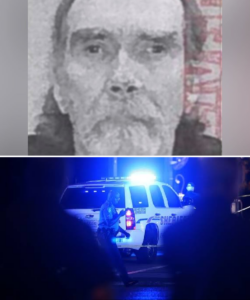
In 1987, Baton Rouge was shaken by the news of Thomas Klotz’s death. At 45 years old, Klotz was not only a radio station employee but also a familiar figure in the local media landscape of the era. His life came to a tragic and abrupt end inside a hotel room, where police discovered his body riddled with stab wounds.
At the time, the traces left by the killer at the scene were minimal. While investigative technology of the 1980s was applied to the best of its ability, it could not overcome the limitations of the era to identify the culprit. The case eventually hit a dead end, turning into a stagnant file tucked away in storage, gathering dust alongside the fading memories of those involved.
DNA: The Golden Key to Breaking the Barrier of Time
The persistence of the new generation of detectives at the Baton Rouge Police Department brought about a decisive turning point. Instead of accepting the passage of time as a permanent barrier, the biological evidence collected from the scene decades ago was exhumed and submitted to the Louisiana State Police Crime Lab. Within the modern laboratory, those microscopic strands of DNA finally spoke for the deceased.
The forensic results definitively identified Sean Atkinson, now 62 years old, as the primary suspect. After nearly four decades of living under a shroud of normalcy in Mobile, Alabama, the shadow of the 1987 crime has finally caught up with Atkinson.
Justice Never Expires
The arrest of Sean Atkinson is not merely a routine legal procedure; it is a profound lesson on the power of forensic science. Currently, the suspect is being held in Alabama, awaiting the completion of extradition proceedings to face justice in Baton Rouge.
From a perspective on this case, it is evident that while a criminal may evade human pursuit for a time, they can never escape the pursuit of objective evidence. This development not only provides closure for Thomas Klotz’s family after many long, agonizing years but also delivers a stern message to those who believe they have successfully escaped the law: time does not erase guilt; it simply waits for the precise moment for justice to be served in its entirety.
For those following this case, the event serves as a stark reminder that in the world of criminology, no case is truly closed until the absolute truth is brought to light.
SOURCE: WAFB 9