Part 1
The gate slammed behind me with the kind of metallic finality that makes your spine understand something before your brain does.
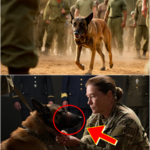
Concrete pen. Chain-link fence. Four military working dogs spread across the far side like a tightening net. Ninety pounds each, all tendon and scar and bad patience. The late afternoon sun hit the fence hard enough to turn the steel white. I could smell hot metal, old bleach, and dog sweat baked into concrete. Somewhere outside the enclosure a man laughed too softly, like he already knew how this ended.
I kept my hands loose at my sides.
Lieutenant Colonel Dominic Kesler stood at the fence with his jaw set so hard it looked painful. He had one palm flat against the chain link, wedding-band tan line still visible even though there was no ring on his finger. That detail stuck with me for some reason. Men like him always told on themselves in small ways first.
“Let her prove it,” he said.
The lead dog lunged.
That is not where this story starts, but that is the moment everything that had been buried for thirty-three years finally began to come up.
My name is Kira Brennan. I was twenty-seven years old that afternoon, a naval officer, attached to a K9 innovation team under Naval Special Warfare, and I had spent most of my life chasing a ghost with my father’s eyes.
I never met him.
Captain Thaddius Brennan died on February 27, 1991, seven kilometers outside Kuwait City, six weeks before I was born. In every official version of my childhood, he died a clean heroic death—combat conditions, operational chaos, a tragic casualty in a war full of them. My mother kept the folded flag in a walnut case on the mantel and his picture in the hallway, the one where he was half smiling in desert camouflage with a German Shepherd at his side. People who visited always lowered their voices in front of that photograph. They looked at me and said I had his eyes.
When I was little, I used to stand on a kitchen chair and trace the glass over his face with one finger.
When I was older, I learned people tell children the version of grief they can live with.
I was fourteen when I found the real report.
My mother kept it in a file cabinet she never locked because she trusted me to be decent, which is a dangerous thing to do with a fourteen-year-old girl who already suspects everyone is lying. It was raining that afternoon, hard enough that the gutters overflowed. I still remember the smell of wet eucalyptus drifting in through the cracked kitchen window while I sat on the floor in her study and read words nobody had ever intended me to see.
Redirected aggression.
Handler-directed attack.
Behavioral instability worsened by corrective escalation.
I read paragraph seventeen three times because the blood in my ears was so loud I missed half the sentence the first two times. My father had not been killed by enemy fire. He had not died in some noble blur of battlefield randomness. He had been killed by his own K9 partner after the dog’s training collapsed into something ugly and misdirected.
The last thing my father said, according to Staff Sergeant Mike Hollis, was: It wasn’t his fault.
Not the dog’s fault.
That sentence sat inside me for thirteen years like a piece of shrapnel.
Some girls decide to become doctors because they lose someone to illness. Some become lawyers because they see injustice early. I built my whole life around one question: what kind of training breaks a dog so badly it stops knowing friend from threat?
By nineteen I was studying animal behavior and stress physiology like my life depended on it. By twenty-two I was in the Navy. By twenty-five I was working in places where the air smelled like fuel and dust and men still believed pain was the fastest teacher. By twenty-seven I had a reputation for getting difficult dogs to stand down without force. People called it instinct because that sounded prettier than obsession.
Then Commander Diana Frost called me into a fluorescent conference room in San Diego and slid a thin folder across the table.
She was the sort of woman who never wasted motion. Steel-gray hair cut close. No jewelry. Eyes that made you feel like your excuses had already been measured and rejected.
“Camp Harrison,” she said. “North Carolina. Special operations K9 training facility. Eleven complaints in eighteen months. Four preventable dog deaths. Multiple reports buried at regional level.”
I opened the folder.
The first photograph was a German Shepherd lying in a run, front shoulder visibly lower than the other, eyes dark with that flat exhausted look animals get when pain becomes their normal weather. There were medical notes in the margin.
Untreated stress fractures.
Repeated electrical burns.
Rehabilitation likely if intervention is immediate.
At the top of the page, in neat black block letters, was the dog’s name.
Havoc.
For a second my fingers stopped working.
Part 2
The lead dog hit the end of its line with a snap that cracked through the pen like a gunshot.
Muscle, teeth, momentum—pure forward violence.
I didn’t move.
That’s the part people always get wrong. They think control is about dominance. About showing the animal who’s in charge.
It isn’t.
It’s about removing the question.
The dog’s eyes were already wrong—too wide, too bright, the whites showing in sharp crescents. Not focused on me, not really. Focused on everything and nothing. A nervous system stuck in permanent alarm.
“Don’t engage!” someone barked behind the fence.
I lowered my gaze—not submissive, just… quieter. Took one slow breath. Then another.
The dog lunged again.
I shifted half a step sideways. Not retreating. Just changing the angle so I wasn’t directly in its line. Breaking the tunnel.
“Easy,” I said, voice low enough it almost disappeared under the noise.
Not a command. A statement.
The second dog joined in, then the third. A chain reaction. Energy feeding energy, panic amplifying panic. Exactly the kind of environment that creates what killed my father.
I crouched slightly, bringing my center of gravity down, making myself smaller without folding. Hands still open. No sudden movements.
“Look at me,” I murmured.
The first dog didn’t. Not yet.
But it hesitated.
Just for a fraction of a second.
That’s all it takes.
I shifted my weight again, slow enough it barely registered. Let my breathing set the rhythm. Animals read that before anything else. Before tone. Before posture. Before intent.
The fourth dog stayed back.
Watching.
That one mattered.
There’s always one that hasn’t fully broken.
“Who handled Havoc?” I asked without looking away.
Silence.
Then, from behind the fence: “That’s not relevant right now, Lieutenant.”
Kesler.
“It is if you want this to stop,” I said.
The first dog lunged again—but shorter this time. Less commitment.
“Staff Sergeant Rourke,” someone muttered.
I filed the name away.
“Rourke taught them to escalate pressure when they didn’t comply,” I said, more to the dogs than the men. “No release threshold. No recovery window.”
Another half-step.
Closer now.
The first dog froze.
Just… froze.
Like something inside it hit a wall it didn’t understand.
“Good,” I whispered.
Not praise. Permission.
Behind me, the laughter was gone.
“You’re flooding them,” Kesler said sharply. “This is unsafe.”
“No,” I said. “This is the first time they’ve been allowed to come down.”
I slowly lowered one hand.
The dog’s head tilted.
Confusion.
Curiosity.
A crack in the loop.
“Come here.”
Soft. Almost nothing.
The dog took one step.
Then another.
The line went slack.
Behind the fence, someone swore under their breath.
I didn’t reach for the collar. Didn’t touch it yet. That comes later. Trust isn’t a switch—it’s a sequence.
The dog stopped two feet away from me, chest heaving, eyes still bright but no longer wild.
“Hi,” I said quietly.
For the first time, it blinked.
That’s when I knew.
This wasn’t instinct.
This was damage.
And damage can be traced.
“Bring Havoc,” I said.
Kesler didn’t move.
“That dog is restricted,” he said. “Level four containment.”
“I know what level four means.”
“It means he’s already put a handler in the hospital.”
“So did one thirty-three years ago,” I said, finally turning to look at him.
That landed.
Hard.
His jaw tightened again—but something else flickered behind it. Recognition. Or maybe guilt.
“Bring him,” I repeated.
A long pause.
Then: “Do it.”
The gate on the far side opened.
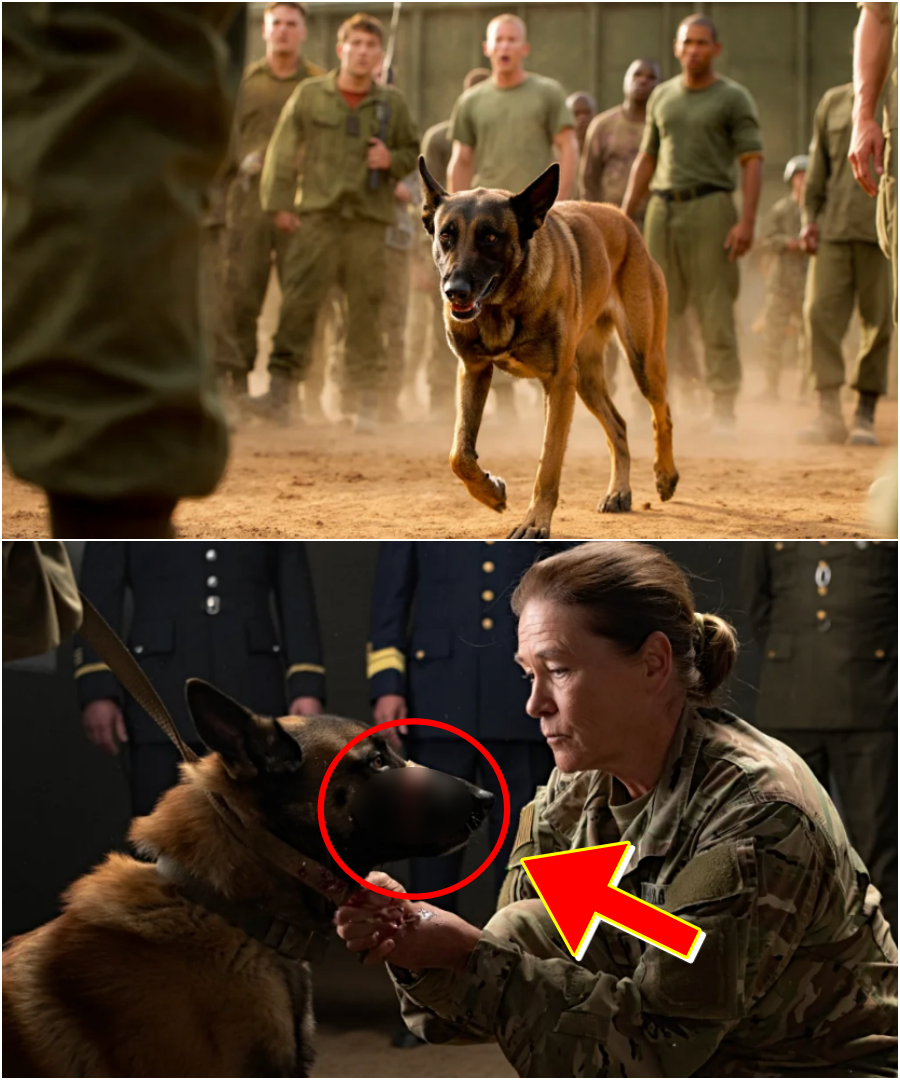
And Havoc stepped into the light.
Part 3
He was smaller than I expected.
Not in size—he was still a full-grown Shepherd—but in presence. Like something had been hollowed out of him.
His coat was dull. Patchy near the shoulder where the injuries had been. His gait was uneven, favoring the front left just like in the photo. But it was his eyes that stopped me.
Flat.
Not aggressive.
Not afraid.
Just… gone.
That’s worse.
Dogs like the ones behind me—those can come back. They’re loud, reactive, still fighting something.
Havoc wasn’t fighting anything.
He’d already lost.
“Stay back,” someone warned.
I ignored them.
“Havoc,” I said.
No response.
Of course not.
Names only matter if they’ve ever meant safety.
I took a step closer.
Behind me, one of the other dogs whimpered—low, uncertain.
Havoc’s ear twitched.
There it was.
A thread.
“Hey,” I said, softer now. Different tone. Not asking. Not directing.
Just… there.
Another step.
Kesler’s voice cut in: “Lieutenant, if that dog charges—”
“He won’t,” I said.
“You don’t know that.”
I did.
Because I’d seen those eyes before.
In a photograph on a hallway wall.
I stopped about six feet away.
Close enough to matter. Far enough not to trap him.
Then I did something that made three people behind the fence suck in a sharp breath.
I knelt.
Lowering yourself like that around a “dangerous” dog goes against every rule they teach.
But rules are built for systems that work.
This one didn’t.
Havoc’s head lifted slightly.
Confusion again.
“Good boy,” I murmured.
And this time, it wasn’t strategy.
It slipped out before I could stop it.
Because suddenly I wasn’t in Camp Harrison anymore.
I was fourteen, sitting on a cold tile floor, reading about a dog who didn’t know he’d done something unforgivable.
“It wasn’t your fault,” I whispered.
Havoc blinked.
A slow, deliberate blink.
Then, almost imperceptibly, his weight shifted forward.
One step.
The limp was worse up close.
My chest tightened.
“You’ve been hurting a long time, haven’t you?” I said.
Behind me, silence. Total.
Even Kesler wasn’t speaking now.
Another step.
Havoc’s nose lifted, testing the air.
I didn’t reach for him.
I let him come.
Three steps.
Four.
Then he stopped right in front of me.
Close enough that I could see the tiny scar across his muzzle. Close enough to feel the heat of him.
For a moment, nothing moved.
Then, slowly—so slowly it almost broke something in me—he leaned forward and pressed his forehead against my shoulder.
Not a nudge.
Not a demand.
Just… contact.
The kind that says I don’t know what this is, but I need it.
My hand came up automatically, resting lightly against his neck.
No pressure.
No restraint.
Just presence.
Behind the fence, someone exhaled like they’d been holding it for a year.
“Jesus…” a voice whispered.
Kesler didn’t say anything.
I looked up at him.
Really looked this time.
The hard edges were still there. The control. The command.
But underneath it—
Regret.
“How long?” I asked.
He didn’t pretend not to understand.
“A while,” he said.
“That’s not an answer.”
His jaw flexed.
“Since before I took command.”
“Then why didn’t you shut it down?”
Silence again.
Then, quieter: “Because I thought results justified pressure.”
I nodded.
“Yeah,” I said. “They always do. Until they don’t.”
Havoc shifted closer, leaning more of his weight into me.
Trust isn’t loud.
It’s this.
Small. Fragile. Hard-won.
“Get the vet team,” I said. “Now. He’s still salvageable.”
Kesler didn’t move immediately.
Then he turned. “You heard her.”
Boots moved. Radios crackled.
The machine started turning again—but differently this time.
I stayed where I was, hand resting on Havoc’s neck.
“You’re okay,” I murmured.
Not fixed.
Not healed.
But no longer alone inside whatever they’d done to him.
And somewhere, thirty-three years ago, a man I never met had said the same thing about a dog who didn’t understand.
It wasn’t his fault.
I finally understood what that meant.
Not forgiveness.
Responsibility.
I looked back at Kesler one last time.
“This doesn’t happen again,” I said.
It wasn’t a request.
For a moment, I thought he might push back.
Instead, he gave a single, sharp nod.
“No,” he said. “It doesn’t.”
The sun dipped lower, casting long shadows across the concrete.
The other dogs had gone quiet.
Watching.
Waiting.
For the first time, not because they were afraid.
But because something in the air had changed.
And once that happens—
You don’t go back.
News
CAUGHT ON CAMERA — A chi-lling moment involving Tanner Horner after the ki-lling of young Athena Strand — and what happened next has left many outraged…
Killer FedEx driver Tanner Horner was seen cleaning the van he used to abduct and murder 7-year-old Athena Strand in disturbing security video…
AN UNEXPECTED NAME EMERGES… — Sheriff shares latest update on a potential “person of interest” in the case of Nancy Guthrie, sparking intense attention
Sheriff Chris Nanos shut down a viral rumor with one word: “Nope.” Pima County Sheriff, Chris Nanos, speaks to the…
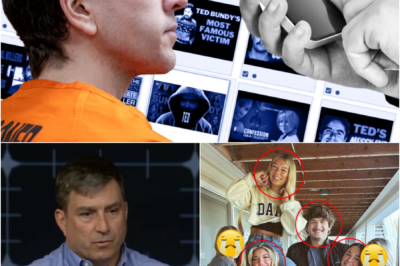
THE ABSENCE ITSELF… BECAME THE KEY — Case details on Bryan Kohberger reveal a surprising twist: the near-total lack of a digital footprint became crucial to building the case
EXCLUSIVE: Despite Bryan Kohberger leaving behind his DNA at the crime scene in 2022, the digital footprint of a man…
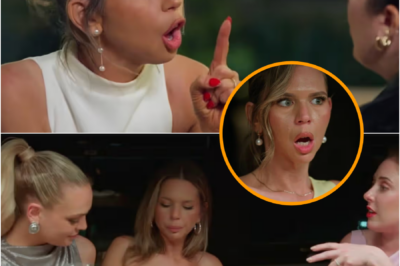
THE HIDDEN TEXTS ARE FINALLY EXPOSED… — Spoilers from Married At First Sight Australia reveal what Rebecca Zemek really said in the explosive messages
Many MAFS Australia viewers in the UK may be wondering what Bec really said in unaired scenes View 3 Images…
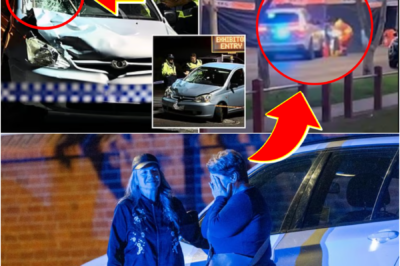
I HEARD A SCREECH… AND A GUY… — A witness recounts the moment a car allegedly mounted the kerb outside Comic Con Melbourne in Melbourne
A man has been killed and another is fighting for life after a car allegedly swerved into fans outside a…
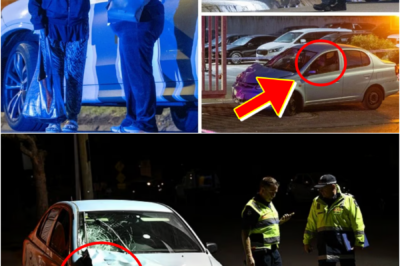
JUST ONE SECOND… EVERYTHING COLLAPSED… — A car suddenly plowed into a crowd outside Comic Con Melbourne in Melbourne, taking one life and leaving another on the edge — driver arrested at the scene
A man has been killed and another is fighting for life after a car allegedly swerved into fans outside a…
End of content
No more pages to load