Marcella makes you think you are watching a detective solve crimes — but half an hour in, you realise you are actually watching someone lose her grip on reality.

The BBC/Netflix psychological crime series, which ran for three seasons between 2016 and 2021, follows Marcella Backland (Anna Friel), a former London detective who returns to the force after a sudden breakdown and separation from her husband and children. At first glance it looks like a classic procedural: Marcella investigates a string of brutal murders, tracks suspects, interviews witnesses, uncovers lies. But very quickly the show reveals its true nature — the real mystery isn’t who the killer is… it’s what is happening to Marcella herself.

She blacks out for hours. When she wakes up, there is blood on her hands. Sometimes fresh bruises on her body. Sometimes objects appear in her flat that she doesn’t remember bringing home. And the case she is working on — a series of strangulations that eerily mirror events from her own past — starts to feel less like coincidence and more like someone (or something) is deliberately playing with her mind. Or maybe it’s her.
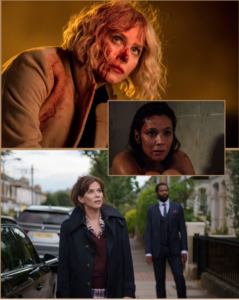
The genius of Marcella lies in that constant uncertainty. You are never sure whether you are watching a woman solving a crime… or a woman committing one. Every blackout scene is edited in a disorienting, fragmented way that forces the viewer to share Marcella’s confusion. The camera lingers on her face during those lost hours — eyes open, yet completely vacant — and when she “comes back” the guilt, panic and fear are so raw that you start questioning everything alongside her.
Anna Friel’s performance is widely considered the heart of the show. She plays Marcella as someone who is simultaneously fierce, broken, terrifying and heartbreaking. One moment she is interrogating a suspect with cold precision; the next she is staring at her own bloodstained hands in horror, whispering “What did I do?” The supporting cast is equally strong — Nicholas Pinnock as her ex-husband Jason, Ray Panthaki as her colleague DI Rav Sangha, and Sinéad Cusack as her mother — all feeding into the suffocating atmosphere of doubt and dread.
Across three seasons the series never repeats itself. Season 1 focuses on the Grove Park murders and Marcella’s disintegrating sanity. Season 2 moves to a new city and a new killer — but the blackouts continue, and the line between hunter and hunted blurs even further. Season 3 (the final one) takes the story into darker, more personal territory, forcing Marcella to confront whether the darkness is coming from outside… or from within.
Critics praised the show for its psychological depth and refusal to give easy answers. The Guardian called it “a masterclass in unreliable narration,” while The Telegraph described Friel’s performance as “mesmerising and deeply unsettling.” Viewers on social media still talk about how the show “ruined sleep for weeks” — not because of gore, but because of the slow, creeping terror of not knowing what your own mind is capable of.
Even years after its finale, Marcella remains one of the most unsettling and rewatchable British crime series ever made. It starts as a detective story. It ends as a study in psychological collapse. And somewhere in the middle, it makes you question whether you can ever truly trust what you see — even when the person doing the seeing is the one holding the badge.
Stream all three seasons on Netflix or BBC iPlayer. Just don’t watch it alone at night.
News
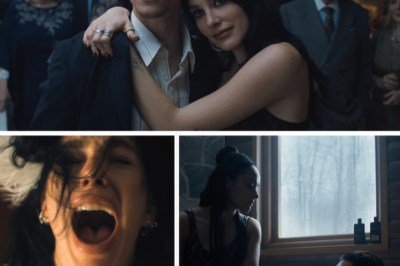
Netflix’s New Horror Series Unleashes Unrelenting Terror, Creeping Supernatural Secrets, and a Wedding Day Nightmare That Will Haunt You Long After the Credits Roll
Netflix’s New Horror Series Unleashes Unrelenting Terror, Creeping Supernatural Secrets, and a Wedding Day Nightmare That Will Haunt You Long…
Episode 500 didn’t just celebrate a milestone — it quietly turned into a full-blown treasure hunt hiding clues, callbacks, and emotional bombs that trace all the way back across decades.
Only Real NCIS Fans Will Catch These… Episode 500 Turned Into a Full Treasure Hunt With Hidden Clues From Decades…

The show just delivered one of its boldest moves yet, saying goodbye to a longtime fan-favorite in a way no one saw coming. Some fans are calling it a powerful, necessary shake-up, while others think it crossed the line after years of emotional investment.
NCIS Fans Left Shattered After Shocking 500th Episode Death as Leon Vance’s Exit Sparks Debate Over the Most Heartbreaking Departures…
A troubled detective hunts a ritualistic serial killer while confronting a corrupt colleague, in a Nordic noir story that feels overly familiar. Streaming on Netflix.
Detective Hole’ Review: Jo Nesbø’s Dark Cop Arrives Too Late to the Nordic Noir Boom (Netflix) A troubled detective hunts…

A SHOCKING PSYCHOLOGICAL THRILLER THAT WILL MESS WITH YOUR HEAD — and it’s already shaping up to be your next obsession.
An “unconventional thriller” full of twists and turns? We’re in! Exploring “guilt and retribution, love and betrayal,” Apple’s Imperfect Women…
BOOKISH MEETS SMALL-TOWN M-U:RDER — and somehow it’s even more addictive than you’d expect!
If you love a good detective drama and are on the hunt for a new TV obsession, look no further…
End of content
No more pages to load