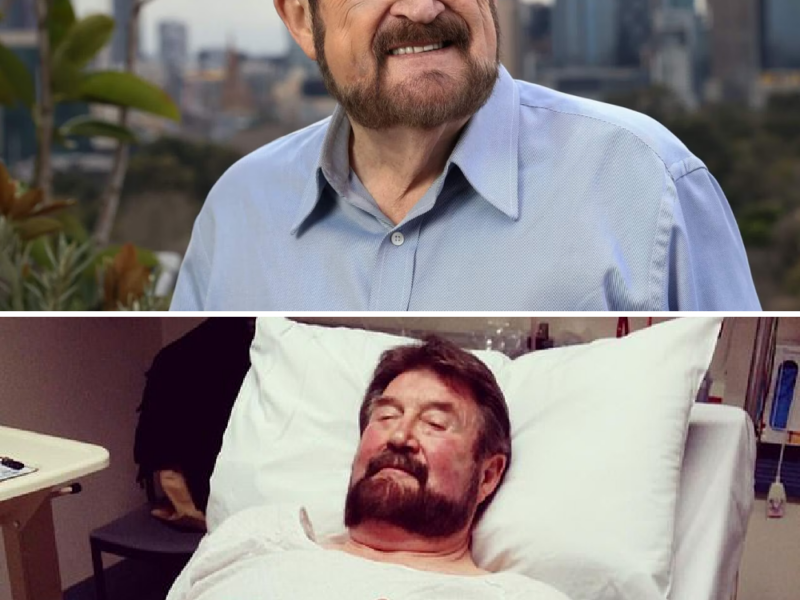
THE FINAL TWIST OF THE ‘HUMAN HEADLINE’: Defying the courts, beating cancer, five marriages—Derryn Hinch and his shocking, untold legacy
The passing of Derryn Hinch at 82 marks not only the close of a veteran voice on the Australian airwaves but also raises profound questions about the boundaries between media, justice, and populism. Over four decades in the industry, Hinch never chose to stand on the sidelines of debate; he placed himself at the center, where traditional journalistic principles clashed fiercely with the mindset of a social activist.
From Reporter to Vigilante
Hinch did not emerge as an objective news reporter, but as a figure who redefined a provocative media style. The moniker “Human Headline,” which he coined for himself, was no exaggeration; it served as proof of how he made himself the focal point of events. While traditional media typically adheres strictly to sub judice rules (prohibiting the publication of information that could influence an ongoing trial), Hinch chose the opposite path: exposing the identities of sex offenders before formal judicial processes were concluded.
From a sociological perspective, this action was a double-edged sword. On one hand, it reflected the frustration of a public grappling with gaps in the justice system, where protracted legal proceedings are sometimes perceived as protecting offenders rather than victims. Hinch leveraged that frustration to build his own media power. On the other hand, defying suppression orders was a direct challenge to the rule of law. His jail time and house arrest for violating these orders were not merely “professional accidents,” but inevitable consequences when an individual attempts to place themselves above the legal system to enforce the personal brand of justice they pursue.
The Transition from Airwaves to Parliament
Hinch’s founding of the “Derryn Hinch Justice Party” and his election to the Australian Senate in 2016 was a logical next step after decades of broadcasting. This demonstrates the influence of mass media on modern politics. When a journalist can transform audience support into votes, the line between reflecting reality and changing reality becomes blurred.
However, his political career also reflects a common trend in today’s politics: the rise of single-issue politicians. By focusing on law and order, he mobilized a specific voter base—those who felt their voices were unheard by major parties. Although his tenure as a senator was brief, it left a powerful message: public outrage is a valuable political resource if one knows how to harness it.
Lessons on Resilience and the Cost of Critical Thought
Looking back at Hinch’s life, one can observe a surprising consistency, even when facing significant adversities such as liver cancer. His resilience in battling illness mirrored the persistence in his professional style. Whether one agrees with or criticizes his methods, it is hard to deny that Hinch serves as a case study on how an individual can challenge the stability of social institutions.
The controversies surrounding his public naming of criminals or his challenges to the courts should not be viewed as impulsive actions. They were manifestos of a life philosophy: that the rights of victims and the safety of the community are sometimes more important than dry administrative procedures. Naturally, this viewpoint carries significant risks for judicial fairness, but the very debates he sparked forced society to re-examine loopholes in the law.
Ultimately, Derryn Hinch did not leave a legacy of harmony; he left a legacy of collision. He stands as proof that the media does not necessarily have to be a mirror reflecting society, but can also be an instrument of intervention in social structures. Despite a turbulent personal life marked by multiple marriages and health challenges, his place in Australian media history remains unique: a man who chose to become the “headline” rather than just the news reader—a man willing to trade his career and freedom to pursue his personal conviction of justice.
SOURCE: 7 NEWS
https://7news.com.au/lifestyle/real-life/veteran-broadcaster-and-senator-derryn-hinch-dies-aged-82-c-22558894