
When HBO premiered Band of Brothers in September 2001, it didn’t just launch a television series — it set a new standard for historical drama and war storytelling that still stands unmatched more than two decades later. Executive produced by Steven Spielberg and Tom Hanks, and based on Stephen E. Ambrose’s book chronicling the real-life journey of Easy Company, 2nd Battalion, 506th Parachute Infantry Regiment, 101st Airborne Division, the ten-episode miniseries follows the men of “Easy” from their training in 1942 through the end of World War II in Europe in 1945.
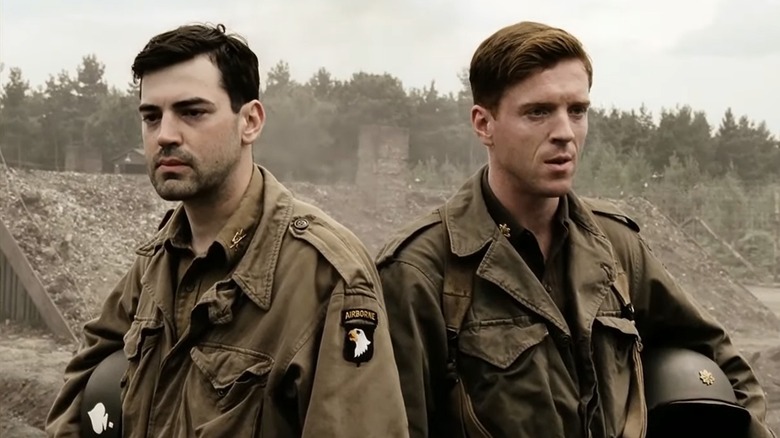
What makes Band of Brothers extraordinary is its refusal to glorify war while still honoring the profound humanity of the soldiers who fought it. The series opens with the D-Day invasion of Normandy — one of the most realistically depicted combat sequences ever filmed — and follows the company through Operation Market Garden, the Battle of the Bulge, the liberation of Kaufering IV concentration camp, and the final occupation of Hitler’s Eagle’s Nest. Each episode is told through the eyes of different members of Easy Company, allowing viewers to see the war from multiple intimate perspectives.
The ensemble cast is exceptional. Damian Lewis gives a quiet, commanding performance as Captain Richard Winters, the steady moral centre of the unit. Scott Grimes, Neal McDonough, Ron Livingston, Donnie Wahlberg, David Schwimmer, Michael Fassbender (in a small but memorable early role), and many others deliver portrayals that feel lived-in and authentic rather than performative. The real power, however, comes from the interviews with the actual surviving members of Easy Company — men like Richard Winters, Bill Guarnere, Joe Toye, and Donald Malarkey — who appear in documentary-style segments throughout each episode. Their real voices, weathered by age and memory, anchor the drama in lived truth.

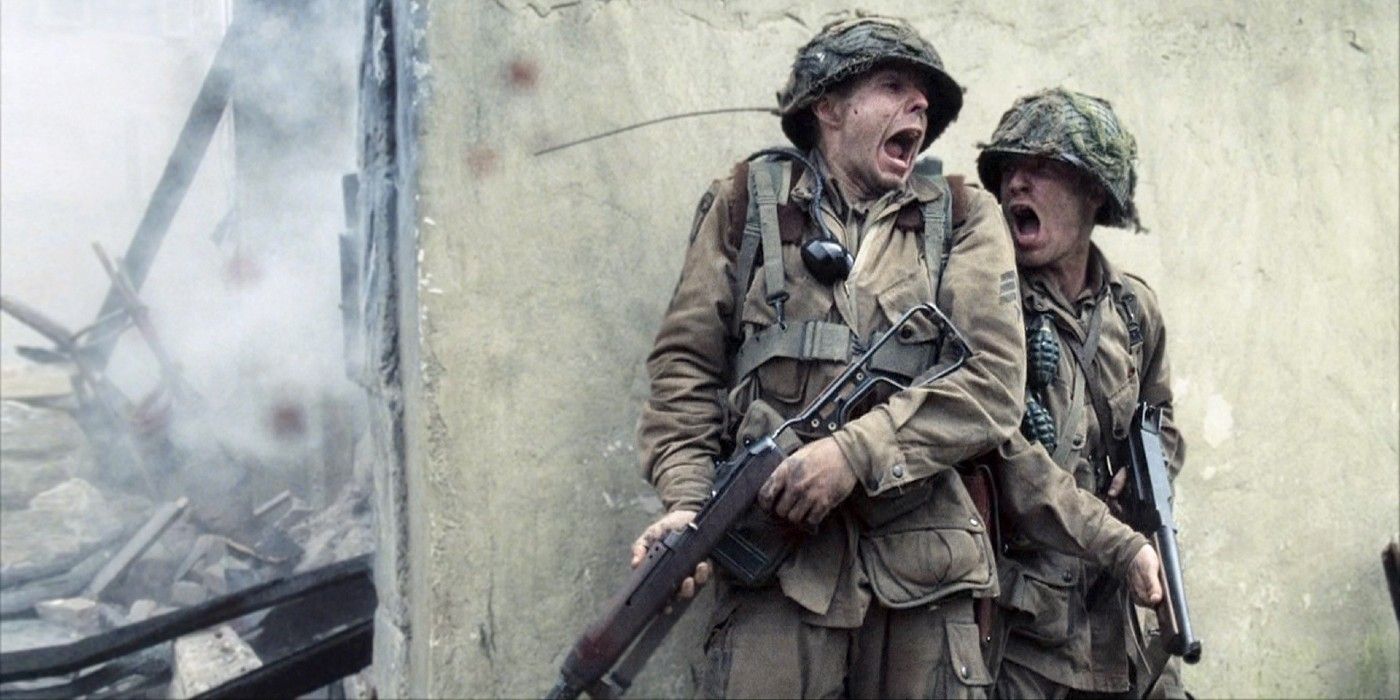
Visually, the series was groundbreaking. Shot with handheld cameras, muted colours, and a documentary-like realism, it set the template for modern war filmmaking. The production spared no expense: real military consultants, authentic uniforms and weapons, and massive set pieces (the Normandy beach landing alone cost millions). The result is combat that feels chaotic, terrifying, and almost unbearably real — never romanticised.

The emotional depth is what separates Band of Brothers from other war stories. It never shies away from the fear, the boredom, the exhaustion, the guilt, and the brotherhood that sustained men through unimaginable horror. Scenes of soldiers comforting each other after losing friends, of medics working under fire, of quiet moments of humanity amid carnage — these are the moments that linger long after the credits roll.
Critically, the series was an immediate triumph, winning six Primetime Emmys (including Outstanding Miniseries) and a Peabody Award. It has since been ranked among the greatest television series ever made by outlets such as Empire, Rolling Stone, and The Guardian. Its cultural impact is enormous: it changed how war is portrayed on screen and inspired a generation of filmmakers and viewers to seek out the real stories behind the history.
More than 20 years later, Band of Brothers remains essential viewing — not only for its historical accuracy and technical brilliance, but for its deep respect for the men who lived through the war. It reminds us that behind every medal and every victory are individual lives — fragile, brave, and forever changed.
Stream all ten episodes on HBO Max or other platforms. Few series have ever captured the human cost — and the human triumph — of war so completely.
News

Netflix’s New Horror Series Unleashes Unrelenting Terror, Creeping Supernatural Secrets, and a Wedding Day Nightmare That Will Haunt You Long After the Credits Roll
Netflix’s New Horror Series Unleashes Unrelenting Terror, Creeping Supernatural Secrets, and a Wedding Day Nightmare That Will Haunt You Long…
Episode 500 didn’t just celebrate a milestone — it quietly turned into a full-blown treasure hunt hiding clues, callbacks, and emotional bombs that trace all the way back across decades.
Only Real NCIS Fans Will Catch These… Episode 500 Turned Into a Full Treasure Hunt With Hidden Clues From Decades…

The show just delivered one of its boldest moves yet, saying goodbye to a longtime fan-favorite in a way no one saw coming. Some fans are calling it a powerful, necessary shake-up, while others think it crossed the line after years of emotional investment.
NCIS Fans Left Shattered After Shocking 500th Episode Death as Leon Vance’s Exit Sparks Debate Over the Most Heartbreaking Departures…
A troubled detective hunts a ritualistic serial killer while confronting a corrupt colleague, in a Nordic noir story that feels overly familiar. Streaming on Netflix.
Detective Hole’ Review: Jo Nesbø’s Dark Cop Arrives Too Late to the Nordic Noir Boom (Netflix) A troubled detective hunts…

A SHOCKING PSYCHOLOGICAL THRILLER THAT WILL MESS WITH YOUR HEAD — and it’s already shaping up to be your next obsession.
An “unconventional thriller” full of twists and turns? We’re in! Exploring “guilt and retribution, love and betrayal,” Apple’s Imperfect Women…

BOOKISH MEETS SMALL-TOWN M-U:RDER — and somehow it’s even more addictive than you’d expect!
If you love a good detective drama and are on the hunt for a new TV obsession, look no further…
End of content
No more pages to load