
TNT’s Animal Kingdom (2016–2022) stands as one of the most intense, morally complex, and rewatchable crime dramas in recent television history. Spanning six seasons and 75 episodes, the series transformed a 2010 Australian indie film into a sprawling, sun-drenched California crime epic that blended high-stakes heists, family dysfunction, and ruthless betrayal into a slow-burn masterpiece. With a powerhouse ensemble led by Ellen Barkin and a breakout performance from Finn Cole, Animal Kingdom quietly became a cult classic — and its influence is still felt across today’s streaming landscape.

The story centers on the Cody family, a tight-knit criminal clan operating out of Oceanside, California. At its core is Janine “Smurf” Cody (Ellen Barkin in Seasons 1–4), the iron-fisted matriarch who raised her four sons — Pope (Shawn Hatosy), Craig (Ben Robson), Deran (Jake Weary), and adopted son J (Finn Cole) — in a life of organized crime. When 17-year-old Joshua “J” Cody arrives after his mother’s overdose death, he’s pulled into the family’s dangerous world of bank robberies, drug deals, and power struggles. What begins as a coming-of-age story quickly evolves into a brutal examination of loyalty, greed, trauma, and the toxic legacy of a family that survives by breaking every rule.
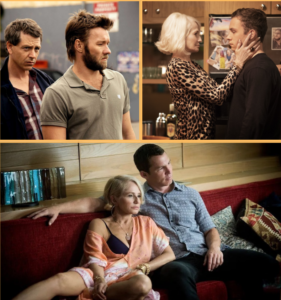
Ellen Barkin’s Smurf is one of television’s greatest villains — charismatic, manipulative, and terrifying. She loves her sons fiercely but controls them completely, creating a dynamic that’s equal parts maternal warmth and cold-blooded menace. Her performance earned widespread acclaim, blending tenderness with ruthless calculation. When Barkin left after Season 4 (following reported creative differences), the show smartly shifted focus to Finn Cole’s J, whose quiet intelligence and moral conflict make him the audience’s anchor. Cole’s slow transformation from naive outsider to calculating player is one of the most compelling character arcs in modern TV.
The supporting cast is exceptional. Shawn Hatosy’s Pope is heartbreaking — a mentally unstable ex-con who craves love but is doomed by violence. Ben Robson’s Craig is the reckless adrenaline junkie, Jake Weary’s Deran the conflicted gay son trying to break free, and Rigo Sanchez’s Manny provides explosive menace as Smurf’s former lover. Later seasons introduce standout additions like Leila George as young Smurf (in flashbacks) and Rya Kihlstedt as a ruthless rival matriarch.
The series excels in pacing and tone. Early seasons focus on heist-of-the-week energy — meticulously planned robberies that often go wrong in spectacular fashion. Later seasons deepen the psychological drama: family betrayals, addiction, incestuous undertones, and the generational trauma Smurf inflicted on her children. Creator Jonathan Lisco and showrunner David Michôd (who directed the original Australian film) keep the violence brutal but never gratuitous — every gunshot has weight, every betrayal cuts deep.
The California setting is a character in itself. Oceanside’s beaches, boardwalks, and surf culture contrast sharply with the Codys’ criminal underworld, creating a sunlit noir aesthetic that makes the darkness feel even more sinister. The soundtrack — heavy on 90s alt-rock, indie, and hip-hop — perfectly captures the mood.
Critics praised the show’s evolution. The New York Times called it “a masterful crime family saga with heart and teeth.” Vulture hailed Finn Cole: “One of the best performances on television.” On Rotten Tomatoes, it averages 88% across seasons, with Season 4 (post-Barkin) often cited as the strongest for its emotional payoff.
Animal Kingdom isn’t just about crime — it’s about family, loyalty, and the cost of survival. As Smurf once said: “We don’t have friends. We have family.” In the end, that family destroys itself from within — a tragedy as old as Shakespeare, retold with blood, surfboards, and 90s nostalgia.
All six seasons are streaming on Netflix, Hulu, and Max. Dive in — but be warned: once you’re in the Cody family, there’s no easy way out.
News
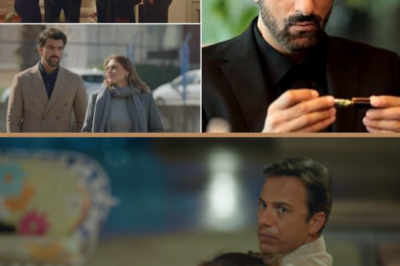
“THIS ISN’T A COMEBACK… IT’S A RECKONING.” – Season 2 returns with a darker edge — where elegance hides cruelty and every move comes at a cost.
Netflix’s breakout Turkish drama Old Money (known locally as Enfes Bir Akşam) returns with Season 2, delivering a bolder, more emotionally charged narrative…

“WHAT HAPPENS… WHEN THE MIRACLES STOP?” – For seasons, the story gave us hope — lives changed, faith restored, miracles everywhere. But this time… everything shifts. The new chapter dives into something far heavier — not power, but surrender. Not peace… but pain. As the story moves toward the final, agonizing hours before the crucifixion, the tone turns darker than ever. No more crowds. No more easy faith. Only doubt. Only fear. Only the weight of what’s coming.👇 WATCH NOW 👇
The upcoming sixth season of The Chosen will center on the theme of surrender, exploring one of the most significant and…

“THIS IS THE MOST INTENSE CHAPTER YET…” – *The Chosen* Season 6 is finally here — and it’s taking the story to a whole new level.
The countdown to The Chosen Season 6 has officially begun, and this season promises to be unlike anything we’ve seen before. As…
The first teaser for HBO’s new Harry Potter series has sent shockwaves through the franchise’s global fandom, with millions of viewer reactions flooding social media in the wake of its surprise release.
Hogwarts is back in session, sparking a fresh wave of ‘Pottermania’. The first teaser for HBO’s new Harry Potter series has sent…

LADY WHISTLEDOWN IS D:E-AD. LONG LIVE THE LIAR! The quill has changed hands — and NO ONE IS SAFE.
The quill has changed hands — and no one is safe. Bridgerton Season 4’s explosive finale didn’t just close one…
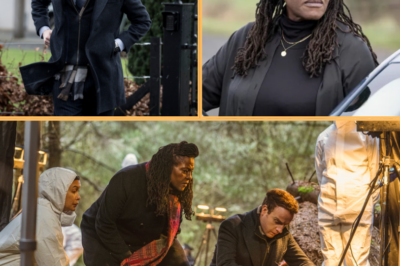
Viewers Are Calling This the Most Underrated Detective Drama on British TV — And It’s Finally Coming Back With a Downton Abbey Star!
Acorn TV and 5 announced today the second season renewal of the critically-acclaimed detective drama, Inspector Ellis. Inspector Ellis — Photo…
End of content
No more pages to load