The Best ‘Pick Me Girl’ Movie of All Time: A Girl Deliberately Contracts a Serious Illness for Attention—And the Bitter Ending
🎭 Analysis of “Sick of Myself”: When Narcissism Becomes a Form of Survival
“Sick of Myself” by director Kristoffer Borgli is not just a black comedy; it is a cold, uncompromising mirror reflecting narcissism and the obsession with seeking attention in modern society. Through the self-destructive journey of the main character, Signe, the film delves into the darkest aspects of media culture and the competition for “victim status.”
1. The Narcissism Epidemic: Fame at Any Cost
The film revolves around Signe, who feels completely overshadowed and jealous when her boyfriend, Thomas, becomes a successful artist. Signe is not seeking personal happiness or satisfaction; she craves recognition and to be more noteworthy than others.
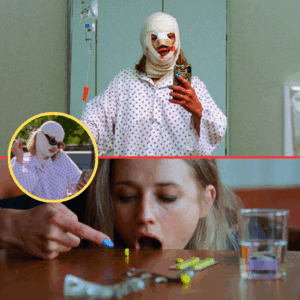
The core analysis shows that when Thomas is praised for his talent, Signe realizes that the only way for her to stand out is through suffering. She doesn’t want to be famous; she wants to be the most important person in the room, even if it requires her to self-inflict victimhood. Her act of using illegal medication to develop a severe skin condition is the peak of this desperation, turning physical pain into a tool to garner sympathy and social media fame.
2. Internal Rot (Body Horror)
“Sick of Myself” utilizes the element of Body Horror—the gruesomeness of Signe’s worsening dermatological condition—as a powerful visual metaphor. Her deteriorating physical state is the pictorial representation of the internal decay and rot of her psyche.
Every lesion, every instance of skin peeling is not merely a medical symptom but proof that Signe’s distorted psychology is demanding attention from the outside world. Physical pain becomes the price of the fame she pursues.
3. The Toxic Competitive Relationship
The relationship between Signe and Thomas is a sharp analysis of toxic competition. Both are narcissists, but in different ways. Thomas seeks validation through creation (shock art), while Signe seeks it through self-destruction (shock victimhood).
The film clearly illustrates that they do not love each other; they need each other as rivals in a race for the spotlight. One person’s success inevitably leads to the failure and extreme reaction of the other. The absence of genuine love and empathy in this relationship further sharpens the film’s satire.
4. Conclusion: A Modern Reflection
“Sick of Myself” is a terrifying wake-up call. It doesn’t just satirize social media addicts, but it also raises questions about a society in which truth, genuine compassion, and humility have been replaced by the desperate craving to be seen and pitied.
Signe’s struggle is a frightening magnification of how we define our self-worth in an era where attention is the common currency. The film succeeds in creating a tragically sympathetic antagonist, forcing the audience to confront the uncomfortable truth about our own need for attention.