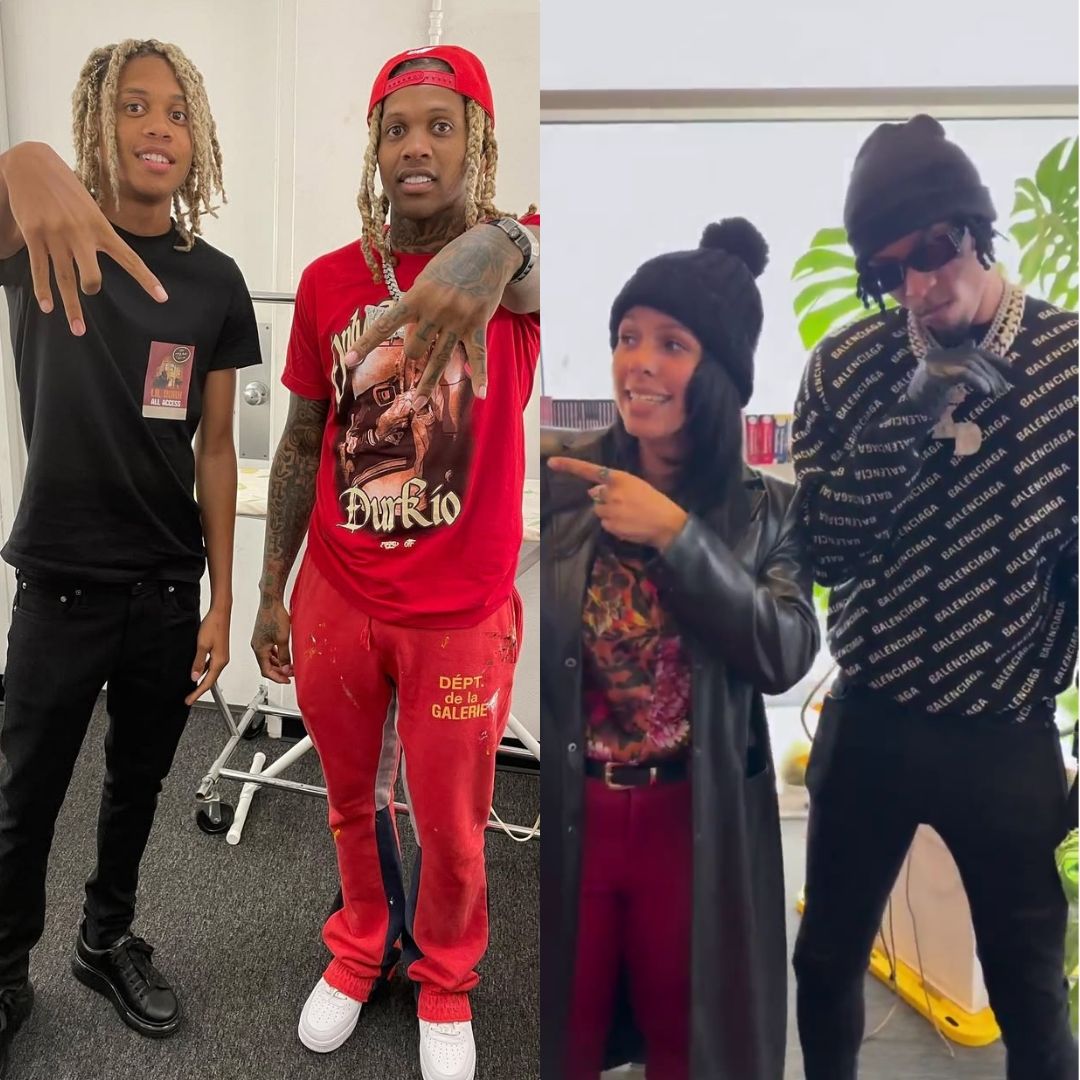
For years, hip-hop has seen impersonators come and go. Some are harmless, some are hilarious, and a few even earn the blessing of the artists they mimic. The most famous recent example is the so-called “Fake Lil Durk,” who went viral for his resemblance and mannerisms — only to eventually meet the real Lil Durk and even appear in one of his music videos. That moment turned a joke into a co-sign and proved that, sometimes, imitation really can turn into opportunity.
But the situation surrounding the Fake YoungBoy is very different — and far more controversial.
What initially caught attention was how uncannily accurate the impersonation is. From facial expressions to voice cadence, body language, and energy, many fans admit it’s almost uncomfortable to watch. Clips circulate where, at first glance, viewers genuinely think they’re seeing the real NBA YoungBoy. The performance is so precise that some argue it unintentionally makes the real artist look exaggerated or slowed down by comparison — not because that’s true, but because the imitation highlights every recognizable trait all at once.
That’s where the backlash begins.
Unlike parody skits or neutral fan content, this impersonator has reportedly been linking up with artists and figures considered rivals to YoungBoy, including NLE Choppa. For fans deeply aware of rap politics, alliances, and long-running tensions, that move feels less like entertainment and more like provocation.
Social media reacted instantly.
“This ain’t funny anymore,” one fan wrote.
“You don’t play both sides wearing another man’s face,” said another.
The concern isn’t just about clout — it’s about consequences. Hip-hop history is full of examples where blurred lines between image, identity, and affiliation led to real-world problems. Even when violence isn’t intended, perception alone can escalate situations fast. Critics argue that by publicly impersonating YoungBoy while appearing alongside his perceived rivals, the look-alike is inviting attention he may not be prepared to handle.
What makes this situation even more tense is the contrast with Fake Lil Durk’s path. That impersonation stayed largely respectful, playful, and non-confrontational — ultimately earning Durk’s approval. The Fake YoungBoy, by contrast, hasn’t received any public acknowledgment or co-sign from the real artist. Silence, in this case, is being interpreted as disapproval.
Some fans argue the impersonator is simply chasing viral fame without understanding the weight of the image he’s wearing. Others believe he knows exactly what he’s doing — leveraging controversy for clicks, engagement, and relevance. Either way, the line between parody and provocation is starting to blur.
There’s also a broader conversation unfolding: When does impersonation stop being flattery and start becoming harmful? In an era where social media rewards extremes, accuracy alone can become a weapon. When an impersonation is “too good,” it doesn’t just copy — it competes.
Supporters of the impersonator insist it’s all entertainment and that fans are taking things too seriously. But critics push back, saying that hip-hop isn’t just content — it’s culture, history, and real relationships layered with real tension.
The fear many are expressing isn’t hypothetical. They’re worried that if the impersonator keeps inserting himself into rival spaces while wearing YoungBoy’s image, someone might misinterpret intent — and things could spiral in ways no viral moment is worth.
At the heart of it all is a simple truth: clout fades, but consequences don’t.
Whether this ends as a cautionary tale or a wake-up call depends on what happens next. The internet may love the spectacle, but in hip-hop, authenticity, respect, and awareness still matter. And right now, many fans believe the Fake YoungBoy is standing at a crossroads — where one wrong move could turn viral fame into a very real problem.
News

SHE WAS ONLY SEVEN MONTHS OLD — Distu-rbing Video Shows NYC Mom’s Agonizing Realization After Baby Sh0t D-ead
A video captured the heart-wrenching moment a young mom realized her 7-month-old daughter had been shot by a stray bullet while…
SOMETHING YOU NEED TO KNOW… — Lachie & Jules Neale Drama Explodes as Heartbroken AFL WAG Contacts Tess Crosley’s Husband, Sh0cking Fans
Jules Neale has shown her support for Tess Crosley’s husband, Ben Crosley, as the pair continue to navigate the fallout…
I DIDN’T RECOGNIZE MYSELF — Ines Basic Speaks Out After Cosmetic Procedure Goes H0rribly Wrong
Married At First Sight bride Ines Basic has revealed she was left with a partially collapsed face after a routine Botox treatment went horribly…
NO ONE EXPECTED THIS — Police Hint at Motive After Son Accused in Father’s Sh0cking De-ath Inside Family Home
A man has been charged after his father was allegedly fatally stabbed in Sydney’s west last night. Emergency services were…
SECONDS FROM DISASTER — CCTV reveals vi0lent e-bike crash into ute before unbelievable escape sh0cks viewers
An e-bike rider is being sought by police after smashing into a ute and riding away. The man rode in…

THIS HAS GONE TOO FAR — Insider claims Tess Crosley is suffering in silence after Lachie Neale drama explodes
A friend of Tess Crosley has issued a stunning defence in the wake of the Lachie and Jules Neale affair…
End of content
No more pages to load