
An experienced mountaineer has been charged with manslaughter after allegedly leaving his girlfriend to freeze to death on Austria’s highest peak.
Thomas Plamberger, 36, is accused of making a series of life-threatening errors while climbing Grossglockner mountain with Kerstin Gurtner, his 33-year-old girlfriend, in January.
The couple were just 150ft from the 12,460ft summit when Ms Gurtner collapsed from exhaustion at around 8.50pm and said she could not go any further.
Mr Plamberger decided to leave her and descend the mountain to seek help. But he was gone for more than six hours, during which she died from extreme cold.
The couple’s torches can clearly be seen as they initially clamber up towards the summit at around 6pm on January 18.
The next image, taken six hours later, shows a small pool of light as the torches began to lose power.
A third image reveals Mr Plamberger, his torch still functioning, traversing the top of the mountain in an attempt to descend the other side and find help, leaving his girlfriend alone.
The next morning, at 7am, a helicopter was deployed to try to find Ms Gurtner, but the mission had to be called off because of strong gusts.
Three hours later, a rescue team was sent up the mountain, but by the time they reached Ms Gurtner, she was dead.
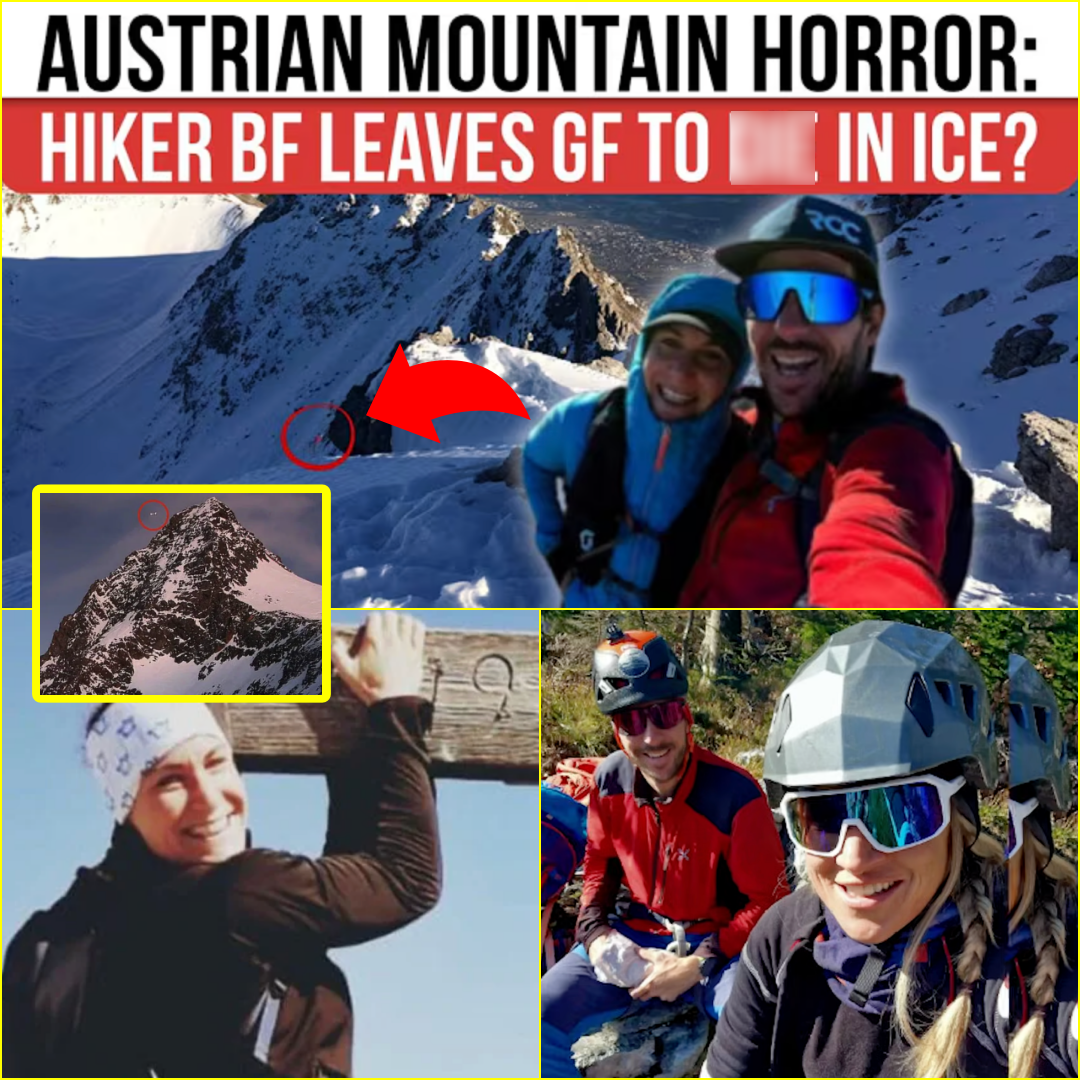
Mr Plamberger was charged with manslaughter and gross negligence following an investigation into her death. He has denied the allegations and said he had gone to get help, calling it “a tragic, fateful accident”.
If convicted of the charges, he could be imprisoned for up to three years. His trial will begin at a court in Innsbruck in February.
Prosecutors accused the mountaineer of making nine cardinal errors.
They said he should not have embarked on the climb because of his girlfriend’s inexperience – she had never undertaken such a challenging high-altitude climb in winter conditions.
He was also accused of starting the climb two hours later than he had originally planned.
He did not carry emergency bivouac equipment, which could have kept Ms Gurtner warm when he went for help. She was wearing soft snowboard boots, unsuitable for the mountain terrain, prosecutors said.
The climber should have made the decision to abandon the entire venture because of 46mph winds and temperatures of minus 8C, which would have felt more like minus 20C with the wind chill effect.
He also did not give a distress signal when a helicopter flew over at 10.50pm, and only called the police at 12.35am but then put his phone on silent so that he missed any further calls.
Lastly, he failed to ensure that his girlfriend was in a sheltered spot, out of the wind, which may have slowed her rate of heat loss. Nor did he remove her backpack and wrap her in emergency blankets, which the couple had brought with them.
An online tribute page to Ms Gurtner said her death had brought “deep shock and sadness”.
It described her as a “beloved daughter, sister, sister-in-law, godmother, granddaughter, partner and friend” and asked those visiting the page to “refrain from accusations and assumptions”.
In a statement, prosecutors said: “At approximately 2am, the defendant left his girlfriend unprotected, exhausted, hypothermic, and disoriented about 50 metres below the summit cross of the Grossglockner. The woman froze to death.
“Since the defendant, unlike his girlfriend, was already very experienced with alpine high-altitude tours and had planned the tour, he was to be considered the responsible guide of the tour.
“Despite the woman’s inexperience – she had never undertaken an alpine high-altitude tour of this length, difficulty, and altitude – and despite the challenging winter conditions, the defendant undertook the alpine high-altitude tour to the Grossglockner via the Stüdlgrat with her in winter.”
News

YOU WON’T BELIEVE WHAT SHE SAID — MAFS’ RACHEL GILMORE REVEALS HOW STEVEN BROKE HER HEART
The 35-year-old said it all started when Steven came to visit her in Melbourne. MAFS bride Rachel’s bombshell update after…
Grant Denyer hits back after being accused of causing motor racing accid3nt that left driver with a br0ken sp!ne — then making light of it on social media
Grant Denyer has denied accusations that he caused a crash that left another racer with a broken spine in last weekend’s…
KYLE SANDILANDS SPOTTED IN OVERSIZED OUTFIT… AFTER SH0CKING COURT DOCUMENTS REVEAL DETAILS ABOUT JACKIE ‘O’
Kyle Sandilands took some time out from his ongoing legal battle with ARN on Thursday to spend some quality time with…

IT’S JUST REALLY HARD TO GET TO THIS POINT… – THE HEARTBREAKING REASON RACHEL AND STEVEN’S LOVE ENDED
It was meant to be a fairytale ending. After weeks of emotional ups and downs on Married At First Sight,…

HOT SCOOP — Meghan Markle Finally Heading to Australia… But This Trip Holds Secrets Bigger Than Anyone Thinks
With Meghan Markle‘s Australian visit just around the corner, rumours are swirling about the real reason for the trip. The Duchess…
ATTENTION-GRABBING ROYAL MOMENT — Kate Middleton suddenly turned toward a younger family member… and what happened next quietly caught people off guard
The Princess of Wales proved the Earl of Wessex is firmly in the royal fold as they shared a sweet interaction at the family’s…
End of content
No more pages to load