
Elon Musk’s statement about Tesla’s mission reignites discussions about sustainable abundance, innovation, and artificial intelligence.
The possible reformulation of Tesla’s missionThe proposal, suggested by Elon Musk, has reignited the debate about the company’s future.
Long-term strategy and the role of artificial intelligence in economic growth.
The statement was made on Christmas Eve, when the executive stated in a post on the social network X.
Consider the term “incredible abundance” more appropriate and “more joyful” than the expression “sustainable abundance”.
The comment was made in the United States, amid the recent release of the company’s new strategic plan, and raised questions.
It’s about whether the speech represents merely a language adjustment or a deeper conceptual shift.
Although the suggestion gained immediate traction, Tesla has not announced any formal changes to its official documents to date.
Thus, the company’s institutional mission remains the same: “to accelerate the world’s transition to sustainable energy.”
The statement comes after the release of the Master Plan Part IV.
the speech of Elon Musk This comes shortly after the release of Master Plan Part IV.
Tesla’s most recent long-term strategic plan, presented to the market this year.
In the document, the concept of sustainable abundance appears repeatedly as the basis for the company’s vision of economic growth supported by technology, automation, and new products.
Despite this, the plan received criticism for adopting language considered broad and lacking in objectivity.
especially with regard to goals, deadlines and means of execution.
At the time of the presentation, Musk publicly acknowledged these criticisms and stated that the document could gain more technical details over time.
In this context, the suggestion to change the term used to define Tesla’s mission came to be interpreted
as a possible sign of adjustments in strategic communication, although without official confirmation.
Change of tone or sign of a new strategy?
It is not yet clear whether Elon Musk’s proposal indicates merely a shift to a more informal and optimistic tone, or if it points to a broader reorientation of the company’s narrative.
The executive is known for using social media to make spontaneous and often informal comments about his businesses.
On the other hand, the timing of the statement is noteworthy. In recent months, Musk has more frequently highlighted themes such as artificial intelligence, robotics, and automation as central pillars of Tesla’s future.
These areas are becoming increasingly connected to the company’s growth vision, extending beyond the traditional automotive sector.
Meanwhile, the company continues to invest simultaneously in electric vehicles, energy storage systems, solar power generation, and autonomous transportation projects, maintaining a diversified strategy.
Sustainability remains the cornerstone of Tesla’s mission.
Despite the debate about language, the trajectory of Tesla remains strongly associated with sustainability.
In 2017, Elon Musk resigned from his position as an advisor to the United States government following the country’s decision to withdraw from the Paris Agreement. At the time, he stated that climate change was real and that leaving the treaty would cause global harm.
In the same year, he declared to the magazine Rolling StoneTo consider global warming the greatest threat facing humanity in this century, second only to artificial intelligence.
In 2018, he reinforced this position by stating that the fundamental reason for Tesla’s existence was to accelerate the transition to sustainable transportation and energy systems.
These statements help to contextualize why the term sustainable abundance has always occupied a central role in the company’s communication.
Environmental impact and technological expansion
According to Tesla’s 2024 impact report, the company’s products helped prevent approximately 32 million metric tons of CO₂ emissions in 2024 alone.
The document also highlights significant progress in battery recycling, the use of renewable energy in factories, and targets for neutrality in greenhouse gas emissions.
In addition to electric vehicles, the company has expanded its operations into energy storage, smart grids, and solar power generation.
Large-scale battery power plant projects and virtual power plants have begun to contribute to the stability of electrical grids in different countries.
To date, these pillars continue to be officially presented as a central part of Tesla’s mission, regardless of recent statements from its CEO.
Debate intensifies amid ambitious goals.
The discussion about Tesla’s mission is happening alongside a period of high exposure for Elon Musk, driven by a compensation package tied to aggressive growth targets.
The plan envisions expanding the production of vehicles, robots, and mobility services, as well as a significant increase in the company’s market value over the next decade.
With the approval of this bonus, Musk could become the world’s first trillionaire, which adds even more scrutiny to his public statements and how he communicates Tesla’s future.
Thus, while the official mission remains unchanged, the suggestion to replace “sustainable abundance” with “incredible abundance” continues to fuel debates about strategy, corporate narrative, and the balance between sustainability and technological innovation.
News

D3ADLY POST SPARKS F@TAL SH00TING — Aspiring NC Rapper K!lled After Controversial “Snitch” Documents Allegedly Shared Online…
What started as a controversial social media post quickly spiraled into a tragedy no one could take back. In North…
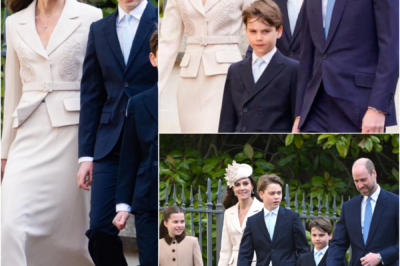
Growing up right before our eyes — done right! Prince George is already nearly as tall as Catherine, Princess of Wales (even in heels), and the shift feels impossible to ignore…
Prince George, Princess Charlotte and Prince Louis were seen walking into the royal family’s church service alongside their parents at…
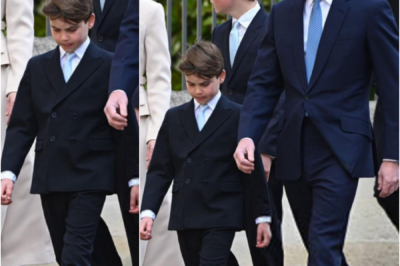
Like father, like son — done right! Prince William and Prince Louis stepped out together at Easter in Windsor, walking in perfect sync in a moment that quietly melted hearts
Prince George, Princess Charlotte and Prince Louis were seen walking into the royal family’s church service alongside their parents at…
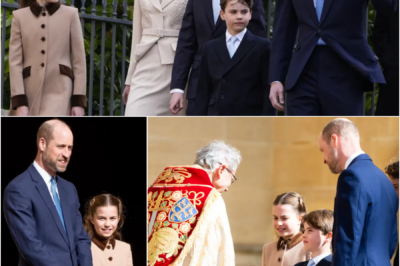
A quiet royal moment done right! Prince William and Princess Charlotte shared a sweet exchange during Easter in Windsor—subtle, natural, and impossible to ignore
Prince George, Princess Charlotte and Prince Louis were seen walking into the royal family’s church service alongside their parents at…
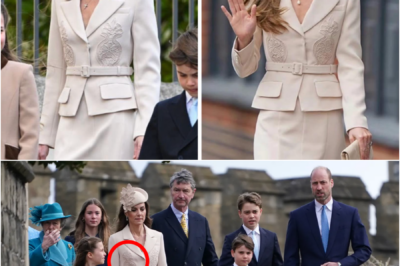
👑 REWEAR BUT MAKE IT ROYAL — Catherine, Princess of Wales Proves Timeless Style Never Fades With Elegant Easter Look in Windsor…
Prince George, Princess Charlotte and Prince Louis were seen walking into the royal family’s church service alongside their parents at…
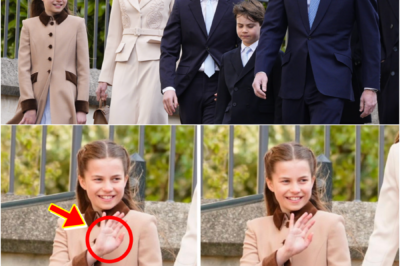
👑 A QUIET MOMENT STEALS THE SPOTLIGHT — Princess Charlotte Draws Attention With Effortless Poise During Easter Appearance at Windsor…
independent.co.uk William, Kate and children join traditional royal Easter service | The Independent She’s growing into it so naturally. Princess…
End of content
No more pages to load