A Father’s Silent Promise: Twenty-Two Years As A Cop Prepared Him For The Exact Moment Everything Changed In Public
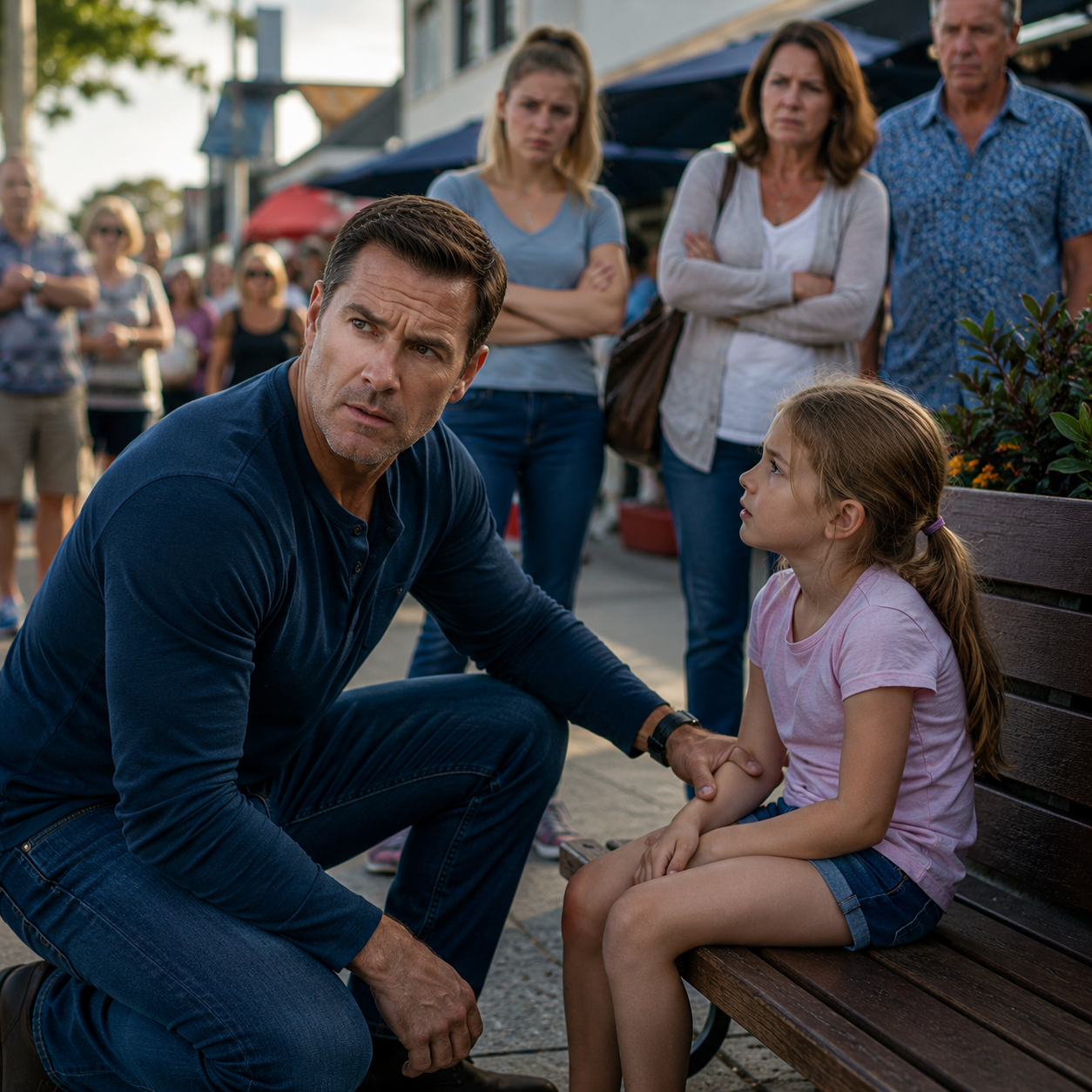
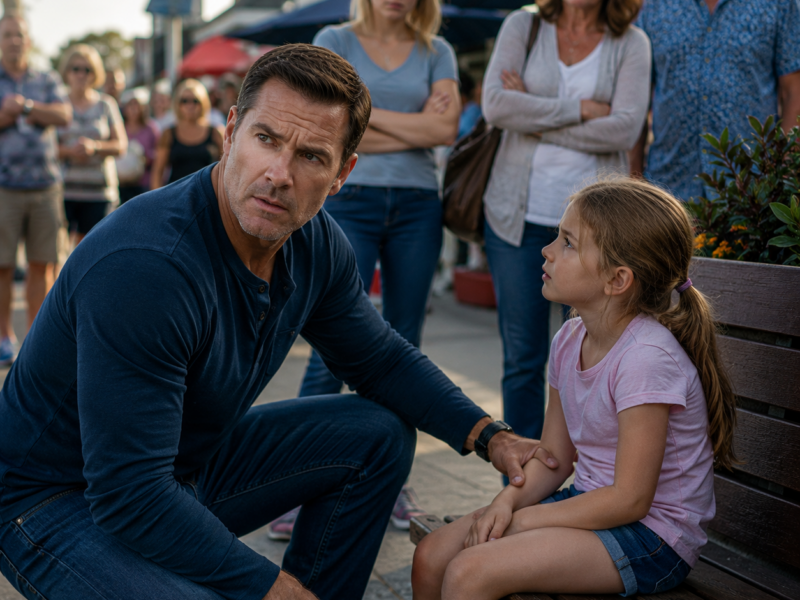
Some houses echo with laughter; others echo with things left unsaid. For twenty-two years on the streets of San Antonio, I learned to read the quiet spaces between people. I watched wives lie through split lips in kitchens that smelled like coffee and bleach, pretending they simply slipped. I learned that cruelty rarely announces itself with a roar. It wears a clean shirt, smooths down a trimmed beard, and smiles across a white tablecloth, confident that the world has already been trained to look away. But training can break. And when it does, the silence shatters into a million pieces.
Part 1: The Amber Light and the White Tablecloth
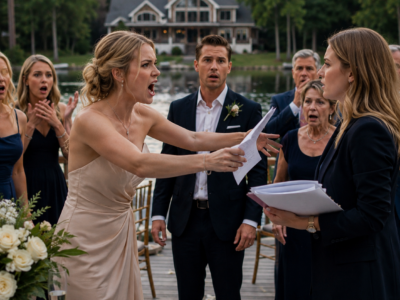
The restaurant glowed amber under low grill lights, smelling of butter, charred steak, expensive bourbon, and wine opened before it had time to breathe. Jazz drifted through hidden speakers, and cold air from the vent hit the back of my neck. Silverware gleamed. Linen napkins sat folded like little white flags. Two tables over, a little girl laughed at something her brother said, then fell silent the second my daughter’s body went rigid.
Valeria looked beautiful in a simple navy dress. She wore the slim silver watch I gave her for her thirtieth birthday, and she had tried very hard to look happy for everyone else. But I know my daughter. I know the signs. The smile held too tightly. The shoulders set too straight. The way her eyes checked the room before she answered her own husband. Rodrigo sat beside her in a spotless white shirt, beard trimmed, cuff links shining, all polished manners and dead eyes. Across from them, Ofelia sat in pearls with her hands folded, wearing the expression of a woman who thinks everyone else is breathing borrowed air.
The argument started the way these things usually do: quiet enough to make outsiders doubt themselves. Rodrigo said Valeria had spent too much time at my house the weekend before, helping me sort through Teresa’s things after her death. He said it like supporting a widowed father was some kind of betrayal. My daughter kept her voice low. She did not challenge him. She only gripped her napkin in both hands and tried to explain without crying in public. I watched her jaw tighten. I watched her right shoulder lift. I watched her breathing shorten. I had seen that posture before on people waiting for impact.
Then it happened. Rodrigo crossed his arm over the table, took hold of Valeria’s hair near the scalp, and pulled. Hard. It was not a joke. Not an accident. Not some playful little marital gesture people could laugh off later. It was clean, fast, humiliating violence. My daughter’s head snapped back. Her eyes flooded instantly. She did not scream. She did not touch him. She froze.
And Ofelia smiled.
“This is how a wife learns where she belongs,” she said.
That was the exact moment they lost, though they did not know it yet. If I had done what every muscle in my body wanted—if I had stood up and driven my fist through Rodrigo’s teeth—then the whole story would have changed. Suddenly it would have become two men fighting in a restaurant. Noise. Chaos. Confusion. I had seen abusers hide inside that kind of mess my entire career.
So I kept both hands flat on the table. Then I reached into my jacket, took out my phone, and started recording. Four seconds. That was all I needed. Rodrigo’s hand still too close to my daughter’s neck. Valeria trying not to shake. Ofelia’s calm little smile. The untouched birthday cake. The glasses. The witnesses. The silence.
Then I waved the server over and said, “Bring me the bill.” I paid for all of it. The bourbon. The ribeye that coward barely touched. The side dishes. The dessert my daughter never got to eat. Every last cent of that disgusting little performance. Then I stood up and looked at Valeria.
“Get your coat, mija. You’re leaving with me.”
Rodrigo rose halfway from his chair. “Don’t make this dramatic.”
Ofelia lifted her cup with two fingers, bored already. “Marriages are corrected in private.”
That was the first time I looked directly at her and let her see there would be a price. “Enjoy the rest of your night,” I told them. “While you still can.”
Part 2: The Kitchen Counter and the Cloud
I got Valeria out of that restaurant at 8:18 p.m. The parking lot smelled like wet concrete, gasoline, and old rain. She was trembling so badly she fumbled the truck door twice before she could close it. I did not ask questions until we were three blocks away and the restaurant lights were gone.
Once we got to my kitchen, she finally let me see the side of her scalp. The skin behind her right ear was red and angry. Near the crown was a small coin-sized patch where strands were missing. Then, without crying, without dramatics, without trying to make herself sound believable, she unlocked her phone and opened a note.
Six dates. Six lines. January 15 grabbed my wrist so hard it bruised. February 2 took my keys so I couldn’t leave. March 19 his mother said I provoke everything. April 7 blocked the doorway for an hour. May 11 squeezed my jaw and told me to smile. Tonight in front of my dad.
I saved the video to the cloud. I made copies. I sent one to a family attorney I trusted. I sent another to an old colleague who now works with the county prosecutor’s office reviewing domestic violence complaints. At 10:43 p.m., he answered with one line.
Don’t let her go back with him. I’ve seen enough already.
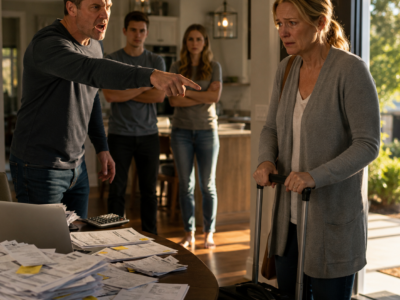
Valeria’s second phone started buzzing on my counter almost immediately. Rodrigo. Declined. Rodrigo again. Then Ofelia. Then Rodrigo again. I turned the screen face down and kept listening to the silence in my own house, the kind that comes right before something breaks open.
I brewed a pot of coffee, the dark roast Teresa always liked, and set a mug in front of my daughter. She wrapped her cold hands around the ceramic, staring at the steam. She looked small in the oversized cardigan she had thrown over her navy dress, but the fear in her eyes was slowly being replaced by something harder. Something permanent. She looked up at me, her voice steady for the first time all evening.
“They think they own me, Dad,” she whispered.
“Not anymore,” I replied, sitting across from her. “They played their hand in public. That was their mistake. People like Rodrigo and Ofelia spend their whole lives believing that behind closed doors is where they hold all the power. They forget that witnesses exist. They forget that public spaces leave tracks.”
The digital clock on the microwave ticked forward. 10:48 p.m. 10:49 p.m. 10:50 p.m. The city outside was quiet, wrapped in the damp chill of a late spring night. I didn’t regret paying that $286.40 bill. It was the cheapest insurance policy I had ever bought. It bought us time, it bought us undeniable proof, and it bought us a clean exit from a nightmare they thought they could control forever.
Part 3: The Knock on the Door
At 10:52 p.m., someone knocked on my front door. It wasn’t the frantic, demanding pounding of a man losing his temper. It was steady, official, measured. The kind of knock that carried institutional weight.
I stood up, smoothing the front of my shirt, and motioned for Valeria to stay at the kitchen island. I walked down the dim hallway, the hardwood floor creaking softly beneath my boots—the same floor I had walked a thousand times during my years on the force, answering midnight calls, delivering news that changed families forever. This time, the news wasn’t coming from the outside in. It was coming for them.
I opened the door.
A man stood on my porch holding a county ID in one hand and a printed still from my video in the other. Behind him, parked at the curb with its headlights cutting sharp beams through the dark, was a unmarked county cruiser. The officer looked up, his face lined with the familiar fatigue of someone who spent his life dealing with midnight disasters.
“Ernesto?” he asked, lowering the paper slightly. “Detective Miller. Dispatch sent me the file your old partner forwarded over. They said you have a verified complaint, clear digital evidence, and a victim inside.”
“She’s inside, Detective,” I said, stepping aside to let the amber porch light spill over his shoulders. “And she’s ready to talk.”
Miller nodded once, his expression grim and professional. He didn’t ask for explanations, and he didn’t waste words. Twenty-two years in San Antonio meant my reputation still carried weight, and the four-second video I sent across town had spoken louder than any police report ever could.
“We’ve already notified a judge for an emergency protective order,” Miller said, stepping into the entryway. “And a couple of units are heading over to Rodrigo’s residence right now to secure a statement and serve notice. They won’t be able to sweep this under the rug, Ernesto. Not with witnesses, not with timestamps, and certainly not with this footage.”
From the kitchen, Valeria stood up, walking slowly toward the hallway. The light caught the slim silver watch on her wrist, ticking steadily forward. She looked at the detective, then at me, and for the first time in five years, the rigid posture melted away. Her shoulders dropped. She took a deep, full breath of air that didn’t taste like fear.
“Let’s go,” Valeria said, her voice clear and strong in the quiet house. “I have a story to tell them.”