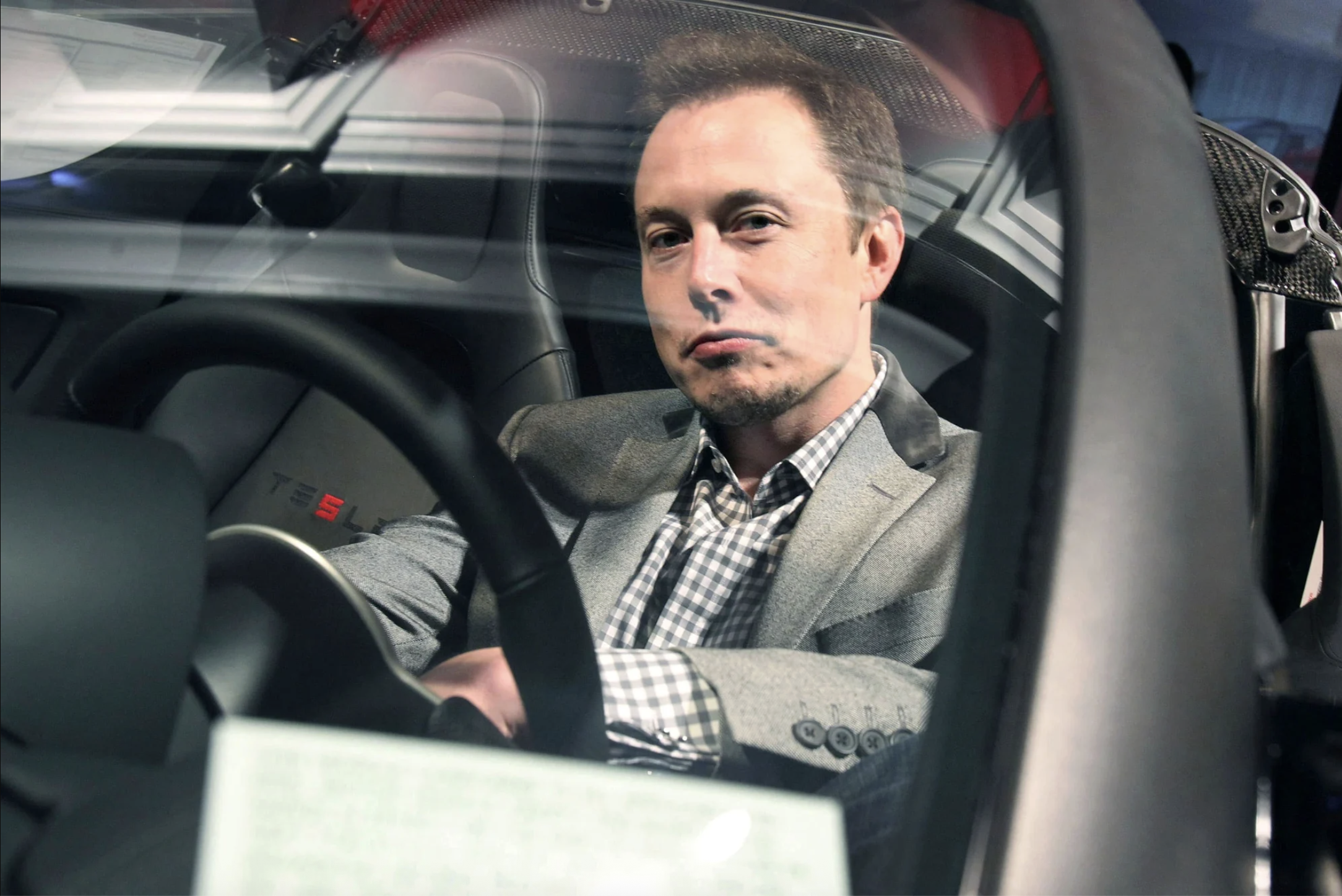
It is rare to see Elon Musk so openly comfortable criticizing his competitors.
A widespread power outage that swept across San Francisco over the weekend caught many users off guard when self-driving taxis suddenly came to a halt in the middle of the road—trapping passengers inside. What surprised the public even more was that Tesla vehicles operating within the Robotaxi fleet appeared completely unaffected by the incident.
Seizing the moment, CEO Elon Musk quickly took advantage of the situation to mock his rivals.
The power outage occurred on Saturday evening, affecting approximately 130,000 homes and businesses—nearly one-third of Pacific Gas and Electric’s customers. The cause was determined to be, at least in part, a fire that broke out inside a substation located at 8th Street and Mission. The outage knocked out traffic lights across the city, triggering severe congestion and major disruptions to public transportation.
With traffic signals down, Waymo’s self-driving taxis were forced to stop operating.
Amid the chaos, Waymo’s robotaxis—Google’s autonomous taxi service—revealed a critical weakness. Videos widely shared on social media showed Waymo vehicles stopping at intersections with non-functioning traffic lights, refusing to move while cars behind them honked incessantly and attempted to maneuver around them. This situation occurred at multiple intersections, further worsening an already chaotic traffic situation throughout the city.
Waymo was forced to temporarily suspend all autonomous ride-hailing services in the San Francisco Bay Area on Saturday night. According to the company, Waymo Driver technology is designed to handle traffic lights under normal operating conditions—where vehicles stop and proceed in an orderly manner.
However, the scale of the power outage caused traffic signals citywide to shut down. As a result, Waymo vehicles remained stationary longer than usual while attempting to assess the status of affected intersections, effectively turning them into immovable obstacles in the middle of the road. More seriously, the vehicles reportedly lacked a mechanism to automatically unlock doors during such failures, leaving passengers trapped inside.
Meanwhile, Tesla vehicles using the Full Self-Driving (FSD) system appeared to encounter no such issues. Videos circulating online showed Tesla self-driving cars smoothly navigating intersections with non-functioning traffic lights, without the hesitation or standstill seen with Waymo vehicles.
Elon Musk wasted no time capitalizing on the moment to attack his competitor. “Tesla Robotaxis are not affected by the SF power outage,” he wrote in a post on X, accompanied by a video showing Waymo vehicles frozen at intersections while Tesla cars continued moving normally.
The clip showed Waymo vehicles standing motionless in the middle of intersections.
The issue goes beyond how autonomous taxis respond to traffic lights—it highlights a fundamental difference in philosophy between the two companies. Musk and Tesla frequently emphasize that their FSD system is trained on “billions of miles of real-world driving,” allowing it to handle unexpected situations. Waymo, by contrast, relies on “perfectly structured simulation data,” detailed maps, and pre-programmed procedures.
While Tesla’s self-driving taxis continued operating normally in the darkness, Waymo issued a response.
A Waymo spokesperson told Fox News Digital on Sunday afternoon that the company had begun restoring ride-hailing services after the temporary suspension. “Saturday’s power outage was a widespread event that caused traffic congestion across San Francisco, with traffic lights down and transportation disrupted,” the spokesperson said. “While the public infrastructure failure was significant, we remain committed to ensuring our technology adapts to traffic flow during such events.”
Waymo acknowledged the problem and said it is “focused on quickly integrating lessons learned from this incident.” However, the statement is unlikely to ease concerns surrounding the reliability of self-driving technology in real-world emergency scenarios.
As for Elon Musk, it is rare to see him enjoying a rival’s misfortune quite so openly.
News

OMG! The unexpected tension between Prince Harry and Prince William that has the internet in an uproar!
A royal wedding is on the horizon, and while the event will be a happy occasion for the Royal Family,…
CAUGHT CAMERA — Prince William’s Four-Word Whisper to Princess Charlotte and Prince Louis Caught on Camera
The Royal Family attended their annual Easter Sunday church service in Windsor this morning – and Prince William was spotted…

💥 THREE WORDS THAT MELTED HEARTS — Princess Charlotte Turns to the Camera at Easter and Quietly Says It…
Prince William got in on the coordinated look as well From left: Princess Charlotte, Kate Middleton, Prince George, Prince Louis…

THE FATEFUL DIAMOND CHAIN — Kevin “Tugg” Watson Sh0t D3ad on Facebook Live in South Austin, Ch!lling Argument Footage Leaves Viewers Shaken
What began as a routine livestream quickly spiraled into a moment that would leave viewers stunned and searching for answers….

WATCH VIDEO: Tugg Watson’s Family Drops Bombshell on K!llers – Chicago PD Ignored Key Evidence!
The case surrounding the death of Tugg Watson has taken a dramatic and unsettling turn, as his family steps forward…
CHAOS ERUPTS — Chief Keef Reacts After Cousin Is Taken in Sh0cking Chicago Incident
Tensions in Chicago have once again erupted into chaos, and this time the situation has hit close to home for…
End of content
No more pages to load