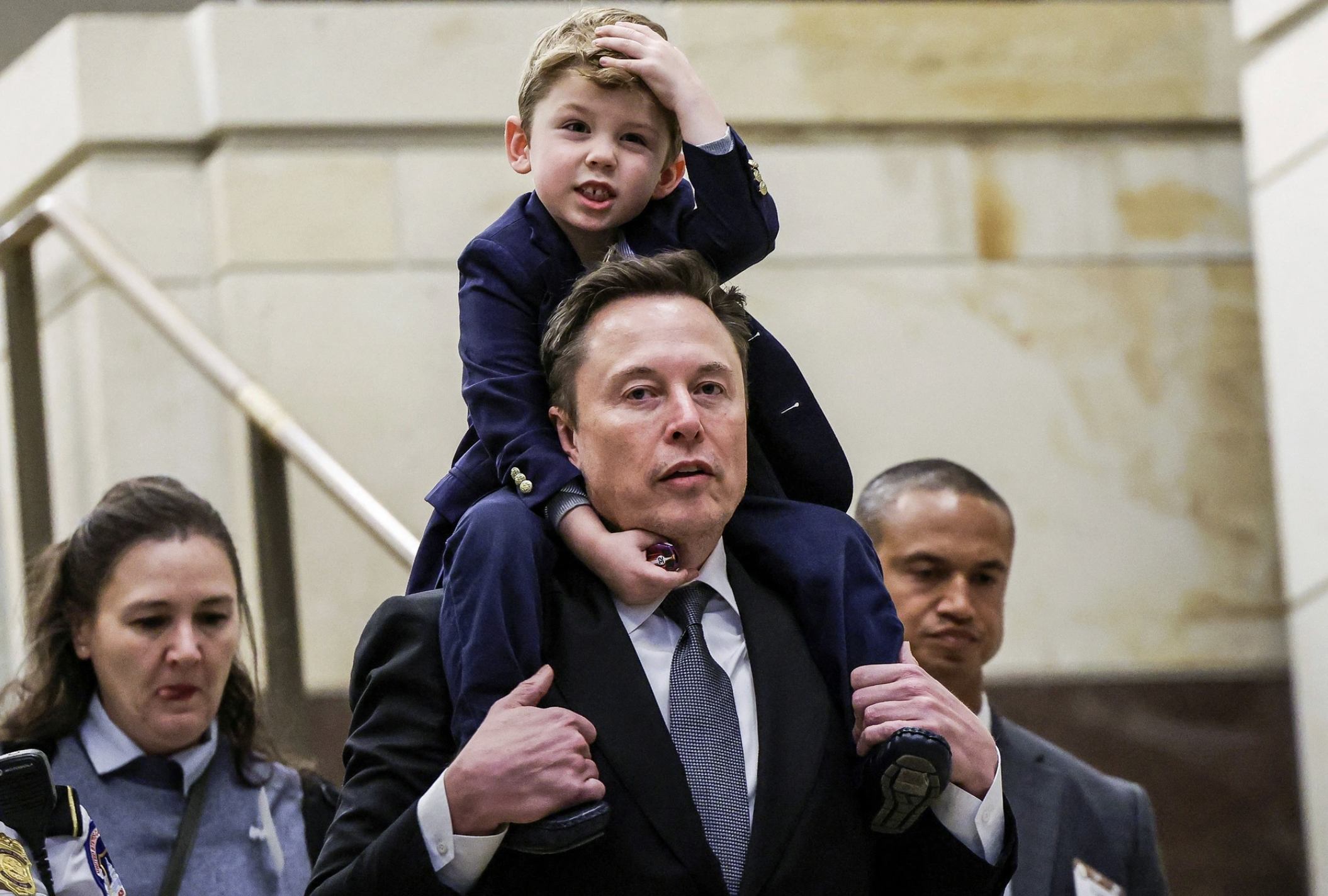
While most billionaires send their children to the world’s most prestigious schools, Elon Musk chose a completely different path: he built a school of his own for his children.
This school is not a luxurious private academy or a miniature Ivy League. Instead, it represents a radical break from traditional education. The school is called Ad Astra—Latin for “To the stars”—a clear statement of Musk’s belief that children should learn differently, think differently, and grow into people capable of solving humanity’s biggest problems.
According to Business Insider, in 2014 Musk quietly withdrew his five children from a well-known private school in California. His reason was simple but firm: he believed schools were failing to teach children how to solve problems using “first-principles thinking,” the mental framework Musk credits for breakthroughs in science and technology. Around the same time, he partnered with Joshua Dahn, a young teacher from Mirman School, to establish Ad Astra on the SpaceX campus.
“I don’t see schools doing the things I think they should be doing,” Musk said at the time, explaining that the school initially served his own children and those of SpaceX employees, who were not charged tuition.
Musk has long argued that much of what people learn in school is meaningless because it is never applied in real life. If this continues, he believes children will inevitably question why they go to school at all.
“The way we educate needs to change,” Musk said. “Education today isn’t much different from a hundred years ago. It’s still classrooms full of students, all learning the same thing at the same pace, taught by underpaid, overworked teachers.”
Hidden inside SpaceX’s headquarters in Hawthorne, California, the school had only a few dozen students as of 2018. Despite its small size, Ad Astra prides itself on a STEM-focused curriculum, emphasizing mathematics, science, artificial intelligence, and robotics.
Students are grouped based on ability and interest rather than age. An eight-year-old with strong mathematical skills, for example, might study math alongside twelve-year-olds. The school does not issue traditional grades or end-of-term rankings.
“I like explosive thinkers in mathematics to teach math. Artists who live and breathe art should teach art,” Musk said.
Ad Astra does not promote standardized testing, grades, or rankings. Musk believes such evaluation systems create unnecessary comparisons and hinder self-discovery. Instead, the school emphasizes exploration, creativity, and aligning education with each child’s natural talents.
From Musk’s perspective, modern education resembles an assembly line. Children, he argues, should be free to focus on what genuinely interests them—whether languages, mathematics, music, or science—because education tailored to individual strengths is far more meaningful.
For Musk, school is not a place for rote memorization, but a space where children are free to explore what truly captivates them. While Ad Astra’s model remains controversial and difficult to scale, its story adds a powerful voice to the global conversation about how education must evolve in the modern age.
News
EXPL0SIVE HOME VIDEO SURFACES: Archie & Lilibet Caught Running Around Searching for Something in Rare Clip That’s Sending Royal Fans Into a Frenzy
Both of the Duke and Duchess of Sussex’s children inherited Prince Harry’s red hair Meghan Markle during a visit to…
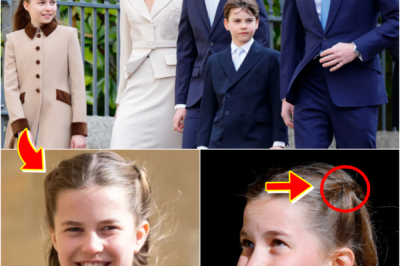
A fleeting moment from Princess Charlotte at the Easter service hides a detail that has the entire royal community talking!
The young royal subtly switched up her signature hairstyle Princess Charlotte attends the 2026 Easter Matins Service at St George’s…
🚨SHOCKING “REVENGE” MOVE? — Meghan Markle and Prince Harry are suspected of pushing the Royal Family into a new wave of tension!
The Sussexes’ calendar is ramping up with their upcoming Australia visit and a raft of new TV deals, but they…
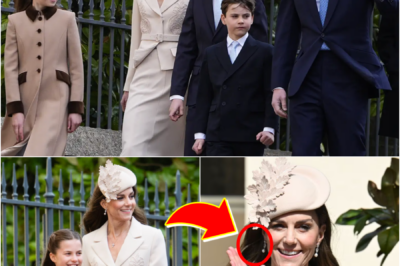
🔥 Royal Fans Are Stunned by Catherine’s Easter Appearance — The Subtle Detail Everyone’s Whispering About!
Her return to the Easter service after two years, Queen Elizabeth II’s historic jewels, and a new hat signal continuity,…
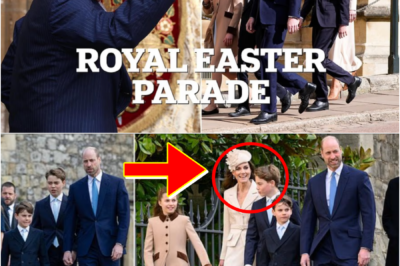
All eyes on Prince George at the Easter service — and the reason has fans “gasping”…
Royal fans are in awe at how tall Prince George, 12, has gotten – as William and Kate’s eldest son…
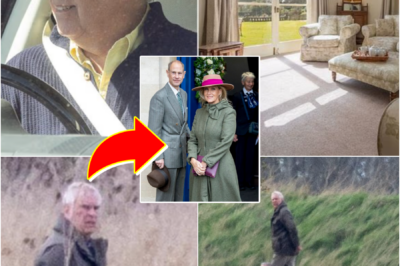
SH0CKING ROYAL EASTER INCIDENT! Prince Edward and Sophie found themselves in an awkward situation following a puzzling move by Andrew Mountbatten-Windsor, leaving royal watchers constantly speculating
Prince Edward and Sophie were forced to use a ‘holiday let’ in Sandringham because Andrew Mountbatten-Windsor refuses to leave their vacation…
End of content
No more pages to load