It only took one outfit — and one name attached to it — for social media to erupt.
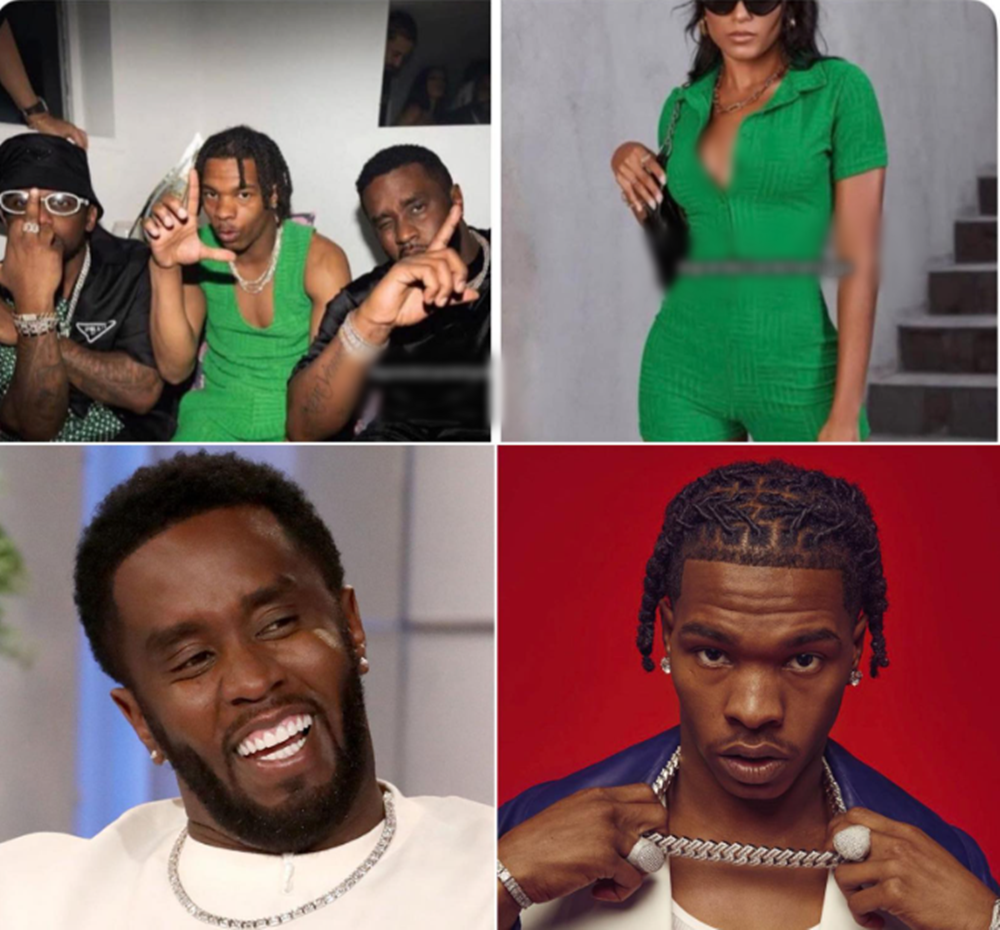
When images of Lil Baby surfaced wearing a fashion-forward look that many fans instantly labeled “unexpected,” the reaction was swift, loud, and unforgiving. But it wasn’t just the clothes that grabbed attention. It was who people associated with the moment: Diddy.
Within hours, timelines were flooded with comments ranging from disbelief to mockery to outright suspicion. One viral post summed up the mood bluntly: “Diddy got Lil Baby dressing like his girl.” Another went further, joking that Lil Baby looked like “a Shein girl on clearance.” Crude? Yes. But it captured the shock value fans felt — and the internet ran with it.
Memes followed. Then threads. Then uncomfortable questions.
For many longtime hip-hop fans, the controversy wasn’t really about fashion. Hip-hop has evolved. Gender-fluid styles, experimental looks, and high fashion have been part of the culture for years. Artists like Young Thug, A$AP Rocky, and Playboi Carti have already pushed those boundaries. But what made this moment different was the power dynamic people believed they were seeing.
Diddy’s name carries weight — not just as a mogul, but as a kingmaker. Decades in the industry. Careers launched, reshaped, and sometimes swallowed whole. So when fans saw Lil Baby — an artist once celebrated for raw street energy and hardened realism — appearing in a look that felt completely detached from his usual image, they didn’t just see a style choice.
They saw influence.
“What hasn’t Diddy done with these tough guys?” one commenter asked, half-joking, half-serious. Another wrote, “He’s the only man who can turn the toughest men into soft girls.”
Harsh words — but they reveal something deeper about fan psychology.
Hip-hop audiences often feel protective over the personas they fall in love with. Lil Baby rose to fame as a voice of the streets, authenticity stitched into every verse. To some fans, this new look felt like a betrayal of that image — not because it was feminine or high fashion, but because it didn’t feel self-directed.
That’s where Diddy became the lightning rod.
Over the years, the Bad Boy founder has been both praised and criticized for how deeply he shapes artists around him. From branding and sound to style and behavior, Diddy’s touch is unmistakable. Supporters call it vision. Critics call it control. And in this moment, online critics were loud.
“This is what happens when power meets insecurity,” one viral thread claimed. “You stop being yourself and start becoming a product.”
Others pushed back hard.
“Y’all are weird,” one fan replied. “Men can wear whatever they want. Fashion isn’t gendered.”
And they’re not wrong.
The backlash also exposed a lingering discomfort within hip-hop culture — where masculinity is still policed heavily by fans, even as the genre claims to be evolving. Lil Baby didn’t say a word. Diddy didn’t respond. Yet millions felt entitled to interpret, judge, and speculate.
Silence only fueled the fire.
Without clarification, narratives filled the gap. Some fans joked. Others theorized. A few went too far, turning jokes into character attacks. And suddenly, a fashion moment became a referendum on power, identity, and influence in the music industry.
What’s fascinating is how quickly the conversation stopped being about Lil Baby at all.
It became about Diddy.
The mogul’s larger-than-life reputation makes him an easy target — especially in an era where people are increasingly skeptical of industry gatekeepers. For critics, this was just another example of Diddy “reshaping” artists to fit a vision that benefits him more than them. For supporters, it was yet another instance of the internet refusing to let men evolve without ridicule.
The truth likely sits somewhere in between.
Fashion today is performative. Artists experiment. Stylists push boundaries. Labels test reactions. And sometimes, outrage is the goal — because attention equals relevance. What fans interpret as manipulation may simply be branding strategy. Or it may be personal expression.
Without words from Lil Baby himself, everything else is noise.
Still, the moment exposed how fragile public perception can be. One look can undo years of carefully built identity — at least in the court of public opinion. And when a powerful figure like Diddy is nearby, fans are quick to assign blame, intent, and motive.
In the end, this isn’t really about whether Lil Baby looked “soft” or “hard,” masculine or feminine.
It’s about control versus choice.
Influence versus autonomy.
And how quickly audiences turn curiosity into condemnation.
Diddy didn’t say a word.
Lil Baby didn’t explain.
But the internet filled the silence anyway.
And once again, hip-hop proved that it doesn’t just consume music — it consumes image, power, and the people behind both.
News
THIS WASN’T WHAT YOU SAW ON TV…: Gia Fleur exposes hidden truth behind sh0ck exit — pre-dinner party confession changes everything
Married At First Sight’s Gia Fleur has broken her silence in a raw and emotional interview with Daily Mail –…

NEW SUSPECTS EMERGE…: Sh0cking twist in Kevin “Tugg” Watson Facebook Live ki-lling — police chase fresh leads in brazen daytime sh0oting
The shocking death of Kevin “Tugg” Watson has haunted Chicago since that fateful day when he was fatally shot during…

IT WAS NEVER JUST THE DRAMA…: Married At First Sight Australia star Bec reveals sh0cking health battle — cast left speechless
Brook left a gaping hole of drama when she walked out of MAFS Australia 2026, and Bec has proved she…
DID YOU NOTICE THIS?!: Tiny detail in photos of Queen Mary of Denmark’s children sends royal fans into a frenzy — and it’s raising unexpected questions
As the Danish royal family stepped out for their traditional Easter celebrations, royal watchers couldn’t stop talking about one thing: Prince Vincent’s height. Queen Mary…
HE COULDN’T SEE WHAT WAS COMING…: Distu-rbing claim surfaces after Grant Denyer crash — family reveals alarming condition post-hospitalisation
Grant Denyer and another driver have been taken to hospital after they had a frightening crash at Bathurst’s famous Mount…

NO ONE SAW THIS COMING…: Chaos at Bathurst as TV star and driver injured in terrif-ying crash — chilling new clue may explain what went wrong
TV star Grant Denyer was taken to hospital along with Richard Barram on Sunday after the pair were involved in…
End of content
No more pages to load