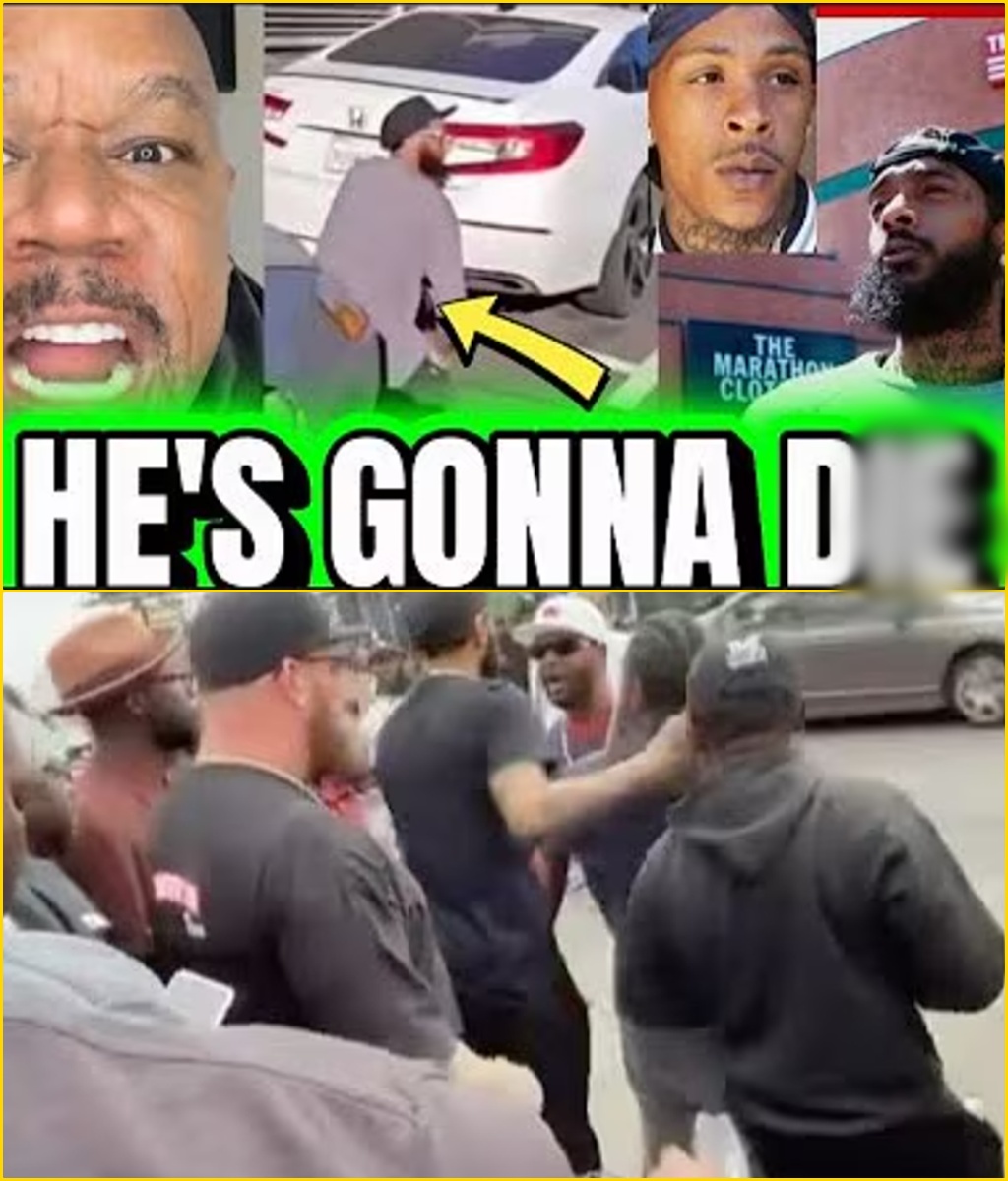
The tension surrounding the legacy of Nipsey Hussle has once again erupted into public controversy — this time fueled by explosive comments from music manager Wack 100 directed at Blacc Sam, Nipsey’s brother and longtime business partner.
In a heated livestream that quickly spread across social media, Wack 100 launched into an emotional tirade, claiming that had he been present during the tragic 2019 shooting, the outcome would have been drastically different. Referring to Eric Holder, the man convicted in Nipsey’s death, Wack made the stunning declaration that he would have “handled it” himself.
The comments instantly sparked backlash.
Many fans felt the remarks were reckless and unnecessarily inflammatory, especially given the sensitivity that still surrounds Nipsey’s passing. Others interpreted Wack’s words as an expression of frustration — a raw reaction rooted in grief and anger that still lingers years later.
But the most startling part of Wack’s outburst wasn’t just what he said about Eric Holder. It was his claim that he “almost died” at The Marathon store himself during a separate incident. While details remain unclear, Wack suggested that tensions and street politics connected to the location nearly cost him his life.
That revelation only intensified the online firestorm.
Blacc Sam, known for his calm and measured public presence, has largely avoided engaging in public back-and-forth exchanges. Since 2019, he has focused on protecting and expanding the Marathon brand, overseeing business ventures, and ensuring that Nipsey’s vision of economic empowerment continues to thrive.
Supporters of Blacc Sam argue that keeping the focus on ownership, growth, and unity honors Nipsey’s message far more than revisiting violent hypotheticals. They believe statements about what someone “would have done” only reopen wounds that have never fully healed.
At the same time, Wack 100 has built his reputation on being outspoken and unapologetic. He frequently inserts himself into difficult conversations within hip-hop culture, often positioning himself as someone willing to say what others won’t. His defenders argue that his comments reflect passion rather than provocation.
Still, critics say there’s a difference between passion and escalating rhetoric.
The broader issue once again centers on who controls the narrative around Nipsey Hussle’s legacy. For Blacc Sam and the Hussle family, that legacy is sacred — built not just on music, but on community development, ownership, and transformation in South Los Angeles.
When Nipsey was killed outside The Marathon Clothing store in 2019, the loss sent shockwaves worldwide. The store became a symbol — not only of tragedy, but of perseverance. Murals, tributes, and gatherings transformed the location into a cultural landmark.
To some observers, revisiting that painful day through aggressive commentary risks shifting the focus from legacy to lingering street tensions.
So far, Blacc Sam has not publicly engaged in direct confrontation over Wack’s latest remarks. Whether he chooses to respond remains to be seen. What is clear, however, is that emotions tied to Nipsey’s death remain powerful, even years later.
In hip-hop, legacy is more than memory — it’s identity, territory, and respect. And when strong personalities collide over how that legacy should be defended, sparks are almost inevitable.
For now, the internet continues to debate: Was Wack 100 speaking from loyalty and frustration? Or did his words cross a line that should never be approached?
One thing is certain — the conversation around Nipsey Hussle’s name still carries weight. And every time it resurfaces in conflict, the culture feels it.
News
IT ALL HAPPENED IN 5 SECONDS… 🚨 Sh0cking new details emerge from fatal Perth rideshare crash — the moment witnesses say everything changed forever
Police are investigating a tragic single-vehicle crash that killed a baby and left two others seriously injured in Perth’s south-east overnight. A silver Toyota Kluger…
THERE WAS NOTHING MORE ANYONE COULD DO… 😱 Tragic rideshare crash in Lynwood sparks fear as eyewitnesses describe terrif-ying seconds before and after impact
A baby has died and three others have been seriously injured after a Toyota Kluger left the road and slammed…
I SAW EVERYTHING… 😱 Witness breaks silence after Lil Mikey’s tragic de-ath — claims the situation may have involved someone he trusted, leaving the community stunned
“I SAW EVERYTHING…” 😱 Witness breaks silence after Lil Mikey’s tragic death — chilling moments and rumors of betrayal leave…

APOLOGY OR COVER-UP? 🚨 Gia & Brook dragged by fans as their “heartfelt” statements BACKFIRE — and unseen drama rumours take over
MAFS Australia viewers were left stunned by the explosive Dinner Party scenes as Brook and Gia unleashed chaos onto all of…

MAFS MELTDOWN — Gia Fleur WALKS OUT Last Minute, Claims She Has “PROOF” Producers Don’t Want You To See
MAFS Australia fans tuned in for their first dose of extra drama with the After the Dinner Party spin off last…

IT WENT OFF THE RAILS — Married At First Sight Australia Cut Scenes EXPOSE Wild Dinner Party Clash Between Brook & Gia Fleur
MAFS Australia served up one of its most chaotic dinner parties yet on Wednesday night (March 26), with Brook and…
End of content
No more pages to load