
When CCTV footage capturing the final moments of South African rap icon Kiernan “AKA” Forbes surfaced online, it didn’t just shock the nation — it triggered a digital chain reaction that turned social media into an unofficial investigation room.
Within hours of the video’s release, clips were circulating across X, TikTok, Instagram, and WhatsApp groups. Users slowed the footage frame by frame, zoomed in on shadows, traced movements, and shared theories with the intensity of professional analysts. What followed was an unprecedented wave of online scrutiny that revealed both the power — and the danger — of internet-driven investigations.
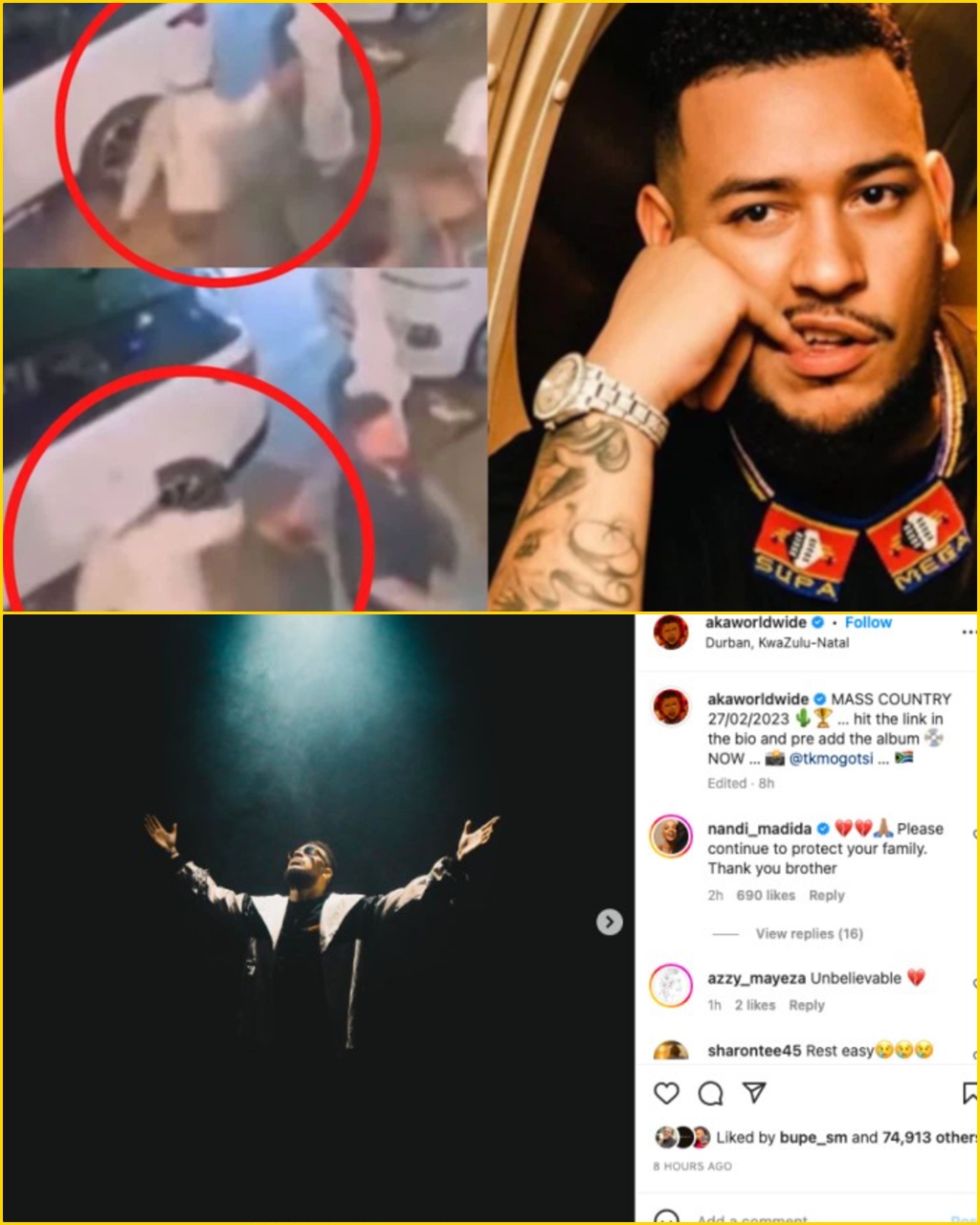
The footage, filmed on Durban’s Florida Road, shows AKA standing with friends moments before he and Tebello “Tibz” Motsoane were fatally shot. While authorities released the video to assist with public awareness and transparency, they may not have anticipated just how deeply the public would engage with it.
Almost immediately, hashtags related to the case began trending. Amateur sleuths identified what they believed were suspicious movements, possible accomplices, and escape routes. Some users mapped the area using Google Street View. Others overlaid multiple CCTV angles to reconstruct timelines. A few even attempted to identify suspects based on clothing, posture, or gait.
For many, this collective effort felt like an act of justice.
“People felt powerless,” said one digital culture analyst. “AKA was more than a musician — he was a symbol. When something that big is taken away so violently, people want to help. They want answers. And online tools make them feel like they can contribute.”
But the same speed that fueled engagement also fueled misinformation.
Incorrect identifications spread rapidly, with innocent bystanders allegedly named and shamed. Some theories contradicted official police statements, creating confusion and mistrust. In several instances, police were forced to urge the public to stop sharing unverified claims, warning that speculation could compromise the investigation.
Law enforcement officials acknowledged the public’s emotional response but stressed that online analysis, while well-intentioned, can cross dangerous lines.
“Videos don’t show intent, context, or the full picture,” one senior officer noted. “A pause, a turn, or a shadow can be misinterpreted — and when millions of people speculate at once, the truth gets buried under noise.”
Despite the risks, the phenomenon highlights a growing reality in modern crime cases: investigations no longer happen in isolation.
In the digital age, every major incident unfolds in two parallel worlds — the official investigation and the online one. The latter operates without rules, driven by emotion, grief, and the human instinct to make sense of chaos.
For fans of AKA, watching the footage was deeply painful. Many described the experience as traumatic, saying the repeated circulation of the video reopened wounds and turned a moment of loss into viral content.
Mental health professionals also raised concerns, noting that constant exposure to violent imagery — especially involving beloved public figures — can lead to collective distress.
“There’s a line between seeking justice and reliving trauma,” said one psychologist. “When footage like this is replayed endlessly, it doesn’t just inform — it imprints.”
Still, the online reaction speaks to AKA’s cultural impact. His death didn’t fade quietly into headlines; it sparked conversation, debate, and a nationwide reckoning about public safety, celebrity vulnerability, and violence in social spaces.
In some cases, online attention has historically helped solve crimes by generating tips or locating suspects. But experts caution that this only works when guided by facts and restraint — not viral momentum.
As arrests were eventually made and the legal process moved forward, many of the early online theories proved incorrect. What remained was a sobering lesson about the limits of crowdsourced justice.
The CCTV footage may have sparked online investigations, but it also exposed something deeper: a society grappling with grief in real time, armed with technology but searching for closure.
In the end, the responsibility for justice still rests with the courts — not comment sections.
And while the internet may never forget those images, the challenge now is ensuring that AKA’s legacy is remembered not for how he died, but for the music, ambition, and influence that defined how he lived.
News

Drama EXPLODES: Married At First Sight Australia Star Bec Zachariah Blames Secret Health Struggle for Brut-al Treatment of Alissa Barmonde
MAFS Australia has already delivered no shortage of drama this series. And now bride Bec has opened up about a…

Our Kids Are Still Waiting for Him… — Wife Breaks Silence After Beloved Father-of-Four Ki-l-led in Sh0cking Melbourne Crash
A devastated wife has spoken out after her husband spent the week fighting for life after being mowed down outside his home…

WORDS TURNED D-E-A-DLY? — Jaro City’s Lil Mikey Gu-nned Down After Explosive Argument Tied to Viral Diss
The hip-hop community is once again grappling with tragedy following the fatal shooting of Jaro City rapper Lil Mikey, an…

IT WAS ALL GONE IN MINUTES — Community Heartbreak as Heroic Grandparents Lose Home in Sh0cking Blaze
An Adelaide community is rallying around two much‑loved grandparents and volunteers who have lost everything in a ferocious house fire….
HE SAID TOO MUCH? — NC Rapper Gu-nned Down Moments After Sh0cking Facebook Live Confession
A shocking and deeply disturbing incident has rocked the hip-hop community after a North Carolina rapper was fatally shot just…
HIS STORY ISN’T ADDING UP — Tiger Woods’ DUI Arrest Takes Dark Turn as New Details Raise Serious Questions
Tiger Woods called President Donald Trump in the moments after his shocking car crash in Florida, new bombshell footage appears to show. The golf…
End of content
No more pages to load