
The murder of DJ Warras sent shockwaves through South Africa — not only because of the brutality of the crime, but because of what followed next.
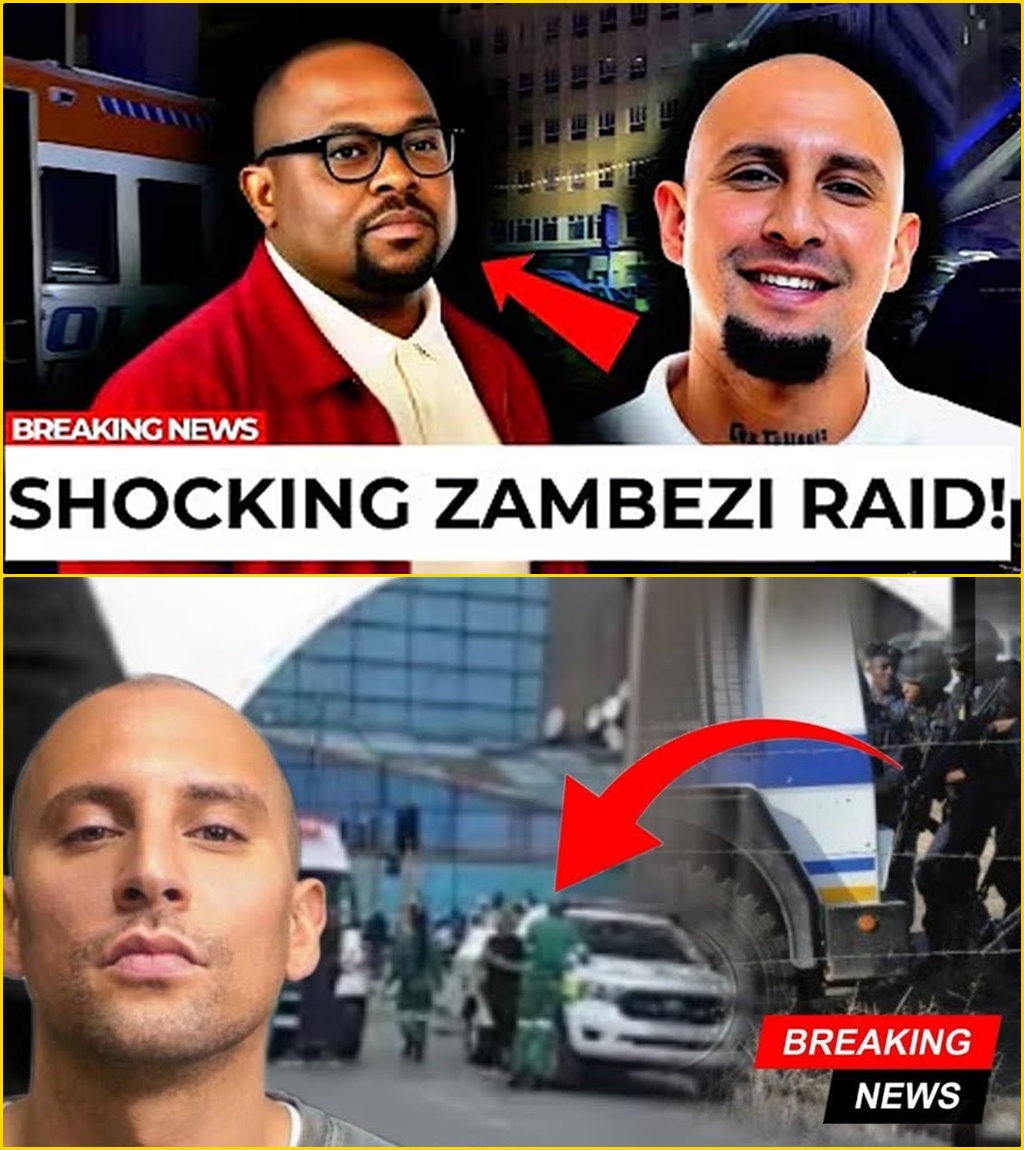
Just two days after his death, law enforcement agencies launched a dramatic, multi-agency raid on the Zambezi Building in Johannesburg’s CBD — a location directly linked to DJ Warras’ professional work. The speed, scale and intensity of the operation immediately raised eyebrows. This was no routine police visit. It was a coordinated strike.
Phones were seized. Occupants were questioned. And behind closed doors, investigators began piecing together a picture that many now believe exposes a much deeper, more troubling reality.
Mzansi PoliScope, analysing the raid and its aftermath, has laid out a disturbing chain of events that connects one man’s murder to a wider crisis unfolding in the heart of Johannesburg.
A Killing That Wouldn’t Stay Contained
DJ Warras was known for his work, his presence, and his connections within the city’s creative and nightlife circles. His murder shocked fans and colleagues alike — but police sources quickly indicated that this was not a random act.
Within 48 hours, the focus shifted sharply to the Zambezi Building.
SABC News footage shows law enforcement officers swarming the premises, moving floor by floor, knocking on doors, and escorting individuals out for questioning. The footage, now circulating widely online, captures the moment the investigation escalated from a single homicide into something far larger.
Authorities confirmed that multiple mobile phones were seized during the operation — a crucial detail that has fuelled speculation about communications, networks, and possible coordination behind the scenes.
Why the Zambezi Building Matters
The Zambezi Building is not just another address in the CBD. For years, it has been cited as an example of Johannesburg’s growing crisis of hijacked buildings — properties taken over by criminal syndicates, operating outside the law, and often beyond effective municipal control.
These buildings frequently house non-paying tenants, are controlled through intimidation, and generate income for shadowy networks that thrive on chaos and neglect.
According to analysts, such environments create the perfect conditions for crime to flourish unnoticed — until something catastrophic happens.
The raid has now thrown a harsh spotlight on how deeply entrenched these issues have become.
Phones, Silence, and the Search for Answers
The seizure of phones during the raid is one of the most significant developments in the case. Investigators are believed to be examining call records, messages, and digital trails that could establish timelines, relationships, and motives.
While police have been careful not to name suspects publicly, they have confirmed that several people of interest were questioned.
That silence has only intensified public concern.
Was DJ Warras caught in the crossfire of something larger?
Was his work connected — knowingly or unknowingly — to dangerous networks?
Or does the answer lie in a system that has allowed lawlessness to take root unchecked?
For now, police are not saying. But the urgency of the raid suggests investigators believe the answers are close — and sensitive.
Hijacked Buildings: The Crisis Behind the Crime
What the Zambezi raid has exposed most clearly is the scale of Johannesburg’s hijacked building problem.
These properties often operate with:
No formal management
No rent being paid
No maintenance or safety compliance
And enforcement through fear rather than law
Residents who speak out risk eviction, assault, or worse. Law enforcement, stretched thin, often struggles to regain control once syndicates are embedded.
Mzansi PoliScope describes this as a “parallel city” operating inside Johannesburg — one where rules don’t apply, and where violence can become a form of currency.
DJ Warras’ murder, many argue, may be the tragic consequence of this unchecked decay.
Public Anger and Political Pressure
As footage of the raid spread, so did public anger.
Social media lit up with questions about how long such buildings have been allowed to operate — and why meaningful action only seems to come after lives are lost.
“This didn’t happen overnight,” one viewer commented. “It’s been ignored for years.”
Others praised the raid but warned it must not become another short-lived crackdown.
“This can’t just be about one case,” another wrote. “The whole system is broken.”
Political pressure is now mounting on city authorities and national government to confront the issue head-on — not with temporary raids, but with sustained enforcement, housing reform, and protection for vulnerable residents.
A Case That Refuses to Fade
For DJ Warras’ family, friends, and supporters, the raid is a painful reminder that his death is now part of a much larger story — one involving crime, corruption, and urban collapse.
The investigation continues. Phones are being analysed. Statements are being reviewed. And somewhere within that data, police believe, lies the truth about what really happened.
But the Zambezi Building raid has already achieved one thing: it has exposed a reality many would rather ignore.
Johannesburg’s crisis is no longer hidden behind boarded windows and locked stairwells. It is now front and centre — and the nation is watching.
The question is no longer just who killed DJ Warras.
It is how many warning signs were ignored before it happened — and what will be done now that they can no longer be unseen.
News

THEY IGNORED THE PROOF… — Family of Kevin Watson Claims GPS Evidence Points to Real K-i-l-l-ers
The killing of Kevin Watson — a 42-year-old father and well-known promoter — has become one of the most disturbing…

I’M ABOUT TO EXPOSE EVERYTHING… — Brother of Kevin Watson Drops Bombshell Claims in Unsolved Sho0ting
The killing of Kevin Watson — known to many as “Tugg” — has left a community shaken and searching for…

THIS WASN’T WHAT YOU SAW ON TV…: Gia Fleur exposes hidden truth behind sh0ck exit — pre-dinner party confession changes everything
Married At First Sight’s Gia Fleur has broken her silence in a raw and emotional interview with Daily Mail –…

NEW SUSPECTS EMERGE…: Sh0cking twist in Kevin “Tugg” Watson Facebook Live ki-lling — police chase fresh leads in brazen daytime sh0oting
The shocking death of Kevin “Tugg” Watson has haunted Chicago since that fateful day when he was fatally shot during…

IT WAS NEVER JUST THE DRAMA…: Married At First Sight Australia star Bec reveals sh0cking health battle — cast left speechless
Brook left a gaping hole of drama when she walked out of MAFS Australia 2026, and Bec has proved she…
DID YOU NOTICE THIS?!: Tiny detail in photos of Queen Mary of Denmark’s children sends royal fans into a frenzy — and it’s raising unexpected questions
As the Danish royal family stepped out for their traditional Easter celebrations, royal watchers couldn’t stop talking about one thing: Prince Vincent’s height. Queen Mary…
End of content
No more pages to load