Ebro Darden Is Out — And Hip-Hop Media Just Exploded
No press tour. No farewell montage. No emotional goodbye on the mic.
After 13 years at Hot 97, one of the most influential radio stations in hip-hop history, Ebro Darden’s sudden exit has sent shockwaves through the culture — and what followed wasn’t reflection or gratitude, but open fire from every corner of hip-hop media.
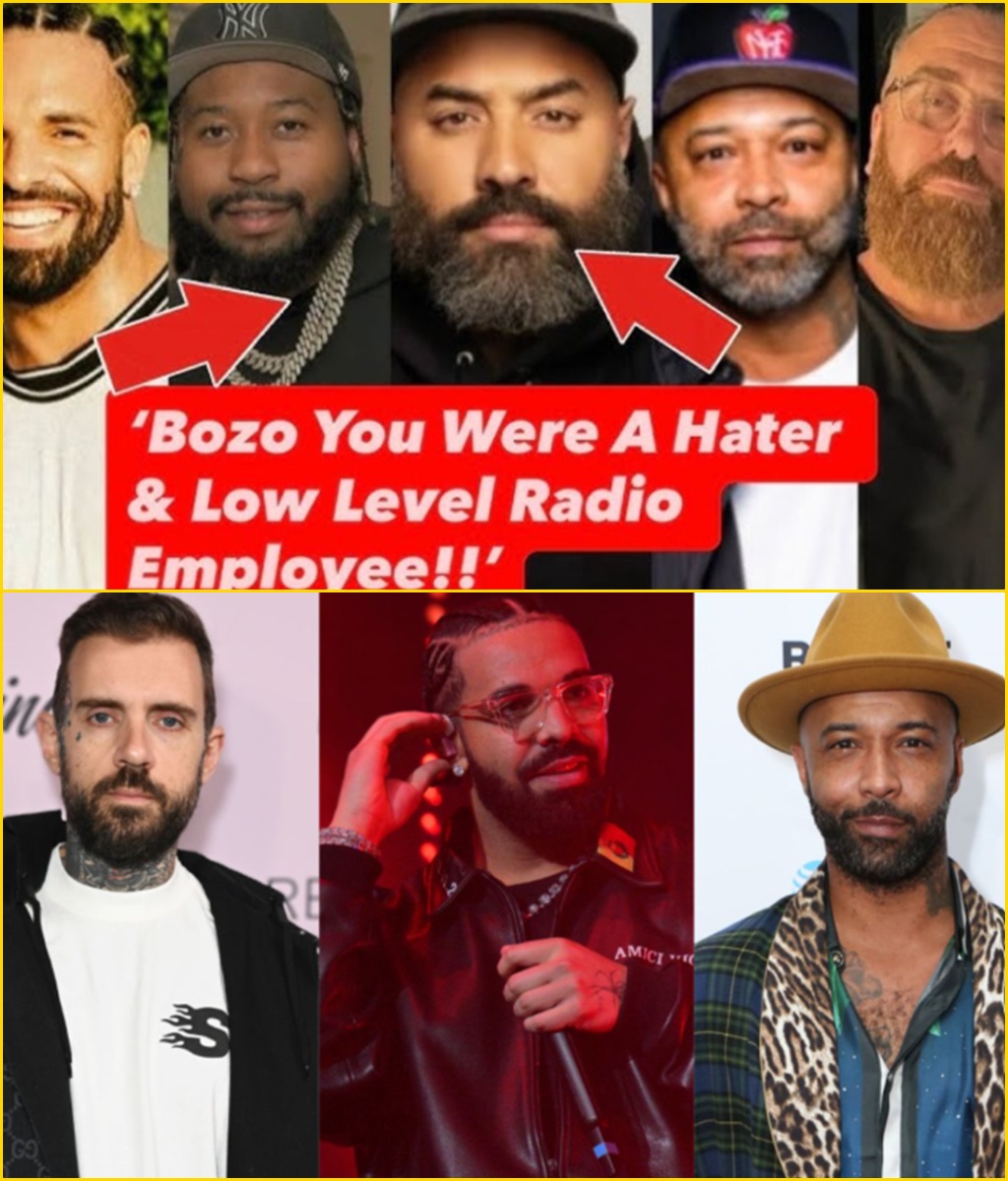
An axe emoji from Drake.
A dismissive jab from DJ Akademiks.
Old beefs resurfaced by DJ Vlad.
And Joe Budden calmly implying this was inevitable.
One departure. Too many reactions. And a very public reckoning for hip-hop radio.
The End of an Era — Or the End of Patience?
For over a decade, Ebro in the Morning was a pillar of Hot 97. Alongside Rosenberg and Laura Stylez, Ebro helped steer the station through shifting eras — from blog rap to streaming dominance, from radio exclusivity to algorithm-driven hits.
But his presence was never universally loved.
To supporters, Ebro was a gatekeeper with principles — someone who pushed social issues, challenged artists, and refused to let hip-hop drift into pure spectacle.
To critics, he was something else entirely:
Out of touch.
Condescending.
More activist than tastemaker.
And increasingly disconnected from the artists and fans he claimed to represent.
So when news broke that Ebro was out, reactions weren’t subtle — they were brutal.
Drake’s Axe Emoji: Quiet, But Loud
Drake didn’t write a paragraph.
He didn’t do an interview.
He didn’t even name Ebro.
He simply posted an axe emoji.
In hip-hop language, that symbol spoke volumes.
Fans instantly connected the dots, recalling Drake’s long-standing tension with Hot 97 and Ebro’s critical stance toward him over the years. The emoji felt like a cold acknowledgment — not celebration, not sympathy — just confirmation.
For many, it read as: chapter closed.
DJ Akademiks: “Low-Level Employee”
If Drake was subtle, DJ Akademiks was not.
The outspoken media personality dismissed Ebro outright, labeling him a “low-level employee” and questioning why the culture was even reacting as if a major power player had fallen.
To Akademiks, the message was clear:
Radio doesn’t control hip-hop anymore.
Streaming does.
Influencers do.
Numbers do.
And Ebro, in his view, represented an old structure clinging to relevance in a game that had already moved on.
That comment alone reignited a long-simmering debate:
Does hip-hop radio still matter — or is it officially obsolete?
DJ Vlad Reopens Old Wounds
Then came DJ Vlad, who didn’t miss the opportunity to revisit past clashes.
Old interviews.
Old comments.
Old disagreements suddenly resurfaced.
Vlad’s angle wasn’t just personal — it was historical. He framed Ebro’s exit as part of a broader pattern: traditional media figures losing influence as digital platforms rise.
In Vlad’s world, control belongs to those who own distribution — not those who once controlled the airwaves.
Joe Budden: “This Was a Long Time Coming”
Perhaps the most chilling reaction came from Joe Budden — not because it was loud, but because it was calm.
On his podcast, Budden suggested the move didn’t surprise him at all. His tone wasn’t celebratory or angry — it was almost analytical.
The implication?
Internal tension.
Cultural disconnect.
A shift Hot 97 could no longer avoid.
Budden didn’t need to say much. His subtext landed harder than any insult.
Fans Split Down the Middle
As reactions poured in, fans did what they always do — they divided.
One side says:
“It was overdue.”
“He lost touch.”
“He talked down to artists.”
“He became bigger than the culture.”
The other side fires back:
“He stood for something.”
“He challenged misogyny, violence, and ignorance.”
“He wasn’t afraid to upset powerful artists.”
“He took heat so others wouldn’t have to.”
And hovering over all of it is the biggest unanswered question:
What happens to “Ebro in the Morning”?
What This Really Signals for Hip-Hop Media
This isn’t just about one man leaving one job.
Ebro’s exit represents a power shift — from radio to digital, from institutions to individuals, from gatekeepers to algorithms.
Hip-hop no longer waits for approval from stations.
Artists break themselves.
Audiences decide in real time.
And media figures who don’t adapt get dragged — publicly.
Ebro was never neutral. He was opinionated, polarizing, and deeply embedded in the culture’s growing pains. That made him influential — and vulnerable.
Respect or Reckoning?
So is this moment disrespectful… or necessary?
Was Ebro pushed out unfairly after years of service?
Or did Hot 97 finally acknowledge what critics had been saying for years?
There’s no clean answer.
What is clear is this:
Hip-hop media is changing fast.
And Ebro Darden’s exit may be remembered as the moment when the old guard officially lost its grip.
One departure.
Too many reactions.
And a culture once again arguing about who really gets to speak for it.
Whether you loved him or hated him — Ebro leaving Hot 97 isn’t just news. It’s a signal.
News

FROM LOVE STORY TO BIG MONEY DEAL! — Stella & Filip Eye Massive TV Wedding Payday That Could Crown Them The Next Jules & Cam
They are the only couple set to go the distance from this year’s chaotic season of Married At First Sight….

FROM FINAL VOWS HEARTBREAK TO NEW LOVE! — Alissa Fay Goes Public With New Boyfriend After David Momoh Dumping Sh0ck
Married At First Sight bride Alissa Fay has moved on with a new man after David Momoh dumped her during Final…

“MAFS EXPLOSION!” — Bec Breaks Her Silence Just HOURS Before Final Vows, Drops Bombshell Betrayal Claims About Danny… But His Side FIRES BACK!
Each year, MAFS’s Final Vows bring the expected mix of happiness and heartbreak, but rarely are viewers hit with a…

FINAL VOWS TURN ICE-COLD AS HE WALKS AWAY! David Momoh shocks viewers with a ruthless confession that leaves Alissa Fay humi-liated at the altar and fans reeling
David Momoh left viewers, and his bride, stunned during Tuesday’s Married At First Sight when he walked out on his Final Vows….

SHE FOUGHT TO SAVE HIM… AND STILL LOST! In a chilling account, a nurse reveals how she battled against the odds to save a young scooter rider in a tragic Easter crash
A nurse who gave CPR to a young scooter rider fatally injured in a collision with a car says she will not…

FINAL NIGHT TURNS VICIOUS! Emotions boil over in a ruthless double elimination that blindsides the cast — tears, betrayal, and one last explosive twist prove no relationship is safe in this jaw-dropping MAFS finale recap!
Two smug Married At First Sight wives arrive for final vows on Tuesday night thinking they’re about to reject men…
End of content
No more pages to load