AMC’s The Son (2017–2019) stands as one of the most ambitious — and quietly brutal — entries in the modern Western revival. Adapted from Philipp Meyer’s Pulitzer Prize–finalist novel, the series traces the violent rise of a Texas oil dynasty through fractured timelines that refuse comfort or nostalgia. Across two seasons and 20 episodes, The Son examines how empires are forged not through destiny or heroism, but through blood, compromise, and an unflinching belief that survival justifies everything.
At its core is Eli McCullough, a man shaped by two worlds that should never have met. The series unfolds across two primary timelines: 1849, in the lawless Texas frontier, and 1915, at the dawn of America’s oil age. The contrast between these eras is not merely aesthetic — it is philosophical. The violence that creates Eli is the same violence that sustains his legacy, only repackaged in suits, contracts, and political maneuvering.
The story begins in devastation. In 1849, teenage Eli McCullough (Jacob Lofland) survives a Comanche raid that annihilates his family. Taken captive, he is spared not out of mercy, but out of practicality. Raised within the Comanche tribe under the leadership of Chief Toshaway (Zahn McClarnon), Eli learns a way of life governed by necessity, loyalty, and brutal clarity. Survival is not romanticized. It is learned through pain, loss, and the constant awareness that weakness invites death.
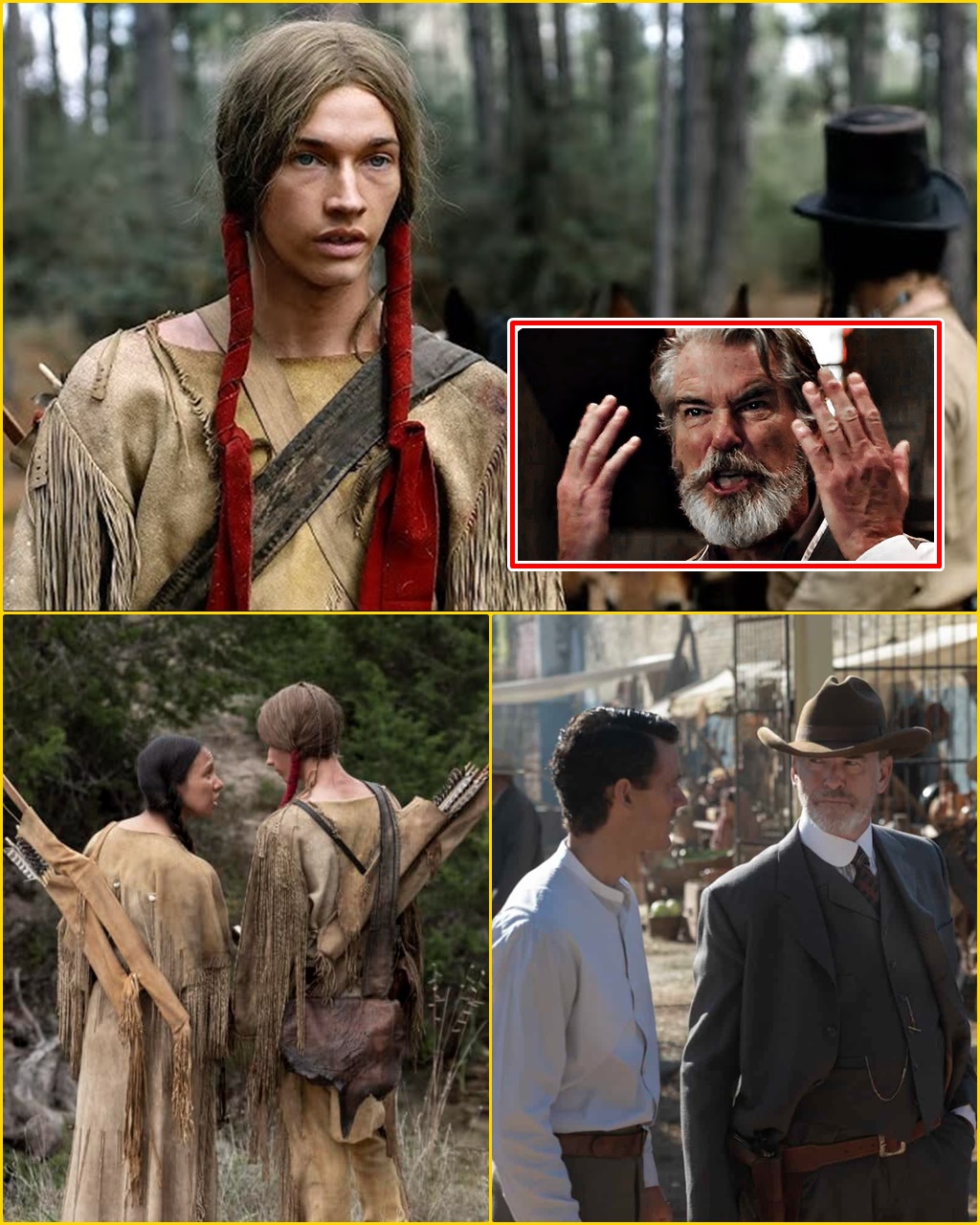
Lofland’s portrayal of young Eli is raw and deeply unsettling. His transformation from terrified settler boy to hardened warrior unfolds slowly, shaped by ritual, endurance, and moral compromise. The Comanche are not depicted as noble savages nor as faceless villains — a rarity in Western storytelling. Instead, The Son offers a revisionist lens that acknowledges their humanity, wisdom, and internal contradictions. McClarnon’s Toshaway commands the screen with quiet authority, delivering one of the series’ most powerful performances as a leader who understands the cost of survival better than anyone.
By 1915, Eli McCullough has become a titan. Played with icy restraint by Pierce Brosnan, the older Eli is a ruthless rancher determined to secure his family’s future as oil begins to reshape Texas forever. Gone is any trace of innocence. This Eli operates in boardrooms and on battlefields alike, manipulating land rights, crushing rivals, and leveraging violence with the same efficiency as capital. Brosnan subverts his charismatic screen persona, presenting a man whose charm barely masks a soul hardened beyond redemption.
The dual-timeline structure is the show’s most daring — and divisive — creative choice. Rather than providing simple cause-and-effect storytelling, The Son forces viewers to reconcile the boy Eli once was with the man he becomes. The innocence stripped away in the frontier years directly informs the calculated brutality of the oil baron. The timelines mirror one another, suggesting that America’s industrial age did not replace frontier violence — it merely refined it.
Family lies at the heart of Eli’s obsession. In 1915, he maneuvers to preserve his ranching empire while grooming his sons, Pete (Henry Garrett) and Phineas (David Wilson Barnes), as heirs. Pete, loyal but conflicted, struggles to reconcile his father’s worldview with his own moral compass. Phineas, more intellectual and politically minded, represents a different kind of power — one Eli neither fully understands nor trusts. Their dynamic exposes the generational cost of empire-building, as sons inherit not only land, but the sins embedded within it.
The women of The Son bring emotional depth and resistance to a male-dominated narrative. Jess Weixler’s Sally McCullough is resilient and quietly formidable, navigating grief and ambition in a world that grants her little agency. Paola Núñez’s Maria Garcia, fiery and defiant, challenges Eli’s authority amid escalating tensions along the Mexican border. Young Sydney Lucas adds poignant innocence as granddaughter Jeannie, a reminder of what stands to be lost if the cycle of violence continues unchecked.
Visually, The Son is sweeping and unforgiving. Vast Texas landscapes emphasize both opportunity and isolation, while its muted color palette reinforces the moral grayness of its characters. The production design immerses viewers in two distinct eras without romantic excess, grounding the myth of the West in dust, blood, and sweat.
Critical reception reflected the show’s ambition and its flaws. Season 1 earned a lukewarm 52% on Rotten Tomatoes, with critics citing sluggish pacing and narrative density. Yet many praised its scope, performances, and refusal to simplify history. Season 2 found firmer footing, climbing to 70% as the family dynamics deepened and the story narrowed its focus. Fans responded more warmly, particularly to the series’ treatment of Native American perspectives and its unflinching examination of Texas mythology — though some took issue with historical liberties.
Ultimately, The Son is not an easy watch, nor does it aspire to be. It dismantles the Western myth from the inside, exposing the violence beneath America’s most enduring legends. Unlike Yellowstone, which often glamorizes power even as it critiques it, The Son offers no such comfort. Its world is shaped by necessity, not righteousness, and its legacy is built on choices that cannot be undone.
In the crowded landscape of modern Western television, The Son remains a flawed but formidable achievement — a grim, intelligent saga of empire that understands one brutal truth: the American Dream has always had blood on its hands.
News
THE FINAL SQUEEZE THAT NEVER CAME: A Friend Reveals the Agonizing, Heartbreaking Final Moments of Kevin “Tugg” Watson — ‘I Held His Hand… But He Couldn’t Hold On’
CHICAGO (WLS) — Chicago police are investigating the shooting death of a man shot while in the middle of a Facebook Live stream…

THEY IGNORED THE PROOF… — Family of Kevin Watson Claims GPS Evidence Points to Real K-i-l-l-ers
The killing of Kevin Watson — a 42-year-old father and well-known promoter — has become one of the most disturbing…
I’M ABOUT TO EXPOSE EVERYTHING… — Brother of Kevin Watson Drops Bombshell Claims in Unsolved Sho0ting
The killing of Kevin Watson — known to many as “Tugg” — has left a community shaken and searching for…
THIS WASN’T WHAT YOU SAW ON TV…: Gia Fleur exposes hidden truth behind sh0ck exit — pre-dinner party confession changes everything
Married At First Sight’s Gia Fleur has broken her silence in a raw and emotional interview with Daily Mail –…

NEW SUSPECTS EMERGE…: Sh0cking twist in Kevin “Tugg” Watson Facebook Live ki-lling — police chase fresh leads in brazen daytime sh0oting
The shocking death of Kevin “Tugg” Watson has haunted Chicago since that fateful day when he was fatally shot during…

IT WAS NEVER JUST THE DRAMA…: Married At First Sight Australia star Bec reveals sh0cking health battle — cast left speechless
Brook left a gaping hole of drama when she walked out of MAFS Australia 2026, and Bec has proved she…
End of content
No more pages to load