
Elon Musk has built fortunes at a scale few people in history can comprehend. Early employees became millionaires. Investors became billionaires. Companies became cultural movements.
But there is one group of people who, by design, did not share in that upside.
His ex-wives.
The most striking example is Justine Musk — Elon Musk’s first wife, the mother of six of his children, and a woman who stood beside him long before Tesla and SpaceX became world-defining giants.
When their marriage ended, Justine asked for something that, on paper, seemed reasonable: equity.
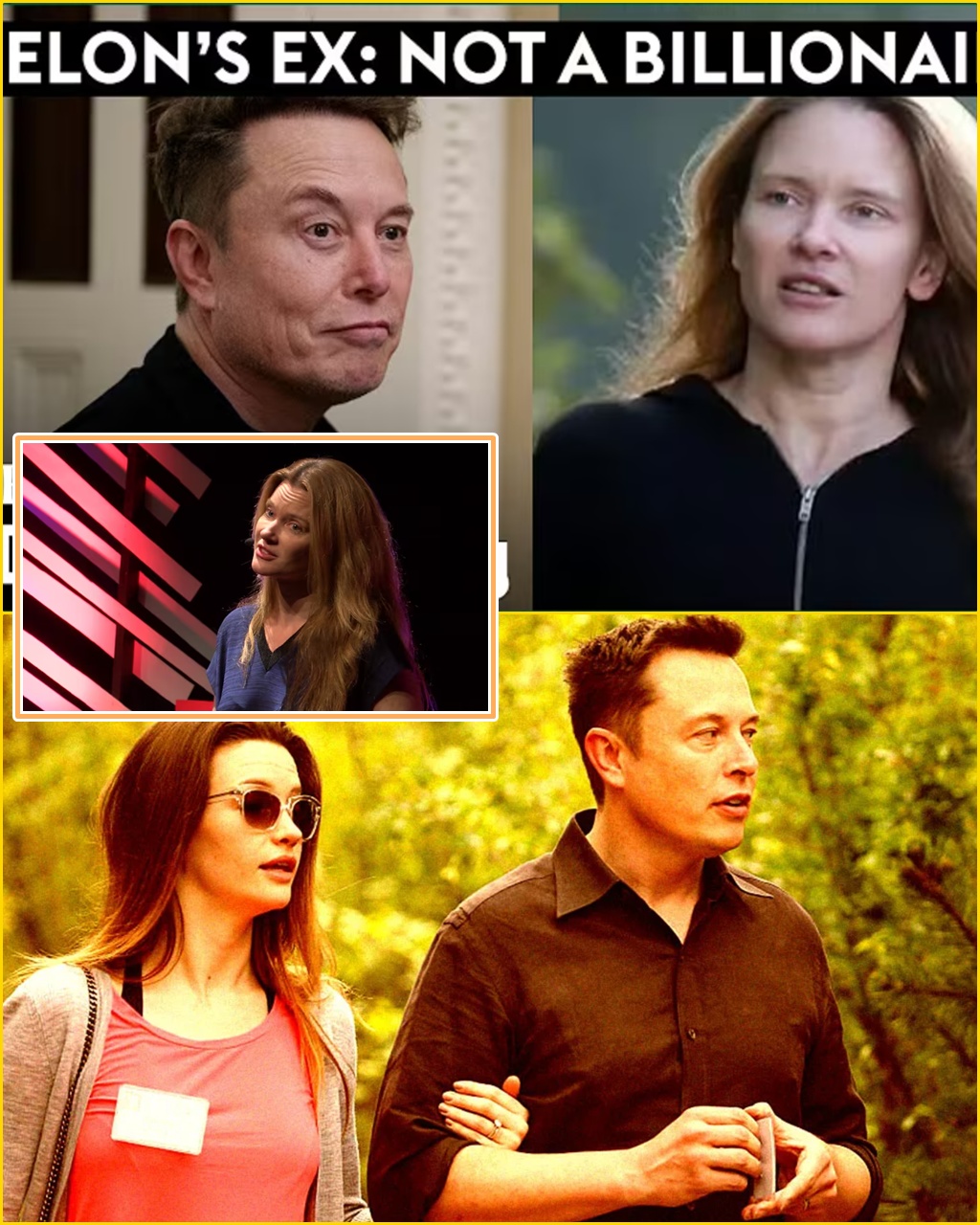
She didn’t want just cash. She wanted ownership in the future she had helped support.
She got neither Tesla shares nor SpaceX shares.
And that decision would shape how the world came to see power, marriage, and money in the age of tech titans.
Before the Billions
Justine met Elon Musk before he was a household name. Before the rockets landed themselves. Before Tesla became synonymous with electric cars.
They married young. They struggled together. They endured devastating loss together, including the death of their first child. They went on to raise six sons.
During those years, Elon was building — obsessively. Justine later described herself as the emotional anchor, the one holding the household together while he focused relentlessly on ambition.
In other words, she played the role that countless spouses of high-risk founders play: stability, support, sacrifice.
But when success arrived, the balance shifted.
The Divorce That Revealed the Rules
When their marriage ended in 2008, the financial gap between them was already vast — and growing fast.
Justine reportedly requested stakes in Tesla and SpaceX as part of the divorce settlement. These were not yet the behemoths they are today, but they were clearly the engines of Musk’s future wealth.
Musk refused.
Instead, the settlement reportedly focused on cash, not ownership. No equity. No shares. No participation in the long-term upside.
From a legal standpoint, it was airtight.
From a human standpoint, it was revealing.
Why Equity Mattered More Than Money
Cash runs out.
Equity compounds.
Justine understood that difference.
A lump sum might secure short-term stability, but ownership would mean long-term independence — and recognition that her contribution wasn’t just domestic, but foundational.
By denying equity, Musk ensured that his wealth would remain entirely under his control, untethered from past relationships.
It wasn’t personal.
It was structural.
“I Was the Starter Wife”
Years later, Justine would famously describe herself as a starter wife — not with bitterness, but with clarity.
In Silicon Valley culture, founders are often celebrated for single-minded focus, emotional detachment, and ruthless prioritization. Those traits build companies.
They also end marriages.
Justine’s experience highlighted an uncomfortable truth: many of the world’s most successful men build empires with invisible labor supporting them — and when the relationship ends, that labor is rarely valued in ownership terms.
She didn’t become poor.
But she didn’t become rich in the way Musk did either.
A Pattern, Not an Exception
Justine isn’t unique.
Elon Musk has been married multiple times, including twice to actress Talulah Riley. None of his ex-wives emerged as beneficiaries of Tesla or SpaceX equity.
This wasn’t oversight.
It was intentional.
Musk is known for obsessively controlling ownership, voting power, and decision-making authority in his companies. Giving shares to an ex-spouse would dilute that control — something he has consistently avoided.
In business, it’s seen as discipline.
In relationships, it feels colder.
The Power Imbalance No One Talks About
What makes this story resonate isn’t just Elon Musk.
It’s the broader question it raises: who gets rewarded when success finally arrives?
In traditional marriages, wealth accumulation is shared. In founder marriages, especially in tech, the rules are different — and often written by the person with the most leverage.
Justine later wrote about how power dynamics seeped into every aspect of her marriage: whose needs mattered, whose voice carried weight, whose future was prioritized.
The divorce didn’t create that imbalance.
It exposed it.
Where Justine Musk Is Now
Today, Justine Musk is not living in Elon’s shadow.
She is a writer. A public thinker. A woman who speaks openly about power, gender, ambition, and the cost of loving someone who puts the future above everything else.
Her essays have been widely read because they articulate something many people feel but struggle to name: supporting greatness does not guarantee sharing in it.
She didn’t get Tesla stock.
She didn’t get SpaceX shares.
What she got instead was something harder to quantify — but impossible to take away.
Her voice.
The Real Twist
The twist isn’t that Elon Musk refused to share his wealth.
The twist is that he didn’t need to.
The system already worked in his favor.
He made many people rich — investors, executives, early believers.
Just not the women who married him.
And in a world obsessed with billionaires, that may be the most telling detail of all.
News

‘PRODUCERS DIDN’T WANT YOU TO SEE THIS’: Danny & Chenelle’s Secret Moments EXPOSED — The Truth Behind the ‘Stolen Match’ Scandal
The Married At First Sight (MAFS) 2026 backup brides have spoken out about their brief experience on the reality show, and it sounds way messier…

FAMILY’S B0MBSHELL CLAIMS ROCK CASE: Loved Ones of Kevin “Tugg” Watson Accuse Chicago PD of Ign0ring Crucial Evidence
The family of Kevin “Tugg” Watson has come forward with explosive allegations that are shaking public confidence in the investigation…
MOMENTS BEFORE THE GU-NSH0TS: Offset Spotted Smiling With Fans Outside Florida Casino — Then Chaos Erupted
Rapper Offset was shot Monday in Florida, just moments after he was spotted smiling and posing with fans at a casino, according…

BREAKING: Offset H0spitalized After Florida Sh00ting — New Health Update Leaves Fans Concerned
Rapper Offset performs onstage at Exposition Park on February 21, 2016, in Los Angeles. Scott Dudelson/WireImage/Getty Images The rapper Offset…

‘THE ELEVATOR NEVER LIES’: Gia Fleur EXPOSED in Shocking Moment Caught on Camera — What Filip Gregov Saw Changed Everything
We’ve officially reached the pointy end of Married At First Sight (MAFS) with the Final Dinner Party of 2026, and oh my God??? In…

‘IT HAPPENED SO FAST’: Brisbane Multi-Vehicle Crash Involving Stolen Car Leaves Four Teens Injured — Police Share Haunting Insights
Six people have been injured in a three-vehicle crash involving a stolen car in an affluent Brisbane suburb. The three cars —…
End of content
No more pages to load